Did a novelist use fingerprints as evidence before the police did?
Mark Twain wrote about a killer caught by a thumbprint in 1883. Police first solved a murder that way nine years later, in Argentina.
▶ Start the storyYes, but only just, and not in the book people usually credit. In his 1883 memoir Life on the Mississippi, Mark Twain included a melodramatic account of a murder in which the killer is identified by a thumbprint. The first known murder actually solved with fingerprints came nine years later, in 1892, in Argentina. By the time Twain's novel Pudd'nhead Wilson, whose courtroom drama turns on fingerprint identification, came out in 1893, real detectives had beaten it by a year.
That Argentine case is the real-life version. In 1892 the police chief Juan Vucetich created the first method of keeping people's fingerprints on file. That same year his colleague, Inspector Álvarez, found a bloody thumb mark on a door at the scene where two boys had been killed. It matched their mother, Francisca Rojas, who then confessed.
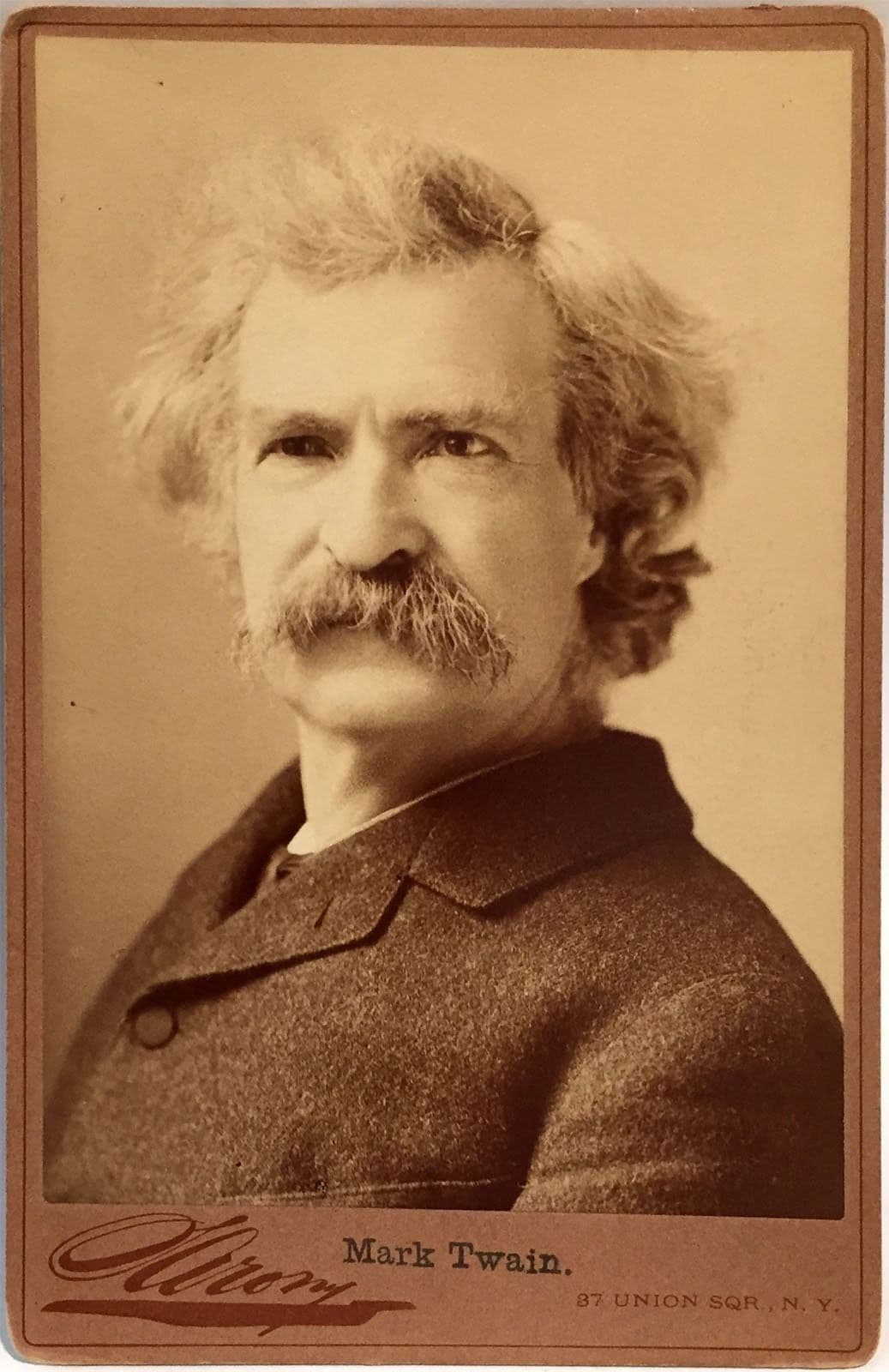
Twain's fictional lawyer, David Wilson, collects fingerprints as a hobby, which only convinces the townsfolk of Dawson's Landing that he is eccentric, until his fingerprints decide the trial. The idea itself was old: the Iranian physician Rashid-al-Din Hamadani, who died in 1318, described a Chinese practice of identifying people by fingerprints, noting that no two individuals have fingers exactly alike. In 1880 the Scottish surgeon Henry Faulds published a paper on identifying people by fingerprints, and in 1886 he offered the idea to London's police, who dismissed it.
London's Scotland Yard only started fingerprinting individuals and identifying criminals with them in 1901. Sherlock Holmes got his fingerprint case even later, in 'The Norwood Builder', published in 1903.
Quiz me
0/3
Recap
1883 Twain's thumbprint tale, 1892 Argentina's first fingerprint murder case, 1893 Pudd'nhead Wilson, 1901 Scotland Yard, 1903 Sherlock Holmes.
Surprising fact · A 13th-14th century Iranian physician, Rashid-al-Din Hamadani, already wrote that no two people's fingers are exactly alike, describing a Chinese identification practice centuries before European science caught up.
Sources (2)
No source, no claim. Every fact in this lesson (15 claims) cites at least one of these.