How do judges decide who won when 100m sprinters finish together?
Two sprinters can cross the line close enough that no human eye can separate them. The fix, borrowed from horse racing, turns time itself into a picture.
▶ Start the storyBy turning time itself into a photograph. In a 100m race, a sprinter only has to get their torso, not their limbs, head or neck, over the nearer edge of the finish line, and when two runners arrive close enough that the naked eye genuinely can't separate them, officials pull out a photo finish.
A photo finish doesn't work like an ordinary photo. Rather than freezing one instant across the whole finish line, a specialized camera aimed straight down the line captures only that narrow strip, continuously, so the image actually shows every racer at the exact moment their body crossed it, no matter when that moment happened. Anything that isn't moving across the line shows up as a flat, stretched streak instead. The result swaps the usual rules of photography: instead of many places frozen at one instant, you get one place recorded across many instants, with position across the image standing in for time. Time markings along the bottom of the picture then give each runner's exact crossing time.
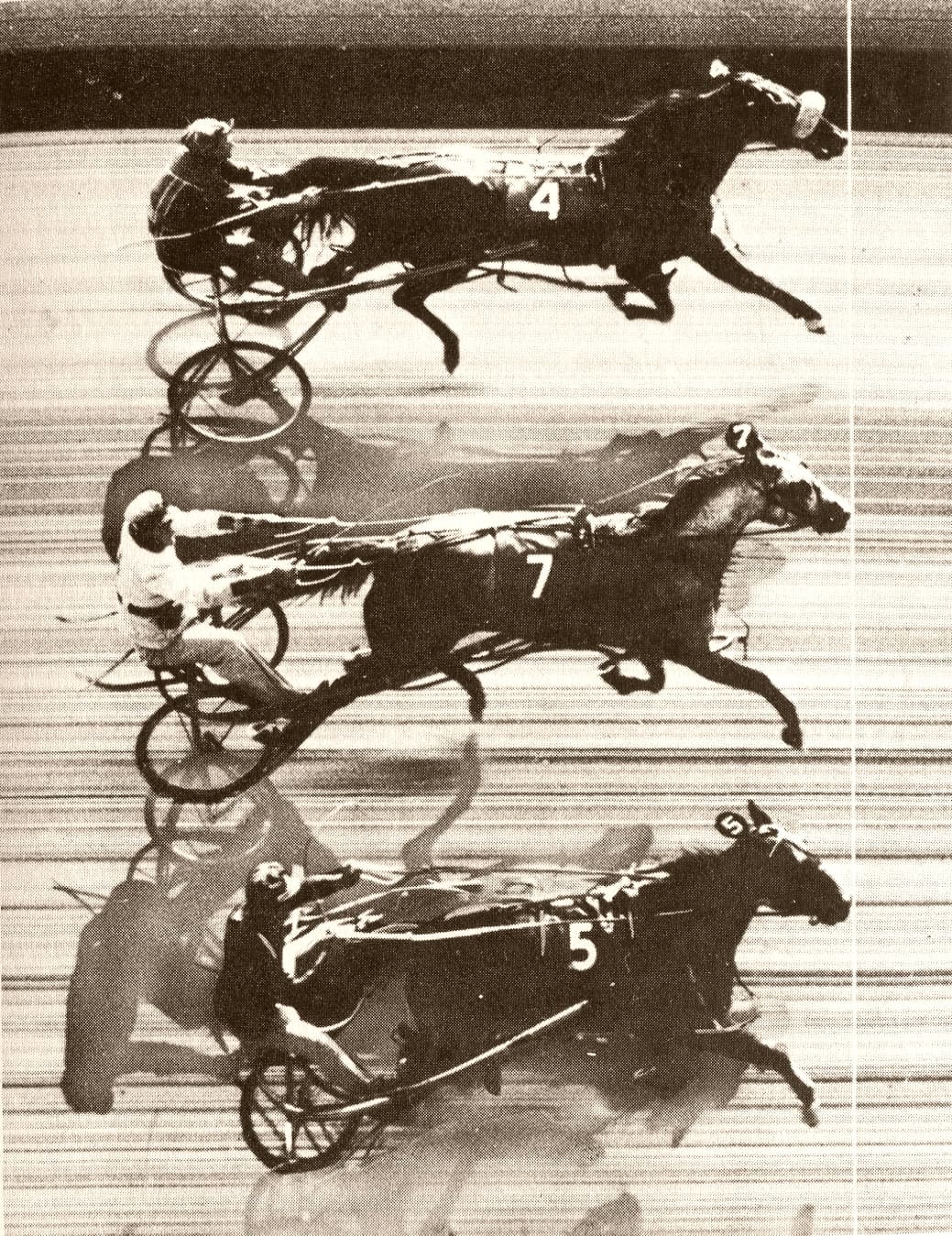
The trick came from horse racing, not the Olympics. The oldest single-exposure photo-finish images found so far were made by John Charles Hemment in 1890. Photo-finish cameras proper were developed in the 1940s and 1950s, when betting on races had become hugely popular and authorities wanted to clean up a sport widely seen as corrupt. Today they also make it much less likely that officials have to declare a dead heat.
Quiz me
0/3
Recap
A photo finish works by capturing only the finish line continuously over time, rather than a whole scene at one instant, so the picture itself tells officials exactly when each runner crossed, down to a fraction of a second.
Surprising fact · Photo-finish technology is over a century old: the earliest known examples were taken in 1890 for horse racing, decades before it reached the Olympic 100m.
Sources (2)
No source, no claim. Every fact in this lesson (10 claims) cites at least one of these.