How did scientists discover that plants need light to make oxygen?
A doctor famous for inoculating the Habsburg family against smallpox later proved, by watching bubbles rise from plants underwater, that sunlight is what lets them give off oxygen.
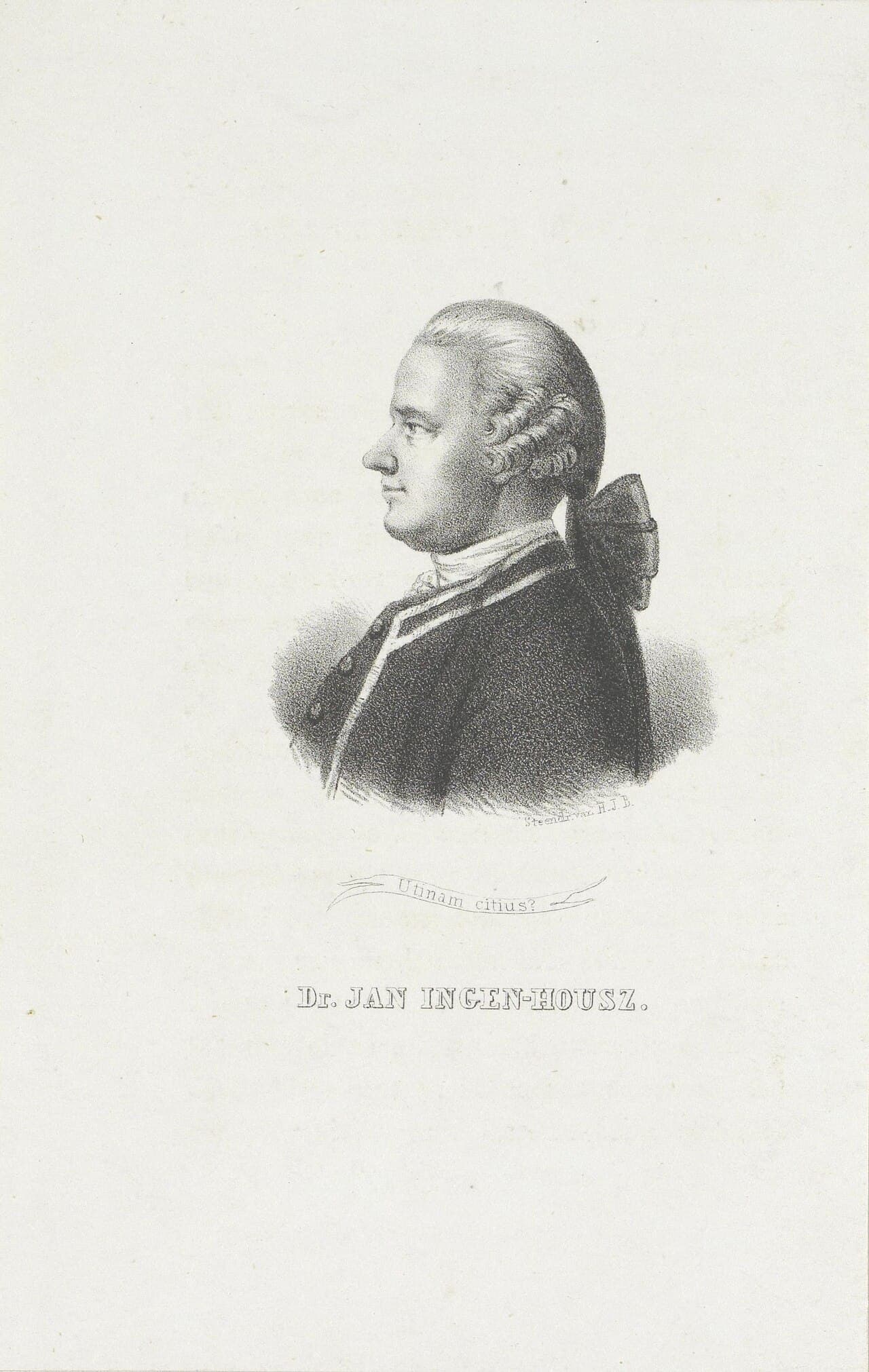
▶ Start the storyScientists discovered that plants need light to make oxygen in 1779, when Jan Ingenhousz showed that light, not just soil and water, was essential to the process. Ingenhousz wasn't a career botanist; he was a physician who, a decade earlier, had become famous for inoculating the Habsburg royal family against smallpox and becoming Empress Maria Theresa's personal physician. His interest in the gases plants exchange only began after he met the chemist Joseph Priestley, who had noticed that plants gave off and absorbed gases but hadn't realized sunlight mattered, leaving his results inconsistent.
Ingenhousz fixed that gap with months of careful, methodical experiments at a rented country house in 1779. He submerged plants in water and watched bubbles stream from their green parts in sunlight, bubbles he identified as oxygen, while in the shade those bubbles eventually stopped. As he put it himself, plants could "correct" foul air "in a few hours" but only "in clear day light, or in the sun shine." He also found the reverse process at work in darkness: plants released carbon dioxide instead.
One detail he noticed turned out to matter enormously. The oxygen plants gave off in light was more than the carbon dioxide they gave off in the dark, which told him that some of a plant's mass had to be coming from the air itself, not only from water and soil nutrients, an idea he kept exploring afterward.
Those bubbles were a glimpse of a process now measured on a planetary scale. The very first photosynthetic organisms likely used hydrogen or hydrogen sulfide rather than water as their source of electrons, long before cyanobacteria appeared and began pumping out enough oxygen to help oxygenate the entire Earth, making complex life possible at all. Today, global photosynthesis captures energy at an average rate of about 130 terawatts, roughly eight times everything human civilization uses, while converting somewhere between 100 and 115 billion tons of carbon into living matter every year.
Quiz me
0/3
Recap
Plants only release oxygen bubbles in sunlight; in the shade or dark, the bubbles stop and carbon dioxide is released instead.
Surprising fact · Ingenhousz discovered that plants release carbon dioxide in the dark, the opposite of what they do in sunlight, by watching bubbles rise from submerged plants.
Sources (2)
No source, no claim. Every fact in this lesson (12 claims) cites at least one of these.