Is believing in God really an all-or-nothing choice?
Richard Dawkins once laid out seven milestones running from 'I do not believe, I know' that God exists to 'I know there is no God', with five shades of uncertainty in between.
▶ Start the storyBelieving in God doesn't have to be an all-or-nothing choice, at least on one well-known map of the question. Richard Dawkins described seven milestones on a spectrum of theistic probability running from a 'strong theist', who holds 100% probability that God exists and, quoting Carl Jung, says 'I do not believe, I know,' all the way to a 'strong atheist' at the opposite end, who says 'I know there is no God, with the same conviction as Jung knows there is one.' In between sits someone 'completely impartial', for whom God's existence and nonexistence are exactly equiprobable, and around it 'de facto' believers and unbelievers and people merely 'leaning' one way, each holding a probability short of certainty.
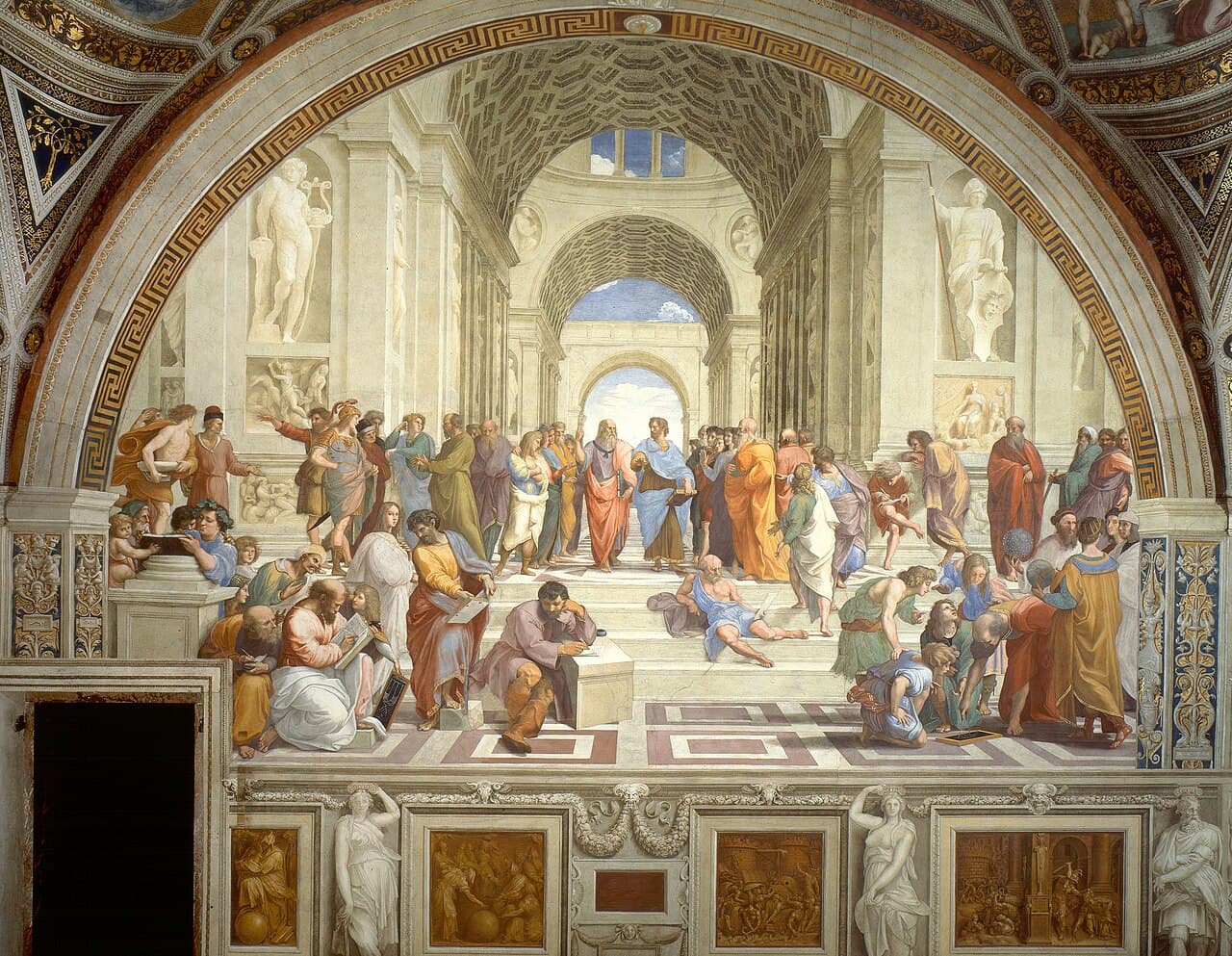
That range reflects just how old and varied this debate is. In Western philosophy, the question goes back to Plato and Aristotle, who argued for a being responsible for fashioning the universe, what we'd now call a cosmological argument. Centuries later, St. Anselm formulated the first ontological argument, Thomas Aquinas built his own cosmological argument, and Descartes argued that a benevolent God had to exist for the evidence of our senses to even be meaningful. Islamic philosophers contributed major arguments too: Al-Ghazali and Al-Kindi developed the Kalam cosmological argument, Avicenna offered his Proof of the Truthful, and Averroes drew on Aristotle's unmoved mover. On the other side, philosophers including David Hume, Ludwig Feuerbach, and Bertrand Russell argued against God's existence, and some religions, such as Jainism, reject the idea of a creator deity altogether.
Even among professional philosophers today, opinion is split in a way that depends heavily on who you ask. A 2020 survey found that theism, the view that God exists, is the dominant position specifically among philosophers of religion, with nearly 70% accepting or leaning toward it. But philosophers as a whole, across all specialties, lean the other way, with roughly two-thirds accepting or leaning toward atheism. Both camps include serious, well-known contemporary defenders, from theists like Alvin Plantinga and Richard Swinburne to atheists like Graham Oppy and J. L. Mackie.
Part of the reason the debate resists a simple yes-or-no answer is that 'belief' and 'knowledge' aren't the same axis. Theism and atheism describe what someone believes, while gnosticism and agnosticism describe what someone claims to know, so even someone's yes or no to belief leaves open how sure they claim to be.
Quiz me
0/3
Recap
Dawkins's seven-point scale, from strong theist to strong atheist, places five of its seven milestones between full certainty in either direction.
Surprising fact · Philosophers of religion lean heavily toward theism while philosophers as a whole lean heavily toward atheism, according to the same 2020 survey.
Sources (1)
No source, no claim. Every fact in this lesson (17 claims) cites at least one of these.