Why do octopuses have blue blood?
This animal has three hearts, and its blood is blue.
▶ Start the storyOctopus blood is blue because it carries oxygen with copper instead of iron. The copper sits in a protein called hemocyanin, which turns blue when it grabs oxygen and goes colourless when it lets go. Our own blood uses hemoglobin, an iron-containing protein packed inside red blood cells, which is bright red when loaded with oxygen and a darker red without it.
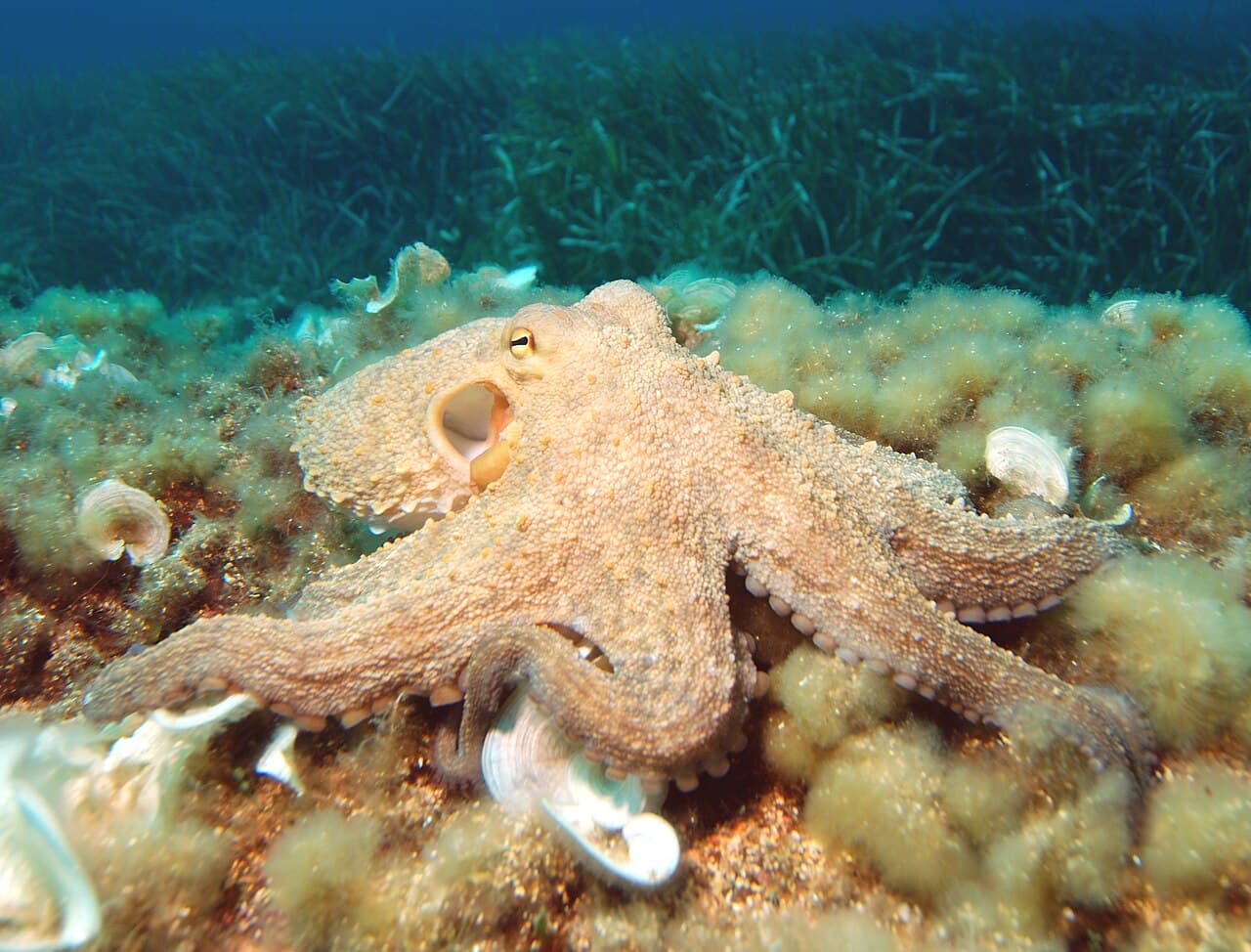
The blue molecule was first discovered by Léon Fredericq, who found hemocyanin in the common octopus in 1878. Nearly half a century earlier, in 1833, Bartolomeo Bizio had already noticed that molluscs contain copper.
That blood is also thick, and pushing it around takes real pressure. So octopuses have three hearts. Two of them, the branchial hearts, push blood through the two gills to collect oxygen. The third, the systemic heart, sends that oxygen-rich blood to the rest of the body.
Why copper instead of iron? Octopuses live in the sea, often in cold water where oxygen is scarce. In those conditions, hemocyanin carries oxygen more efficiently than hemoglobin would. Blue blood is not a quirk. It is a tool that suits their world.
One strange side effect: the main heart stops beating while an octopus swims. That is why octopuses lose energy quickly in open water and mostly prefer to crawl.
Quiz me
0/3
Recap
We carry oxygen with iron, octopuses carry it with copper that turns blue, and they need three hearts to pump it.
Surprising fact · The main heart stops while the octopus swims, which is why octopuses mostly crawl.
Sources (4)
No source, no claim. Every fact in this lesson (15 claims) cites at least one of these.