What can a quantum computer actually do that an ordinary one can't?
A large-scale quantum computer could, in principle, break widely used encryption and simulate physics classical machines never could. Building one that actually works at that scale is a different story.
▶ Start the storyA quantum computer could, in principle, solve a few specific problems exponentially faster than any ordinary computer. It does this with superposition, interference and entanglement instead of plain bits. A classical bit is always 0 or 1. A qubit can be a mix of both, and measuring it returns one answer by chance. That's why it doesn't simply 'try every answer at once': you only ever read out one result. The trick is to use interference to tilt the odds toward the answer you want.
The idea came from physicists. Simulating quantum systems on ordinary computers gets exponentially harder as they grow. In the early 1980s, Richard Feynman and Yuri Manin independently suggested building hardware out of quantum phenomena instead. In 1994 Peter Shor gave the field real teeth: a quantum algorithm that factors large numbers fast. No known classical algorithm can match it, and much of internet encryption relies on factoring being hard.
The catch is keeping qubits alive. A qubit not well isolated from its surroundings loses its quantum state. This is called decoherence, and it floods a calculation with errors. The fix, quantum error correction, spreads each qubit's information across many physical qubits. Because of that overhead, beating ordinary computers at factoring may take machines with millions of qubits.
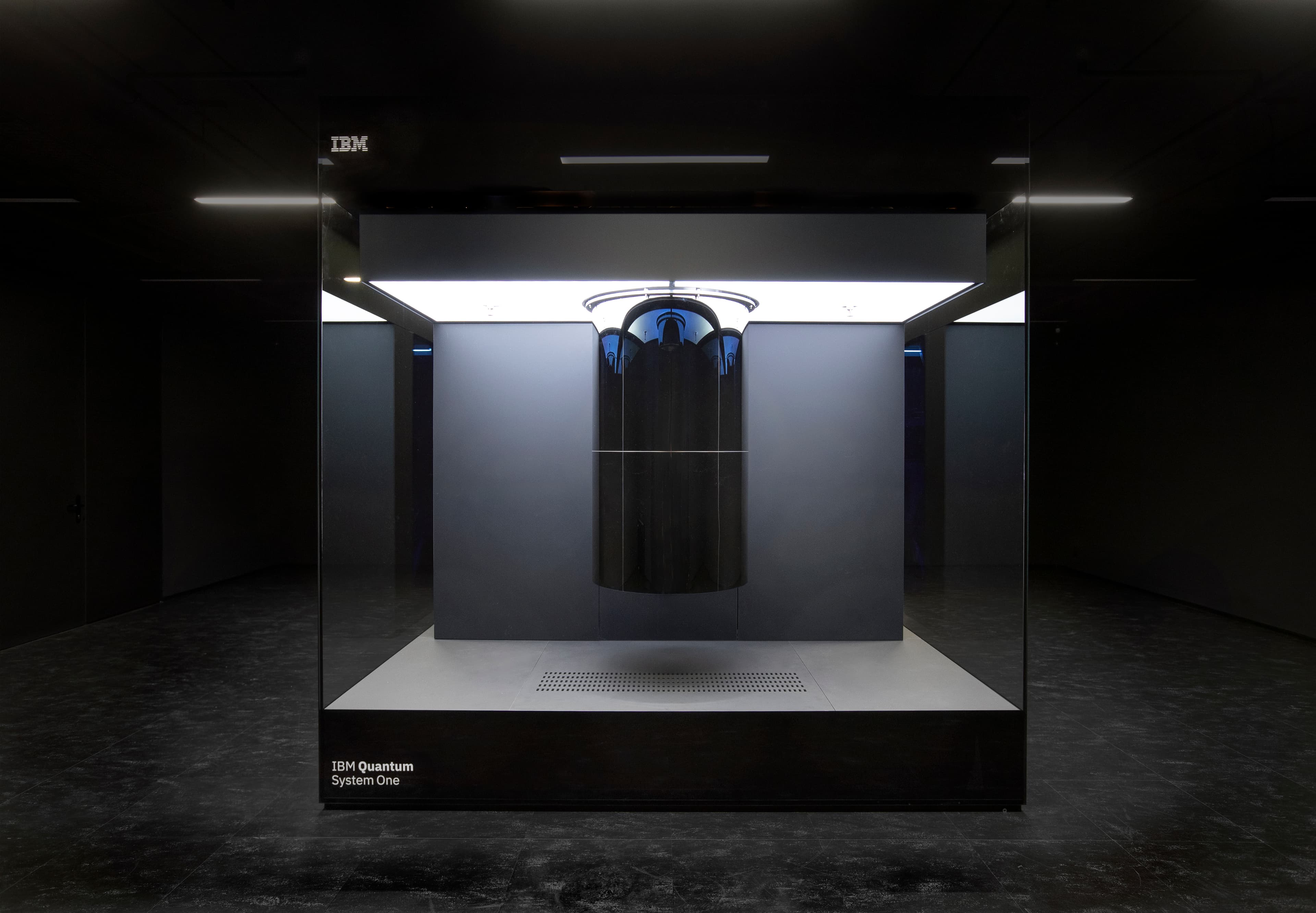
Researchers have claimed quantum devices that beat classical computers at narrow, specially chosen tasks. Those tasks aren't yet useful ones. As of 2026, such results are best seen as scientific milestones, not proof that practical machines are close. Governments are betting anyway: their investment reached about ten billion dollars by April 2025.
Quiz me
0/3
Recap
The real obstacle to quantum computing isn't the algorithms, it's keeping fragile qubits from losing their quantum state to decoherence long enough to finish a calculation.
Surprising fact · Beating a classical computer at factoring with Shor's algorithm may require a quantum computer with millions of physical qubits, due to the overhead of error correction.
Connects to
- 🔗 What did Einstein call "spooky action at a distance"?
- 🐱 Was Schrödinger's cat really meant to be alive and dead at once?
- 📼 What was the imaginary machine Alan Turing described in 1936?
- 🔐 Why is it so hard to split a big number into its primes?
- 🧱 How can a particle pass through a wall it doesn't have the energy to climb?
- 🔢 How does RSA turn two prime numbers into a lock anyone can close but only you can open?
Sources (6)
No source, no claim. Every fact in this lesson (13 claims) cites at least one of these.