What made Carl Jung break with Sigmund Freud?
They founded the International Psychoanalytical Association together, with Jung as its first president. A book built on one woman's visions ended the partnership and gave birth to a rival school of psychology.
▶ Start the storyCarl Jung and Sigmund Freud started out as genuine partners, not rivals. When Jung travelled to Vienna to meet Freud in 1907, the thirty-two-year-old Jung actually had a bigger international reputation than the forty-nine-year-old Freud, thanks to word-association experiments he'd run with a galvanometer, measuring patients' emotional reactions to lists of words. For six years they worked and travelled together, and in 1911 they co-founded the International Psychoanalytical Association, with Jung installed as its very first president.
The cracks had already been there, though. Jung noticed early on that Freud wouldn't tolerate ideas that strayed from his own. The real break came in 1912, provoked by a book. Jung had been studying the recorded visions of a woman known only as 'Miss Miller,' using her case to build out his emerging idea of a 'collective unconscious,' the part of the unconscious that, he believed, holds memories and ideas inherited from generations of ancestors. When Jung published his reasoning in a book called Psychology of the Unconscious, Freud reportedly muttered the word 'heresy' and later told a colleague that Jung had 'lost his way' on a specific page of the German edition, the passage where Jung enlarged on his idea of the libido. Jung played down sexual development as an instinctual drive, Freud's central theme; by August 1912 he was banned from the Vienna psychoanalytic circle.
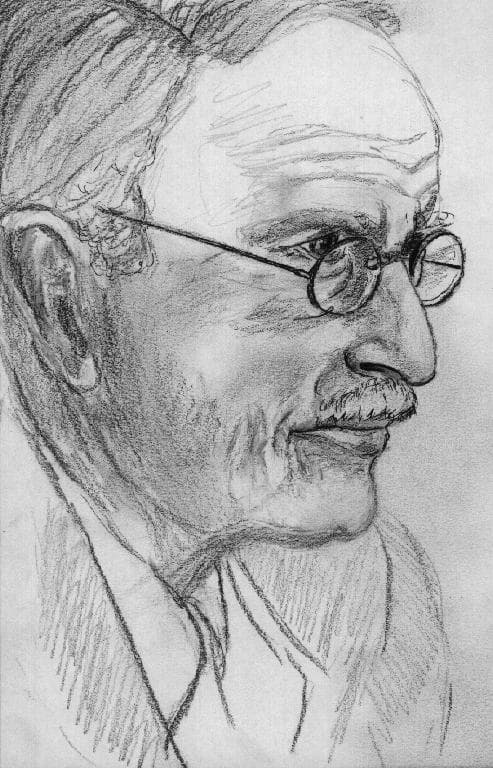
The disagreement wasn't just personal, it was methodological. Jung refused to limit himself to strict scientific method when studying the mind, treating dreams, myths, coincidences and folklore as legitimate evidence. As he put it himself, 'the beauty about the unconscious is that it is really unconscious,' meaning no experiment could ever fully pin it down anyway. Out of that break came a whole new vocabulary that still shapes popular psychology today: archetypes, the collective unconscious, introversion and extraversion, the shadow, and the broader label Jung gave his approach to set it apart from Freud's, analytical psychology.
Quiz me
0/3
Recap
Jung and Freud began as genuine partners, with Jung as the first president of their shared psychoanalytic association, before a book about one woman's visions split them apart for good.
Surprising fact · A book by Jung, built on one woman's recorded visions, was what provoked the break that ended his and Freud's partnership, with Freud calling it 'heresy.'
Sources (1)
No source, no claim. Every fact in this lesson (13 claims) cites at least one of these.