Who is the bank's bank?
In 1694 England needed £1.5 million for its navy and no one would lend it. So it created a bank to do the borrowing, and that bank became the model for central banks everywhere.
▶ Start the storyThe central bank. Your bank keeps your money, and the central bank does the same job for banks. It moves funds between them and supplies their notes and coins, which is why it's called the "bank of banks". It alone can increase the country's base money. Many central banks also watch over banks to keep them stable and prevent bank runs.
Step 1: Issues the currency
Monopoly on creating the base money
Step 2: Banks' bank
Holds reserves and settles payments between commercial banks
Step 3: Lender of last resort
Emergency credit to a bank short of cash (Bank of England: from the 1870s)
Step 4: Sets interest rates
Aims at a government-set inflation target
One of the most copied central banks was born in a war. In 1690, the French navy defeated England's Royal Navy at Beachy Head. England wanted to borrow £1.5 million to expand its navy, but its credit was too poor. A Scottish banker, William Paterson, had proposed a national bank in 1691. In 1694 it became real: the Bank of England, the government's banker and debt manager.
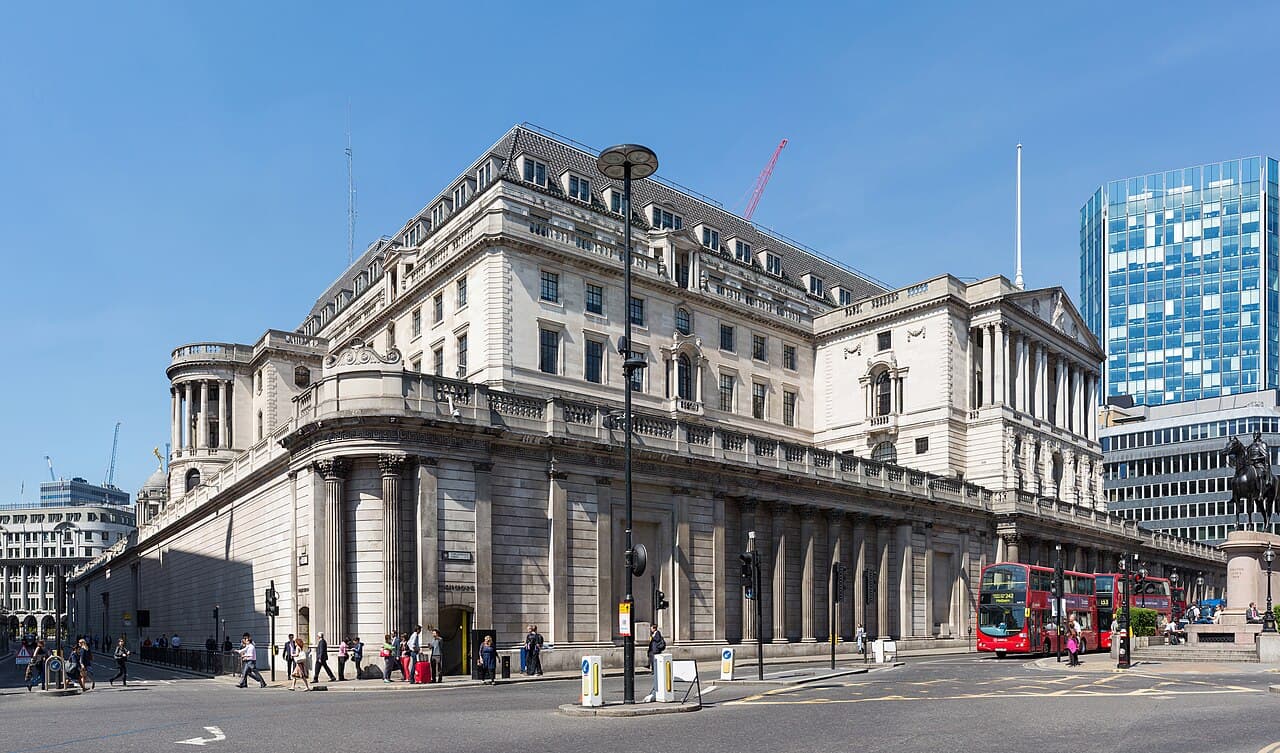
It wasn't a full central bank yet. The early Bank of England still lacked several of today's functions. It only took on the role of lender of last resort, rescuing banks short of cash, in the 1870s. Sweden's central bank is even older, from 1668. But the Bank of England became the model for those that followed.
It also stayed private for a long time: stockholders owned it until it was nationalised in 1946. Since 1998, it has been independent in keeping prices stable, mainly by setting interest rates. Most developed countries now shield their central bank from political interference. Yet governments still have a say, parliaments scrutinize them, and central banks often respond to politics anyway.
Quiz me
0/3
Recap
A central bank is the bank's bank: it backs up commercial banks instead of serving ordinary customers directly.
Surprising fact · The Bank of England only took on the role of lender of last resort in the 1870s, nearly two centuries after it was founded.
Sources (2)
No source, no claim. Every fact in this lesson (13 claims) cites at least one of these.