How can a pile of loose stones stand up as an arch?
A stone arch has no glue doing the real work: every block is simply squeezing its neighbours.
▶ Start the storyAn arch stands because its curve turns weight into squeezing. Every wedge-shaped stone is pressed against its neighbours, so the whole ring works in compression, and stone is superb at being squeezed. Builders could treat it as able to take enormous pressure, while its ability to resist being pulled apart, even with mortar, was effectively zero. A flat stone beam over a gap bends, stretching its underside, and that is exactly where stone fails. The arch sidesteps the problem.
There is a catch: the arch pushes sideways at its feet. That outward shove, called thrust, is why old arches need heavy supports, and why a row of arches works so well, each one leaning against the next so that only the two at the ends need bracing.
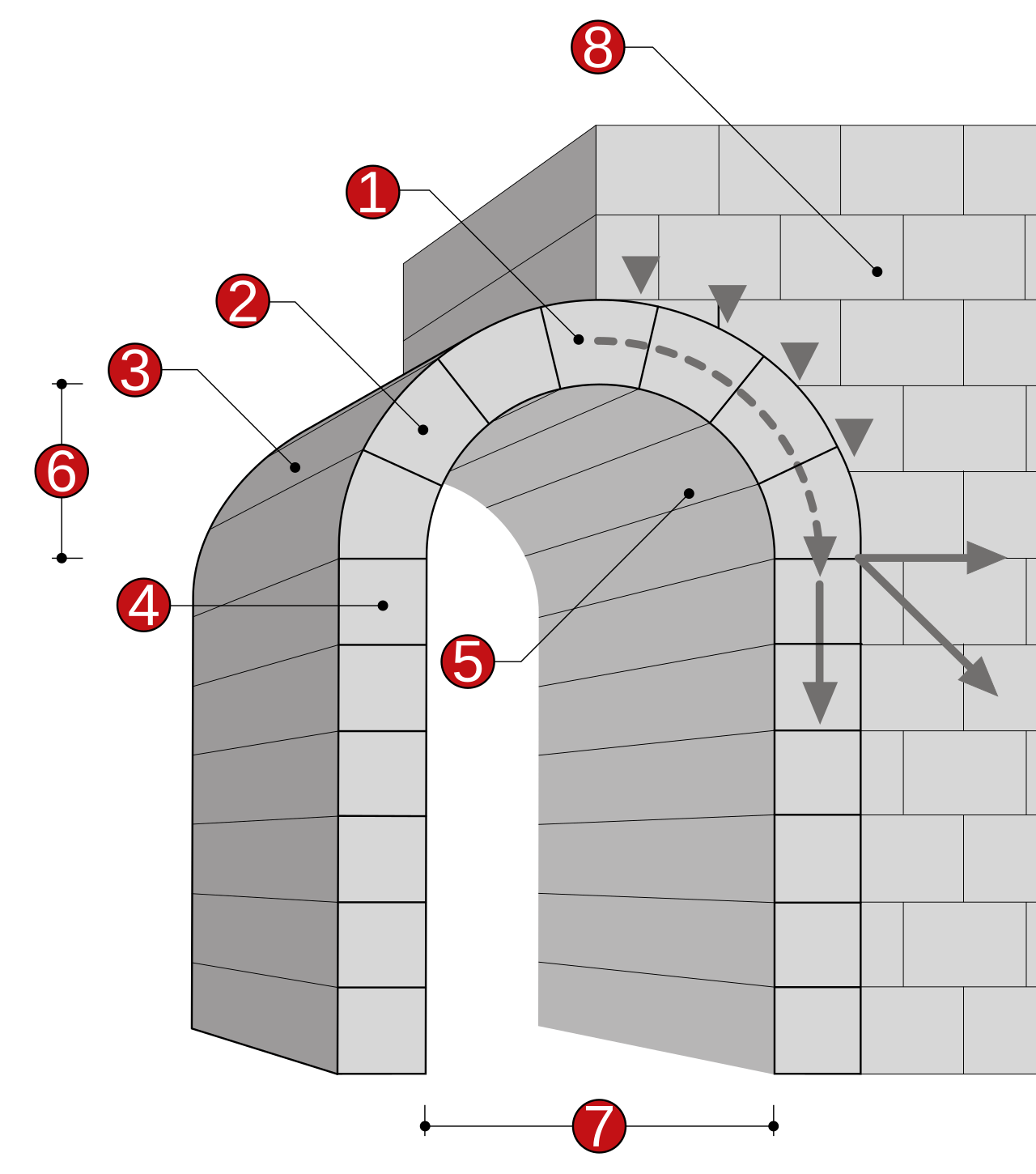
An arch also can't stand halfway. While it is built it rests on a wooden frame called centring, and it only holds itself up once the last stone, the keystone, is dropped in at the top. Oddly, that famous stone carries the least stress of the lot.
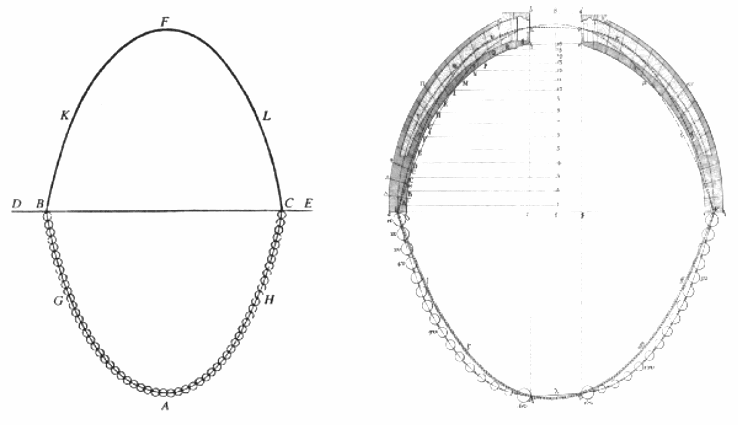
In 1676 the scientist Robert Hooke found the perfect shape with a beautiful trick: hang a chain, and flip it upside down. The curve a chain makes by pulling is the curve an arch needs for pushing.
Quiz me
0/3
Recap
Hang a chain, flip it over, and you have the ideal arch: pure pulling becomes pure pushing.
Surprising fact · The keystone, famous for holding an arch together, is the stone under the least stress.
Sources (4)
No source, no claim. Every fact in this lesson (16 claims) cites at least one of these.