Why can amphibians breathe through their skin?
Some salamanders have no lungs at all, and their lungless family is the largest salamander family on Earth.
▶ Start the storyAmphibians can breathe through their skin because it is thin, permeable, richly supplied with blood vessels, and kept moist by mucous glands. Oxygen diffuses across that wet surface into the blood, a process called cutaneous respiration, which lets adult amphibians respire without rising to the surface of the water and even hibernate at the bottom of ponds.
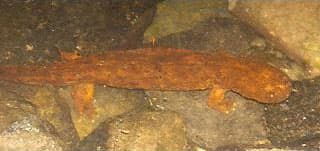
For some amphibians, skin is not a backup plan but the whole plan. Lungless salamanders, the family Plethodontidae, have no lungs at all and breathe only through their skin. That one family makes up 60 percent of every salamander species on Earth. Even amphibians that do have lungs lean on their skin heavily: in cold weather, skin may be the main way frogs and other amphibians breathe, and in the hellbender salamander, whose skin has extensive folds, skin breathing accounts for more than 90 percent of oxygen uptake.
This is also why amphibians are tied to damp places. Skin that works as a breathing organ has to stay moist for oxygen to diffuse fast enough, so on land amphibians are restricted to moist habitats. It also explains a well-meaning mistake wildlife rescuers see often: people place a frog or toad in a tank of water with no way to climb out. Adult amphibians generally cannot breathe underwater, so without an exit, they can drown.
That same permeable skin makes amphibians sensitive early warning signs of a habitat's health, and over recent decades their populations have fallen sharply around the world.
Quiz me
0/3
Recap
If an amphibian's skin can't stay wet, it can't breathe properly, which is also why adult amphibians can still drown if left in water with no way out.
Surprising fact · Lungless salamanders, 60 percent of all salamander species, breathe only through their skin, and in hellbenders skin breathing accounts for over 90 percent of oxygen uptake.
Sources (2)
No source, no claim. Every fact in this lesson (14 claims) cites at least one of these.