Why can your eyes be on the road and still miss it?
Crash investigators have a code for it: 'looked but did not see.' Along with daydreaming and inattention, it tops the list of distractions in fatal US crashes.
▶ Start the storyYour eyes can be pointed straight at the road and you can still miss what's happening on it, because seeing isn't the same as paying attention. Crash investigators even have a category for this: 'looked but did not see', alongside 'inattention' and 'lost in thought/daydreaming', and together these cognitive distractions made up the largest share of distraction-related fatal crashes in a study of US data from 2010 to 2013, more than distractions from inside or outside the car.
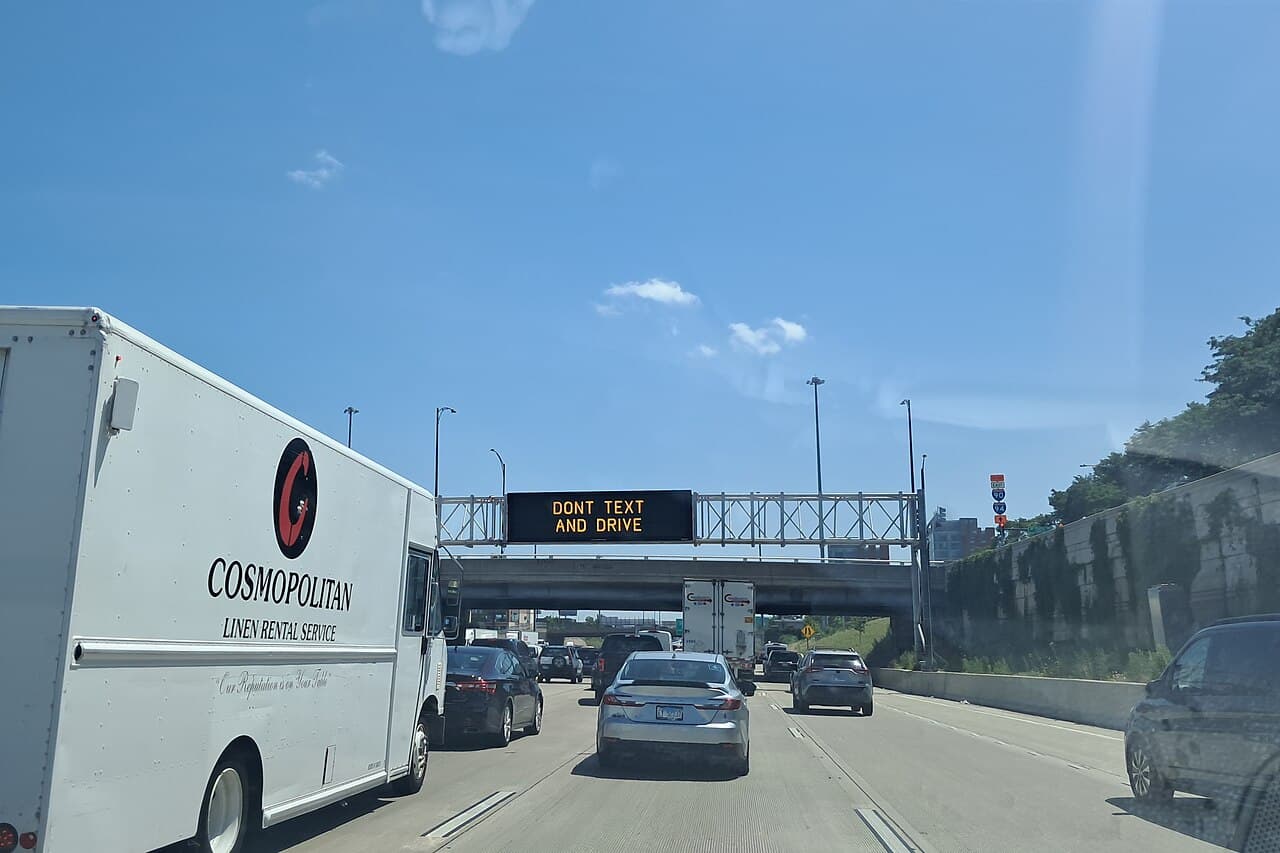
Distracted driving covers any activity that pulls a driver's attention off the road, and researchers split it into three types: visual (eyes off the road), manual (hands off the wheel), and cognitive (mind off the task), and some distractions combine several of these. The US Department of Transportation found texting while driving creates a crash risk 23 times higher than driving undistracted, and estimates that just reaching for a phone costs 4.6 seconds of attention, which at highway speed covers the length of a football field.
But the data complicates a comforting assumption: that switching to hands-free solves the problem. One study found that talking to a passenger is just as distracting as a hands-free phone call, and speaking on any call, hands-free or not, was found to cut focus on driving by 37 percent and raise crash risk by a factor of 2.5. Having kids in the car was measured as 12 times more distracting than a phone call. At the same time, some researchers caution that cognitive distraction from talking on a device is less dangerous than commonly believed compared with visual inattention, which remains the single most significant factor behind crashes and near-crashes.
Some distraction sources are less obvious still: extended use of newer in-car automation may make drivers trust it enough to disengage entirely, distracted driving accounts for 25 percent of crashes involving teenage drivers, and even something as unrelated as a new album dropping has been linked to a measurable rise in US traffic deaths on release day.
Quiz me
0/3
Recap
Where your attention is matters as much as where your eyes point: 'looked but did not see' is one of the most frequently coded factors in distraction-related fatal crashes.
Surprising fact · Crash reports use the phrase 'looked but did not see' for drivers whose eyes were on the road the whole time, yet still missed what was there.
Connects to
Sources (1)
No source, no claim. Every fact in this lesson (17 claims) cites at least one of these.