Why can't some equations be solved with a simple formula?
A teenager settled a 350-year-old question about equations by inventing a new branch of mathematics. He died in a duel at twenty, and his work waited a decade to be read.
▶ Start the storyBecause for general equations of degree five or higher, no such formula can exist. You probably learned the quadratic formula for ax² + bx + c = 0, and similar formulas for degree three (cubic) and degree four (quartic) were found in the 16th century. But the Abel–Ruffini theorem shows there is no solution in radicals for general equations of degree five or more: no way to write the answers using only arithmetic and roots, however long you search.
The person who explained why is one of the strangest stories in mathematics. Évariste Galois, while still a teenager, worked out the exact condition that decides whether a given polynomial can be solved by radicals. To do it, he had to invent new mathematical machinery: he coined the term 'group' and built what we now call group theory, studying the symmetries that an equation's solutions can be shuffled through without changing the equation itself. Whether a formula exists depends on whether that group of symmetries can be broken down in a particular orderly way, and for the general quintic it can't.
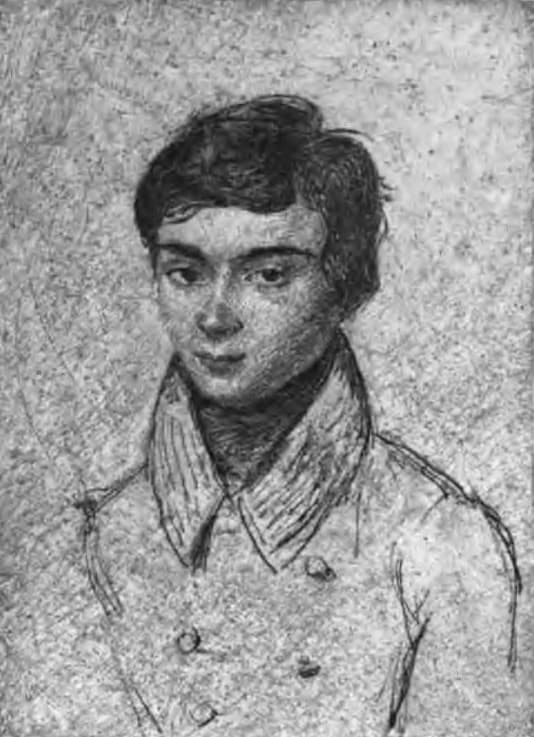
Galois never got to enjoy his discovery. A staunch Republican, he was arrested repeatedly for his activism, and shortly after a stint in prison he fought a duel for reasons that remain obscure; a letter he wrote five days before his death alludes to a broken love affair. He was shot in the abdomen, abandoned by his own seconds, and died the next day at twenty years old. His last words to his brother were: 'Don't weep, Alfred! I need all my courage to die at twenty!'
It took a decade for anyone to notice what he'd left behind. In 1842, the mathematician Joseph Liouville began studying Galois's unpublished papers and recognized their value the following year, and group theory went on to model crystals, the hydrogen atom and three of the four fundamental forces, and to become central to public key cryptography.
Quiz me
0/3
Recap
No formula using only roots and arithmetic can solve a general equation of degree five or higher; Galois showed that the answer depends on the group of symmetries of its solutions.
Surprising fact · Galois solved a 350-year-old problem as a teenager, coined the word 'group', then died in a duel at twenty with his work unrecognized for another decade.
Sources (3)
No source, no claim. Every fact in this lesson (17 claims) cites at least one of these.