Why did humans give up hunting and gathering to start farming?
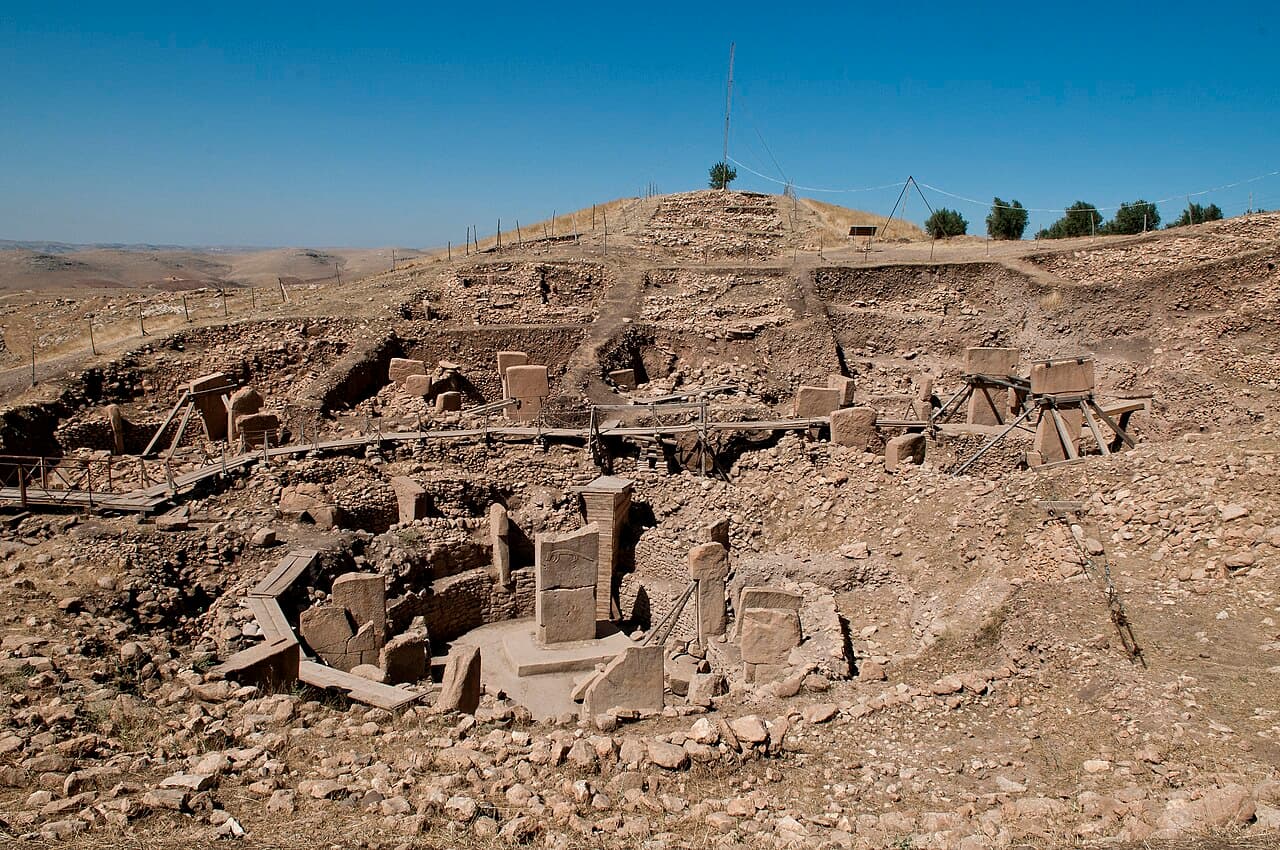
People in Turkey raised giant carved stone pillars about 11,500 years ago, right at the dawn of farming. Archaeologists still argue over whether they were farmers yet.
▶ Start the storyThere is no single reason, and researchers still argue about it. One idea is that the climate grew more stable after the last Ice Age. Another is that growing, settled groups needed more food than they could gather. A third says ambitious people wanted big harvests to throw feasts and show their power. These ideas can all be partly true.
What we know is when and where. Farming began around 11,700 years ago. It started separately in several places, such as the Fertile Crescent and Papua New Guinea. It was not one invention that spread from a single spot.
Farming was not a health win. Farmers ate more carbohydrates but less protein and fewer vitamins than hunter-gatherers. They got shorter. Average European men went from about 178 cm to about 165 cm. Heights only recovered in the twentieth century. Crowded villages and farm animals also spread disease faster.
178 → 165 cm
So why did farming stick? It produced more food from the same land, even if that food was poorer. That fed larger populations. It also freed some people to do other work, which in time made civilization possible.
Göbekli Tepe in Turkey shows how messy the story is. Its huge carved pillars date from around 9500 BCE. For years it looked like a temple built by hunter-gatherers before farming. Newer digs found houses, water supplies and lots of cereal processing. Did the monument or the farm come first? The debate is still open.
Quiz me
0/3
Recap
Farming fed more people, but for a long time, it didn't make them healthier.
Surprising fact · Average European height dropped by about 13 centimetres for men after farming began, and did not recover until the twentieth century.
Sources (2)
No source, no claim. Every fact in this lesson (14 claims) cites at least one of these.