Why did people queue outside a bank in 2007 to grab their own money?
In September 2007, savers queued outside Northern Rock's branches to pull out their money. It became the first British bank in 150 years to fail because of a bank run.
▶ Start the storyBecause they feared the bank would run out of cash, and the first in line would be the safest. Banks lend out most of what is deposited with them. They keep only a small share as cash. So if too many customers ask for cash at once, the bank simply doesn't have enough on hand.
That's what hit Northern Rock, a British mortgage lender. It had grown fast by borrowing short-term on money markets and lending long-term as mortgages. On 14 September 2007, it got emergency support from the Bank of England. Within 24 hours of the news, public confidence collapsed. Savers rushed to withdraw their money, and long queues formed outside its branches.
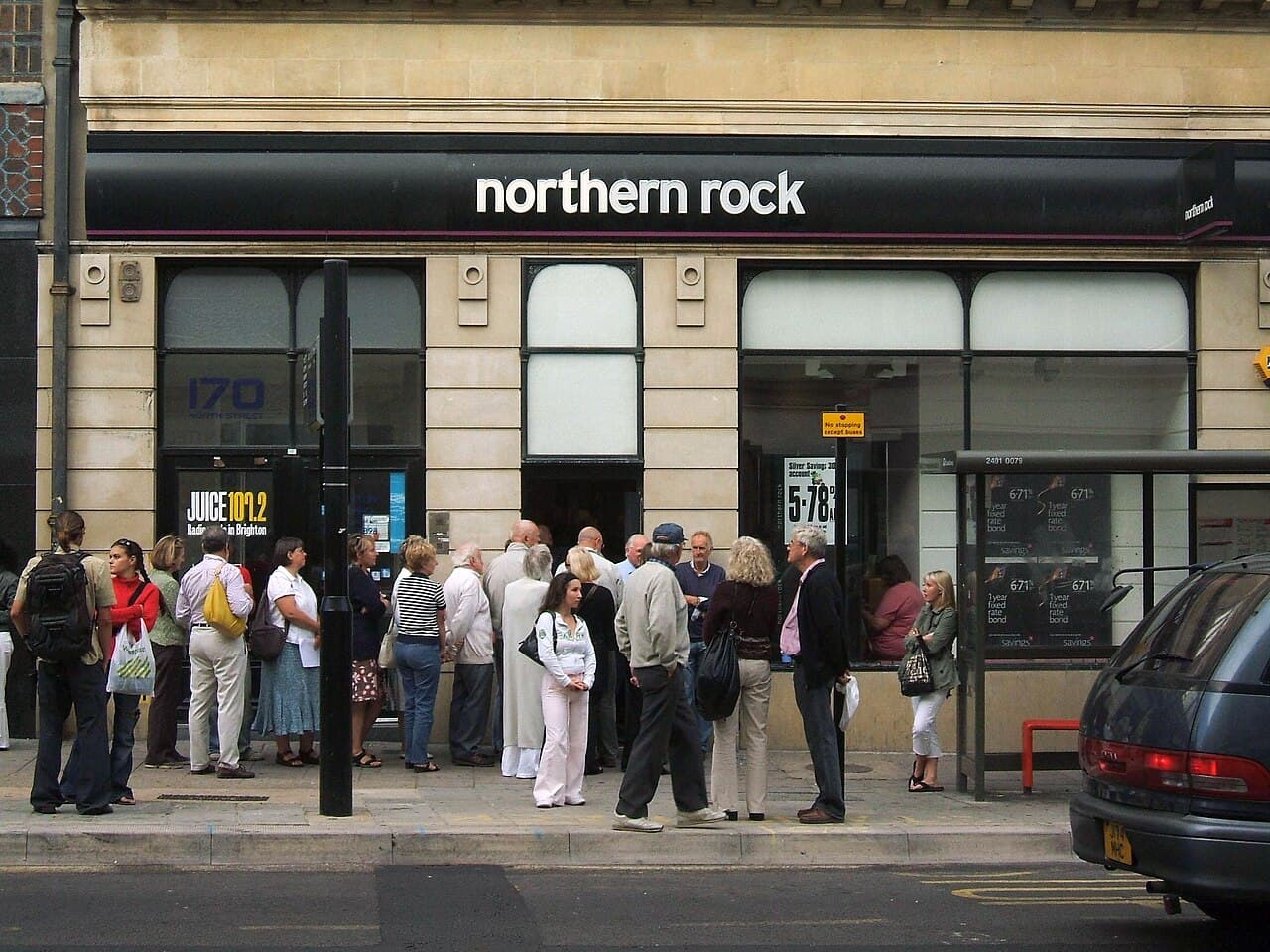
Each withdrawal made the next one more rational. As cash left, the chance the bank would really run out grew, so even more people joined the queue. Economists call this a self-fulfilling prophecy. Northern Rock became the first British bank in 150 years to fail from a bank run. With no buyer found, the government nationalised it in February 2008.
<24h
It was an early tremor of the 2008 financial crisis, which brought a wave of bank nationalisations. The defences against runs are well known: central banks acting as lender of last resort, and deposit insurance, which protects savings up to a limit even if a bank fails. With that protection, there's less reason to rush just because others do.
Quiz me
0/3
Recap
Once people believe a bank might run out of cash, rushing to withdraw first becomes individually rational — and collectively ruinous.
Surprising fact · Northern Rock's 2007 run was the first to bring down a British bank in 150 years.
Sources (2)
No source, no claim. Every fact in this lesson (13 claims) cites at least one of these.