Why do cats purr?
Your cat may have a special purr for breakfast, tuned to the pitch that makes human ears think of a crying baby.
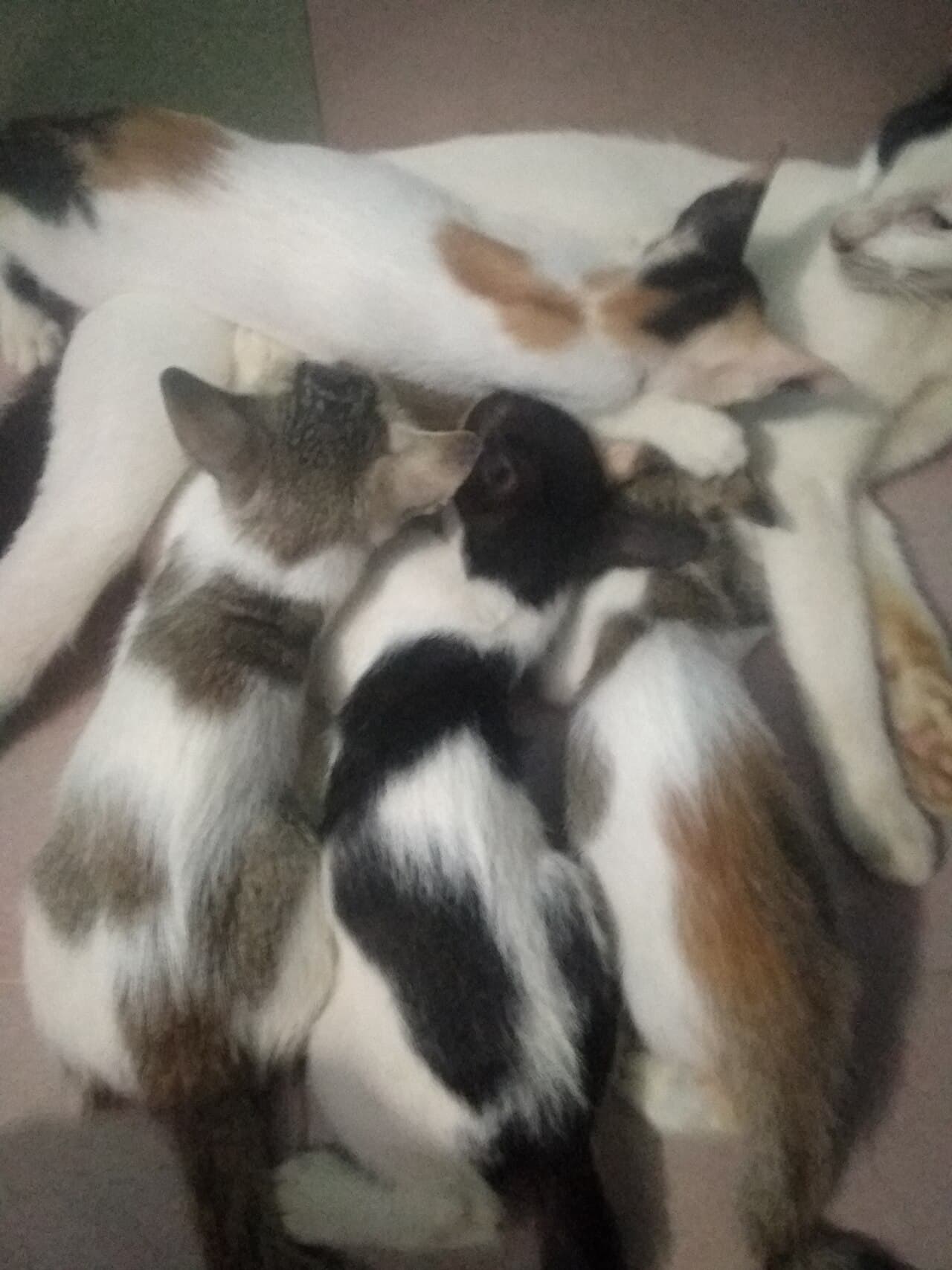
▶ Start the storyCats purr for more than one reason, and happiness is only part of the story. Purring starts in kittenhood: kittens purr while suckling, and purring may be a way for mother cats and nursing kittens to reassure each other. Grown cats keep the habit, purring with contentment when they're petted, relaxing or eating.
But cats also purr when they're distressed or in pain, for instance while giving birth. So a purr is less "I'm happy" than something like "I'm here, and I need or accept closeness". It has even been suggested that purring can soothe the cat and promote healing, though that remains a hypothesis.
The most surprising purr is the one aimed at you. Cats use a special "solicitation purr" to ask their caretakers for food, and it carries a high-frequency component that ordinary purrs lack. In one study, 50 people listened to both kinds at the same volume and consistently rated the food purrs as more urgent and less pleasant. Researchers suspect this high note taps into our sensitivity to cries that resemble a baby's.
Purr pitch: cheetah vs house cat
| Breathing out | Breathing in | |
|---|---|---|
| Cheetah | 20.9 Hz | 18.3 Hz |
| House cat | 22 Hz | 23.2 Hz |
And how do they make the sound? A purr is a soft buzz, like a rolled "r", at around 25 vibrations per second, produced continuously as the cat breathes in and out. For years the leading idea was a rhythm generator in the brain driving the muscles of the larynx. Then researchers in Vienna blew air through cat larynxes and heard them purr with no muscle contraction at all: pads of connective tissue in the vocal folds were enough to make the low sound.
Quiz me
0/3
Recap
A purr means "stay close" more than "I'm happy": cats purr when content, in pain, or asking for food.
Surprising fact · Cat larynxes purred with air alone, no muscle contraction needed.
Connects to
- 🐱 Why do cats meow at humans but not at each other?
- 🗣️ Is a low voice box what lets humans talk?
- Sensory bias
- Fundamental frequency
Sources (3)
No source, no claim. Every fact in this lesson (16 claims) cites at least one of these.