Why did doctors once refuse to believe that washing their hands saved lives?
In 1847 a Vienna doctor cut deaths in a maternity ward from 18% to about 2% with a hand wash. His colleagues ridiculed him.
▶ Start the storyDoctors rejected hand washing because, in the 1840s, nobody knew that invisible germs cause disease. The ruling idea was miasma: sickness came from "bad air" rising from rotting matter, recognizable by its stink. In that picture, a doctor's clean-looking hands could not possibly be dangerous, and some doctors were even offended, feeling that a gentleman's hands could not be unclean.
Ignaz Semmelweis, a young doctor in Vienna, saw something that did not fit. His hospital had two maternity clinics. In the one run by doctors and medical students, about one mother in ten died of childbed fever; in the one run by midwives, fewer than one in twenty-five. Women begged on their knees not to be sent to the doctors' ward, and some preferred to give birth in the street. Then, in 1847, a colleague died after cutting himself during an autopsy, with the same symptoms as the mothers. Semmelweis realized that doctors were coming straight from dissecting corpses to deliver babies, carrying something deadly on their hands.
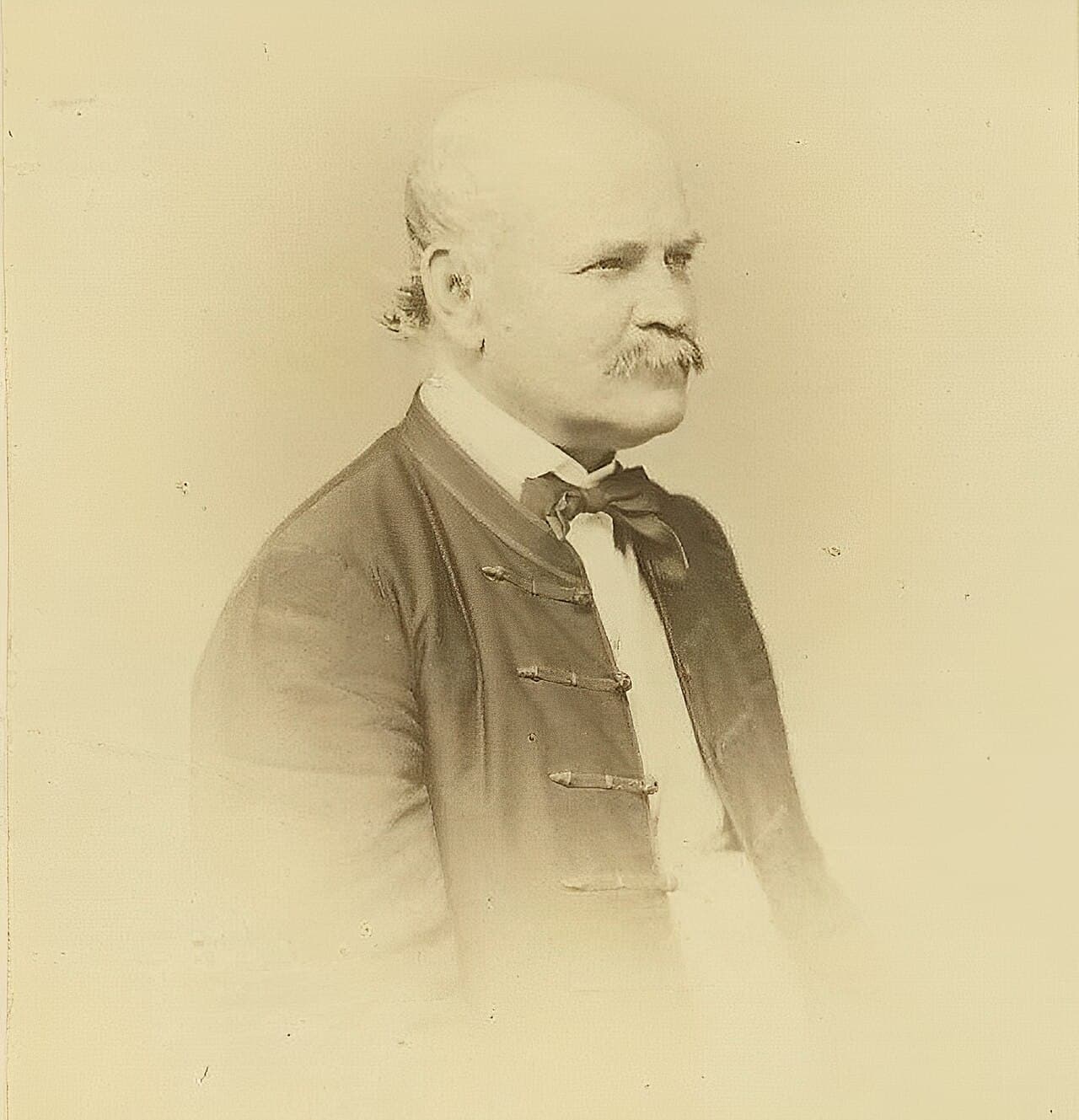
He ordered hand washing in chlorinated lime. Deaths fell from 18.3% in April to about 2% by June. Yet his idea was ignored or ridiculed, and he died in an asylum in 1865. Only later did Louis Pasteur and Robert Koch prove the germ theory that explained why he had been right.
Quiz me
0/3
Recap
Without a mechanism, even dramatic evidence can be dismissed: germ theory gave Semmelweis's hand wash its explanation.
Surprising fact · Semmelweis cut maternal deaths from 18.3% to about 2% in 1847, yet was ridiculed and died in an asylum.
Sources (2)
No source, no claim. Every fact in this lesson (22 claims) cites at least one of these.