Why did the ancient Egyptians call their country the 'black land'?
Egypt's own name for itself was Kemet, the black land, after the dark mud the Nile left behind every summer. Everything else was the red land.
▶ Start the storyBecause the Nile painted it black. Every summer the river flooded, and when the water drew back it left a layer of dark, mineral-rich silt on its banks. The Egyptians called the Nile Ar, 'black', after that sediment, and they called their country Kemet, 'the black land'. Everything beyond the reach of the flood was deshret, 'the red land' of the eastern and western deserts. The name is a map: Egypt was the strip the river fed.
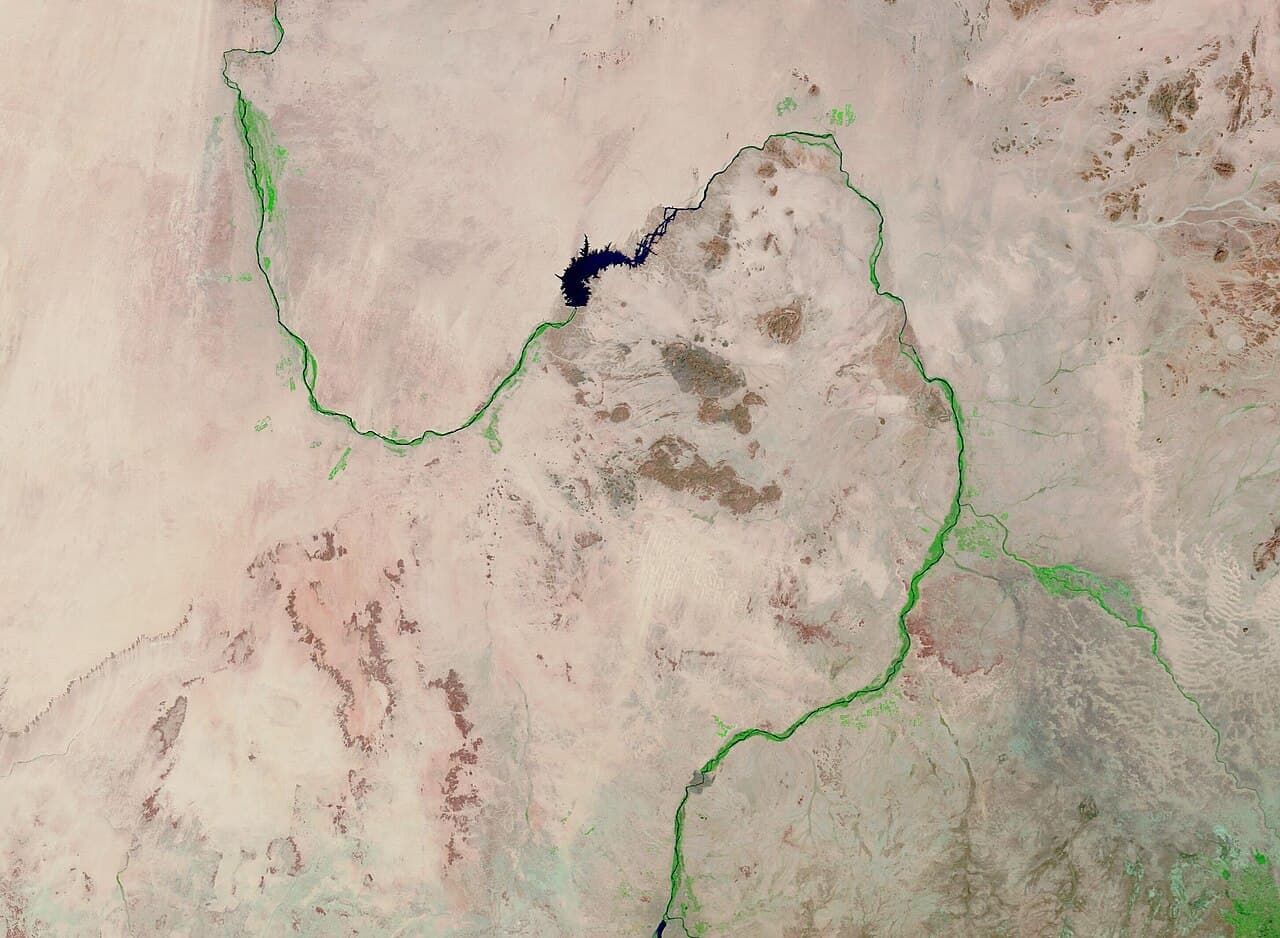
Rain hardly ever came, so the flood was everything. It arrived from June to September, carried by summer monsoon rains on the Ethiopian Highlands far to the south, and the year was organised around it in three seasons: flood, planting and harvest. The cycle was so regular that its start was timed by the rising of the star Sirius, which set the calendar. Religion explained it too: the floodwaters were the tears of the goddess Isis, mourning the murdered Osiris.
The flood's height decided whether people ate. Too low and fields stayed dry, bringing shortage or famine; too high and villages and canals were washed away. So priests measured the river with nilometers, and the year's flood set the level of taxes. Centuries later, after the Arab conquest, Amr ibn al-As reported that 16 cubits meant an abundant harvest, while 18 drowned a quarter of Egypt.
Quiz me
0/3
Recap
Black land where the Nile's mud reached, red land beyond: Egypt was the river's gift of silt.
Surprising fact · The flood's start was timed by the star Sirius, and its height, read on nilometers, decided taxes and famine.
Sources (4)
No source, no claim. Every fact in this lesson (21 claims) cites at least one of these.