Why do flamingos and carrots get their colour from the same pigments?
A flamingo isn't born pink. It eats its way there, using the same family of pigments that turns a carrot orange.
▶ Start the storyBecause both are coloured by carotenoids, and a flamingo gets its carotenoids by eating. A flamingo chick hatches greyish, not pink. The colour it's famous for only shows up later, and it comes from the same family of pigments, carotenoids, that paints a carrot orange, a tomato red and an egg yolk yellow: molecules so good at soaking up violet-to-green light that whatever reflects back looks deeply yellow, orange or red. Flamingos don't make this pigment themselves. They get it from the animal and plant plankton they eat, where it was first made by algae and other organisms, and enzymes in their liver break it down into the pigments that colour their feathers.
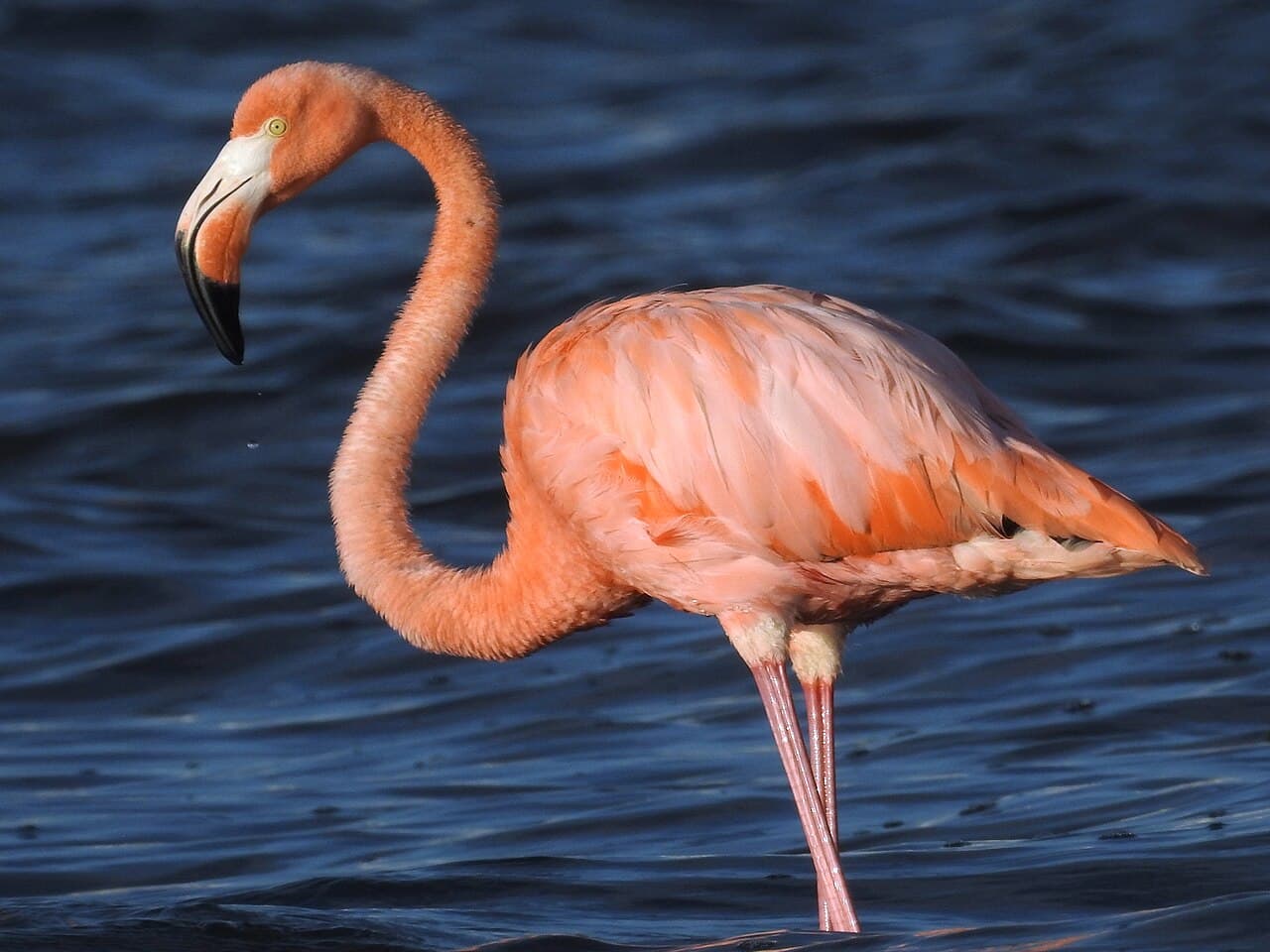
This makes flamingo colour a surprisingly honest signal: a bird that's been eating well and getting plenty of carotenoid-rich food turns a deep, saturated pink or red, while a malnourished or unhealthy bird stays pale, which is part of why a brighter flamingo is considered a more attractive mate. Captive flamingos show the link clearly: even when adequately fed, they may turn pale pink unless they get carotene at levels comparable to the wild.
Quiz me
0/3
Recap
A flamingo's pink feathers and a carrot's orange root come from the same class of pigment, carotenoids, just delivered through very different diets.
Surprising fact · Captive flamingos may turn pale pink unless they are fed carotene at levels comparable to the wild.
Sources (2)
No source, no claim. Every fact in this lesson (10 claims) cites at least one of these.