Why did gamblers lose millions betting against 26 blacks in a row?
In 1913, roulette hit black 26 times running at the Monte Carlo Casino — and gamblers who bet it "had" to turn red lost fortunes, because the wheel had no memory, and the house edge didn't care either way.
▶ Start the storyOn August 18, 1913, the roulette wheel at the Monte Carlo Casino landed on black 26 times in a row. Gamblers, reasoning that the streak had to be followed by red, bet against black and lost millions of francs. The odds of landing on the same color 26 times in a row are genuinely tiny — about 1 in 68.4 million — but that streak didn't make the 27th spin any more likely to be red. Each spin of a fair wheel is completely independent of the last, so the probability of red stayed exactly what it always was.
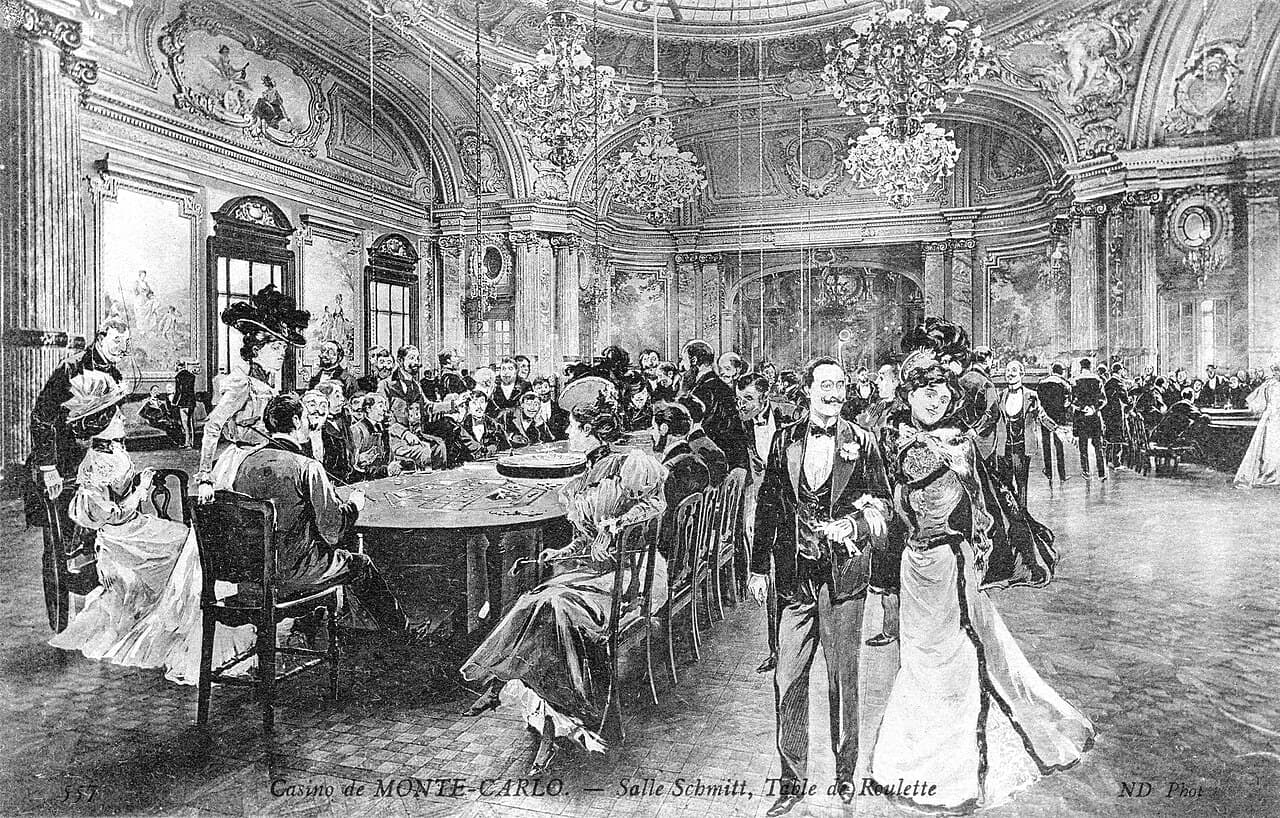
Psychologists call this mistake the gambler's fallacy: believing an outcome that hasn't happened in a while is somehow "owed." Daniel Kahneman and Amos Tversky traced it to a mental shortcut called the representativeness heuristic — people judge how likely something is by how similar it seems to what they have seen before, and a long run of one colour doesn't look the way randomness is supposed to look. It isn't just theoretical: in an analysis of security-camera recordings from a Nevada casino, gamblers became more and more likely to bet against a streak the longer it ran.
Here's what makes casinos unbothered by any of this: the house edge. That's the built-in percentage of each bet the casino expects to keep over time, baked into the rules themselves rather than into any streak. On American roulette, with two zero pockets, it's 5.26%; on European roulette, with just one zero, it drops to 2.7%. Other games vary even more — keno can run a house edge as high as 25%, some slot machines up to 15%, while some games have an edge as low as 0.3%.
That edge doesn't care whether players believe in lucky or unlucky streaks — it applies to every single spin, independent of what came before. The one real exception is games where outcomes aren't independent, like blackjack: once cards are dealt and not reshuffled, the odds of drawing a particular card actually do shift, which is exactly what makes card counting work. But on a roulette wheel, there's no streak, hot or cold, that changes the math — only the house edge grinding on, spin after spin.
House edge by casino game
| Typical house edge | |
|---|---|
| Best table games | 0.3% |
| European roulette | 2.7% |
| American roulette | 5.26% |
| Slot machines | 15% |
| Keno | 25% |
Quiz me
0/3
Recap
A streak changes nothing about the next independent spin, but the house edge changes the casino's expected profit on literally every spin.
Surprising fact · Gamblers lost millions of francs in 1913 betting against a 26-game black streak at Monte Carlo, even though the streak didn't change the odds of the next spin at all.
Sources (2)
No source, no claim. Every fact in this lesson (12 claims) cites at least one of these.