Why is tennis scored 15, 30, 40?
Tennis has counted this way for almost 600 years, and nobody is sure why. Even Erasmus called it a mystery.
▶ Start the storyHonestly, nobody knows for sure. The 15, 30, 40 scores are believed to come from medieval France, and they are old: the earliest reference is a ballad written by Charles d'Orléans in 1435, which mentions a score of 45, the ancestor of today's 40. By the early 16th century, the scholar Erasmus was already calling the way points were counted a mystery that even Parisian players had forgotten.
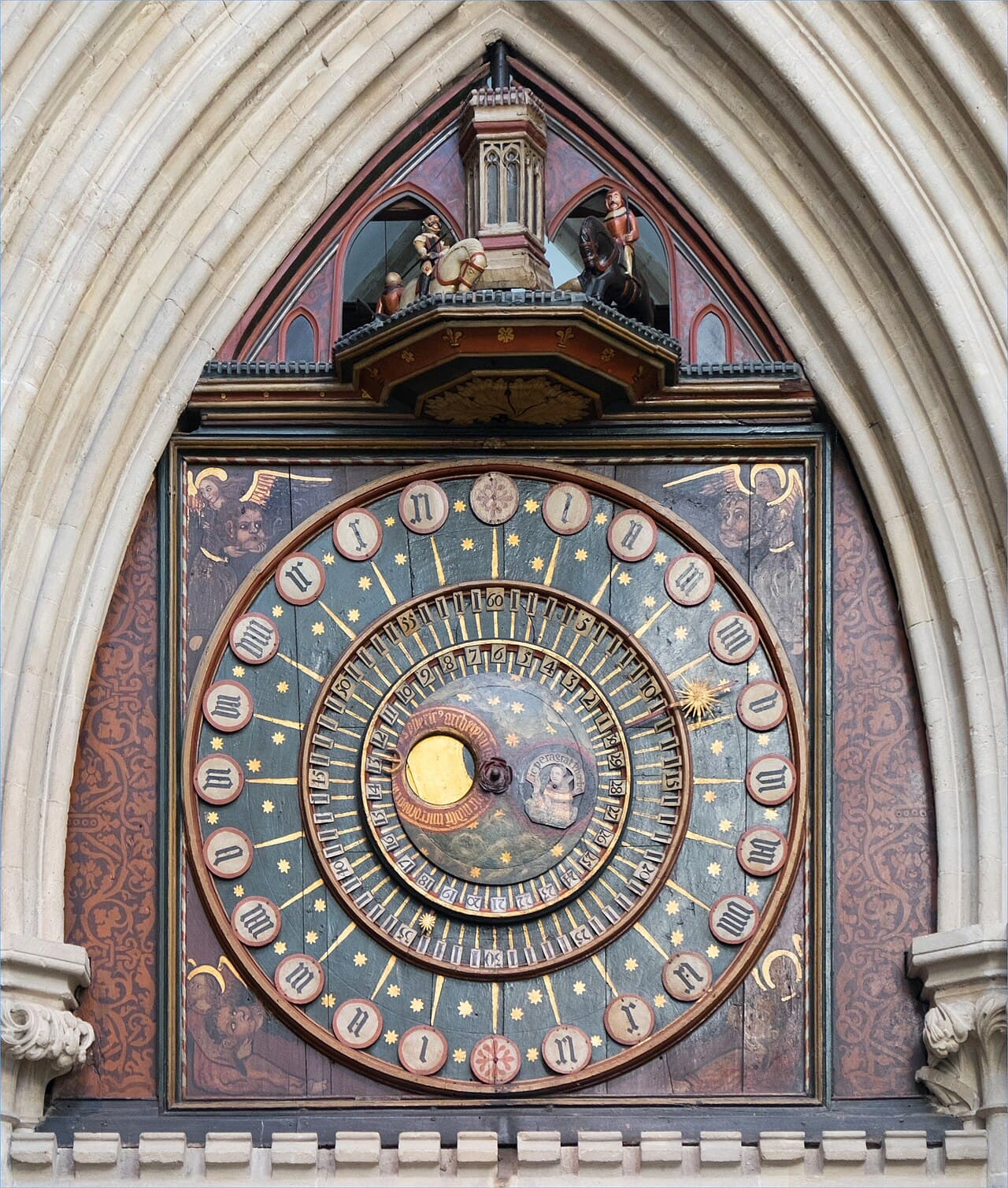
The most famous theory involves a clock. Players supposedly kept score on a clock face, moving the minute hand a quarter turn to 15, 30 and 45, with the game over at 60. To make room for deuce, 45 became 40, so that a player at 40 could move to 50 and then 60. The trouble is that in the 15th century most clocks only showed hours; minute hands became common only around 1690. Then again, a few clocks, like the one at Wells Cathedral from 1386, already had 60-minute dials and chimed every quarter hour.
1386
Wells Cathedral clock has a 60-minute dial
1435
Charles d'Orléans' ballad mentions 'quarante cinq'
Early 1500s
Erasmus calls the scoring a mystery
1555 & 1579
First written theories about the 15
c. 1690
Minute hands become common on clocks
Another theory points to jeu de paume, the French ancestor of tennis: the server supposedly moved 15 feet closer after the first point, 15 more after the second, and 10 more after the third. But those courts had no standard length, which makes the story shaky.
The most plausible idea is money. Counting in sixties was used for accounting and games for thousands of years, and medieval players and spectators regularly bet on tennis. Scoring in four steps of 15 to reach 60 matched the money of the day. Even 'love' for zero may come from 'playing for love', meaning for nothing, with no stakes.
Quiz me
0/3
Recap
15-30-40 is at least 590 years old, and even the 16th century had forgotten why.
Surprising fact · The clock theory is undermined by the fact that minute hands only became common around 1690.
Connects to
- Real tennis
- Sexagesimal
- Carolingian monetary system
- Wells cathedral clock
Sources (2)
No source, no claim. Every fact in this lesson (16 claims) cites at least one of these.