Why does your own voice sound so strange played back in a recording?
You've heard your own voice every day of your life, but the first time you hear a recording of it, it sounds like a stranger. Your skull has been lying to you.
▶ Start the storyLargely because of bone conduction: every day of your life, you've actually been hearing your own voice through two different paths at once, and a recording strips one of them away. Normally your voice reaches your ears partly through the air, like everyone else hears it, and partly through bone conduction, vibrations carried straight to your inner ear through the bones of your skull. Bones transmit lower frequencies more easily than air does, so that second path makes your voice sound lower and fuller to you than it actually sounds to anyone standing in front of you. A recording only captures the air-conducted version, the version everyone else has heard all along, which is why it comes out sounding thinner and higher than the voice you thought you had.
Bone conduction isn't just a quirk of hearing yourself talk; people have been putting it to deliberate use for centuries. Musicians tuning a stringed instrument can start a tuning fork vibrating and hold its stem between their back teeth, which lets them keep hearing the note through their jawbone while both hands stay free to adjust the strings. The same pathway has a long medical history: the first bone conduction hearing aids date to the 16th century, when the Italian physician Girolamo Cardano discovered that a rod held between someone's teeth and touched to a musical instrument let them hear the music despite their hearing loss. In the 1820s, the French physician Jean Marc Gaspard Itard refined the idea into the 'Rod of Itard', connecting the other end to another person's mouth instead of an instrument, so two people could talk through it.
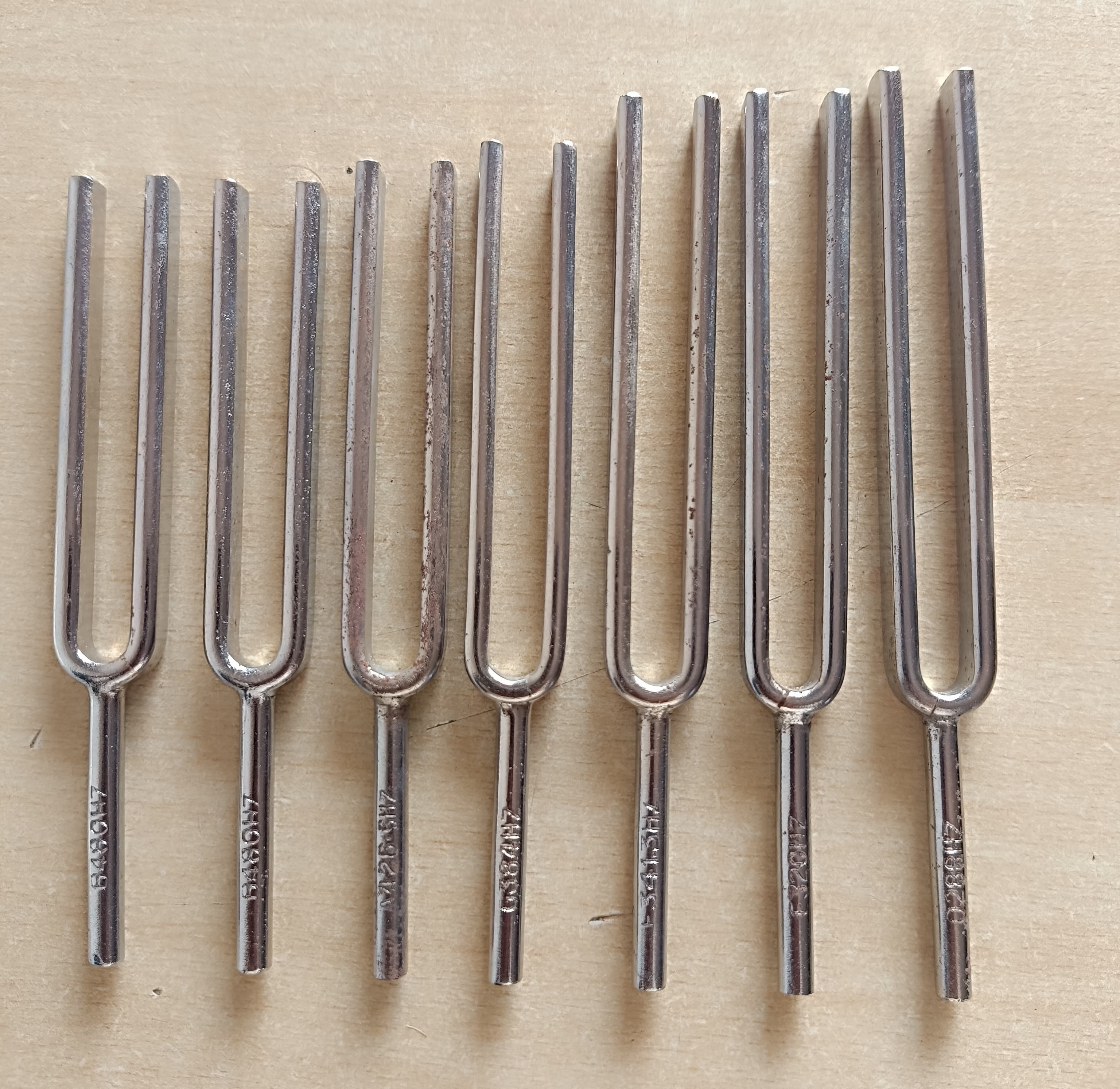
The idea kept evolving into the modern era. In 1923, the inventor Hugo Gernsback created a new kind of bone conduction hearing aid called the Osophone. By the 1970s, doctors in Gothenburg, Sweden, led by Anders Tjellström, were implanting a small vibrating plate directly into the skull's mastoid bone, letting an external processor send sound straight through bone to the inner ear; the first three patients received this implant, now known as a bone-anchored hearing aid, in 1977. Comparing how well someone hears through bone versus through their ear canal also helps audiologists identify problems of the middle ear.
Quiz me
0/3
Recap
You hear yourself through both air and bone at once, and bone favors low frequencies, which is why your own voice always sounds lower and fuller to you than it does to everyone else, or to a microphone.
Surprising fact · Bone conduction hearing aids go back to the 16th century, starting as a simple rod held between the teeth, centuries before the 1970s invention of implants that vibrate the skull directly.
Sources (2)
No source, no claim. Every fact in this lesson (12 claims) cites at least one of these.