Why did the US drop atomic bombs on two Japanese cities instead of one?
There was never a separate decision to bomb Nagasaki. And historians still argue whether it was the bombs, or the Soviet declaration of war that came between them, that made Japan give up.
▶ Start the storyThere was never a separate decision to bomb a second city. The attack order, issued on 25 July 1945, already said more bombs would be delivered "as soon as made ready." Hiroshima was bombed on 6 August. Japan did not surrender. The Nagasaki raid had been planned for 11 August, but it was moved up two days to avoid bad weather. On 9 August a second bomb fell. Only on 10 August was a halt ordered: no further bomb without the President's express authority.
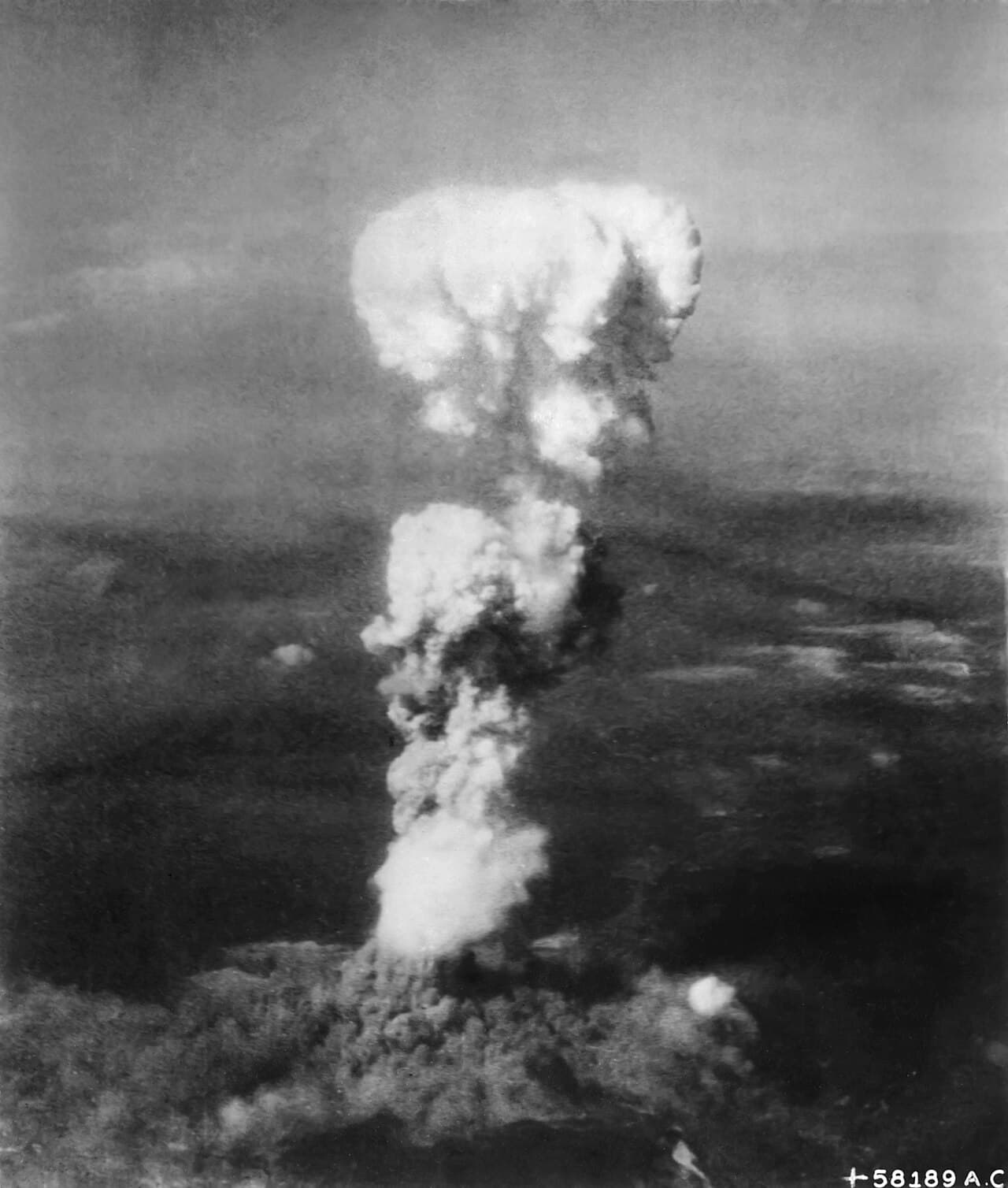
Japan had already ignored the Allies' Potsdam ultimatum of 26 July, which threatened "prompt and utter destruction." Then two blows landed almost together. The Soviet Union declared war on 8 August and invaded Manchuria, and Nagasaki was bombed the next day. Japan announced its surrender on 15 August. Historians still argue over which blow mattered more.
26 Jul
Potsdam Declaration demands surrender
6 Aug
Hiroshima bombed
8 Aug
USSR declares war on Japan
9 Aug
Nagasaki bombed; Soviets invade Manchuria
10 Aug
No more bombs without the President's order
15 Aug
Japan announces surrender
2 Sep
Formal surrender signed
Supporters of the bombings argue they ended the war and prevented an invasion of Japan that would have caused massive casualties on both sides. Japan had correctly predicted the invasion plan and prepared to resist it. Critics argue the bombs were unnecessary, since a naval blockade and conventional bombing might have forced surrender, and some call them a war crime. Historian Tsuyoshi Hasegawa contends the Soviet entry into the war, more than the bombs, made Japan capitulate.
The death toll is a range, not one number, because many people died weeks or months later from burns, radiation sickness and other injuries. Within two to four months, an estimated 90,000 to 166,000 people died in Hiroshima and 60,000 to 80,000 in Nagasaki. Roughly half died on the first day. Most of the dead were civilians.
Quiz me
0/3
Recap
Credible death toll estimates span a wide range, roughly 150,000 to 246,000, because so many victims died from burns and radiation in the months after the bombings, not only on the day itself.
Surprising fact · The second bombing needed no new decision: the original order covered further bombs 'as soon as made ready,' and a halt requiring the President's express authority came only on 10 August.
Connects to
- 🛳️ How did the D-Day landings fool Hitler about where they'd strike?
- ⚖️ Could the victors fairly judge the leaders they'd defeated?
- ☢️ How did the Manhattan Project keep 130,000 workers in the dark?
- 🧊 Why was the Cold War called 'cold'?
- ♟️ How can you predict what people will do when each one's best move depends on the others?
Sources (2)
No source, no claim. Every fact in this lesson (18 claims) cites at least one of these.