How did the Manhattan Project keep 130,000 workers in the dark?
Nearly 130,000 people worked on the atomic bomb, most of them without knowing the purpose of their jobs, some in a town ringed by a fence with seven gates. One Soviet spy got in anyway.
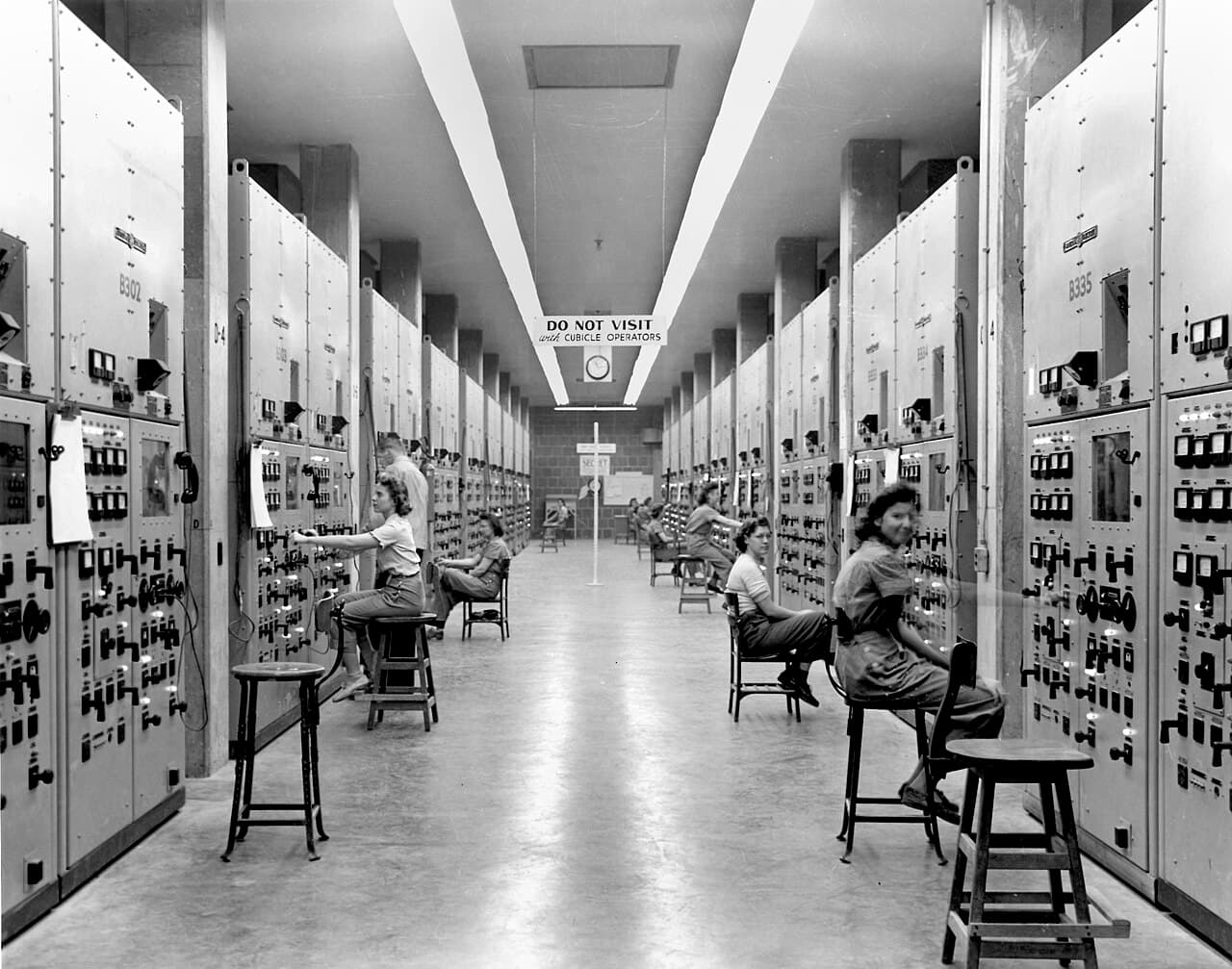
▶ Start the storyBy telling each person only what they needed to know. Under a mandate of "absolute secrecy" from President Roosevelt, the very existence of the Manhattan Project, the World War II program that built the first nuclear weapons, was meant to stay hidden, even though it employed nearly 130,000 people at its peak. Its director, General Leslie Groves, adopted an extreme version of compartmentalization, which he called "the very heart of security": each man should know everything he needed to do his job, and nothing else. In 1945, Life magazine estimated that probably no more than a few dozen men knew the full meaning of the project; the more than 100,000 others "worked like moles in the dark".
Workers were warned that revealing secrets could cost them 10 years in prison, and they watched dials and switches without knowing the purpose of their jobs. The policy clashed with the norms of many scientists, who argued science could not work that way, and officials battled journalists, Congressmen and curious neighbours; over 1,500 "loose talk" cases were investigated during the war. Secrecy was physical too: in 1942 the government forcibly bought nearly 60,000 acres of Tennessee farmland for Oak Ridge, a planned city for 75,000 residents where everyone wore badges, ringed by guard towers and a fence with seven gates.
It largely worked on the press: the head of the Office of Censorship called the project "the best-kept secret of the war". It did not stop espionage. Klaus Fuchs, a physicist deeply involved in designing the implosion bomb at Los Alamos, was the most successful Soviet spy, and he was not identified until 1950. More spies were uncovered after him, including Harry Gold, David Greenglass, and Julius and Ethel Rosenberg.
Quiz me
0/3
Recap
General Groves's rule was that each person should know only what they needed to do their job, which hid the project from the public but could not stop a well-placed spy from learning more than he should.
Surprising fact · Life magazine estimated in 1945 that probably no more than a few dozen men knew the full meaning of a project that employed nearly 130,000 people.
Sources (2)
No source, no claim. Every fact in this lesson (18 claims) cites at least one of these.