How did a broken mechanical shark invent the summer blockbuster?
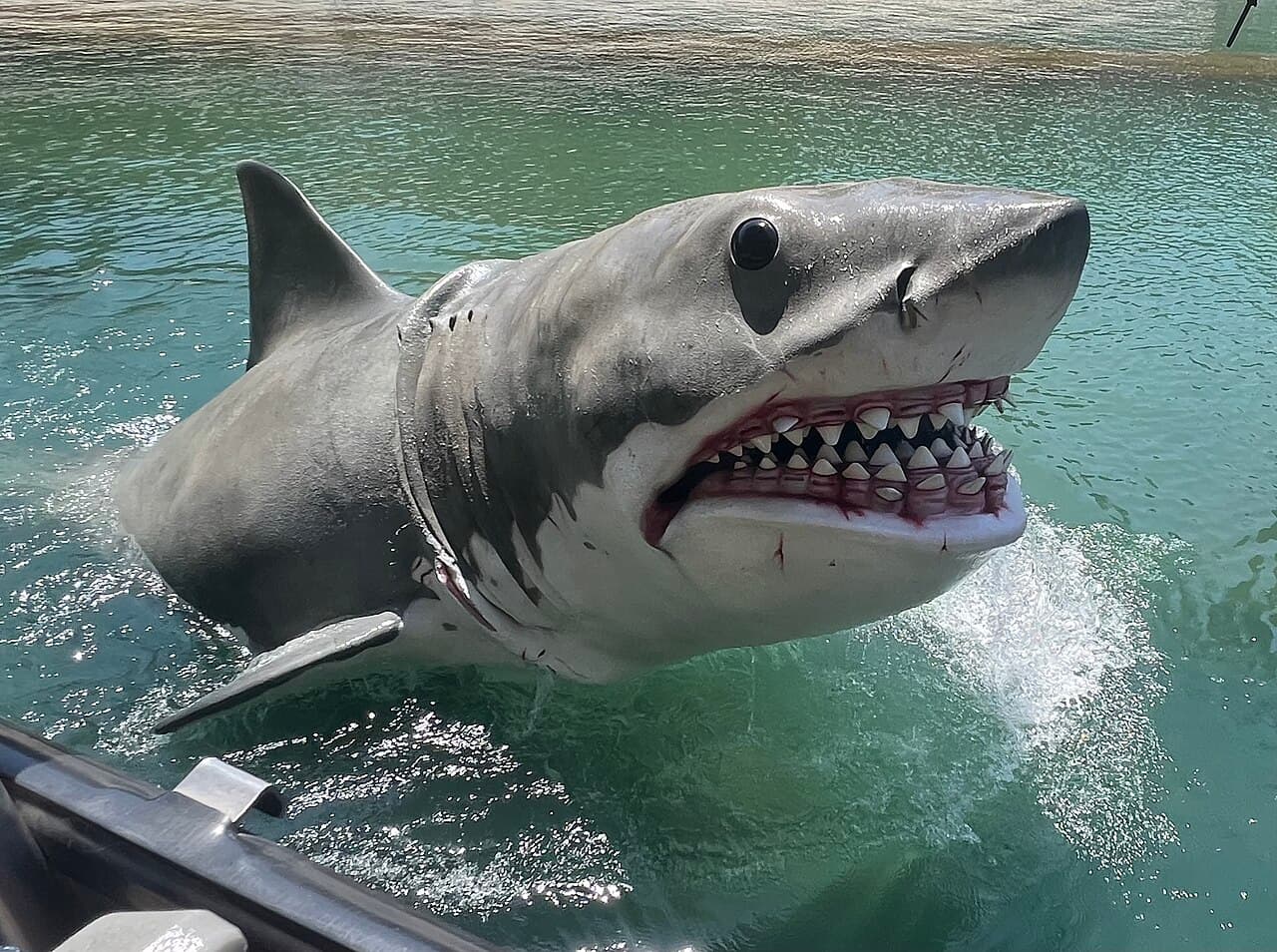
Jaws is terrifying partly because you barely see the shark. That wasn't the plan: the shark kept breaking.
▶ Start the storyBy breaking down so often that Steven Spielberg had to hide it, which made Jaws scarier, and then by opening everywhere at once in June 1975. Jaws was the first major film shot on the ocean, and its three mechanical sharks, nicknamed Bruce, kept failing: their hoses took on salt water, their frames cracked and their skin corroded. So Spielberg, then just 26, shot many scenes with the shark only hinted at, by floating yellow barrels or a lone dorsal fin, while John Williams's two-note theme signalled that danger was near. Spielberg later called the broken shark a godsend that made him more like Alfred Hitchcock.
The shoot was a nightmare. Planned for 55 days, it took 159. The budget, according to producer David Brown, was 4 million dollars, and the film ended up costing 9 million. The crew nicknamed it Flaws, and Spielberg thought his career was over.
Planned
- 55 days of shooting
- A $4 million budget
- A working mechanical shark
What happened
- 159 days of shooting
- A $9 million final cost
- Sharks that kept breaking down
Then Universal did something new with the release. Instead of opening slowly in a few cities, Jaws opened on 464 screens across North America at once, backed by an unprecedented 700,000 dollars of national TV advertising. In 78 days it overtook The Godfather as the biggest hit in North American history. In 1975 the word blockbuster attached itself to Jaws, and the wide summer release with heavy TV advertising became Hollywood's standard model.
One caveat: Jaws was not the very first film to saturate the airwaves, a common misconception. A month earlier, Columbia had tried something similar with the thriller Breakout.
Quiz me
0/3
Recap
A broken shark made Jaws scarier, and a wide release with TV ads made it the first summer blockbuster.
Surprising fact · The mechanical sharks failed so often that Spielberg had to hint at the shark with barrels and fins, which made the film more suspenseful.
Sources (2)
No source, no claim. Every fact in this lesson (22 claims) cites at least one of these.