How does a network of fake neurons learn to recognise a cat?
In 1958 the New York Times called a learning machine 'the embryo' of a computer that would walk, talk and be conscious. Its descendants now write and draw.
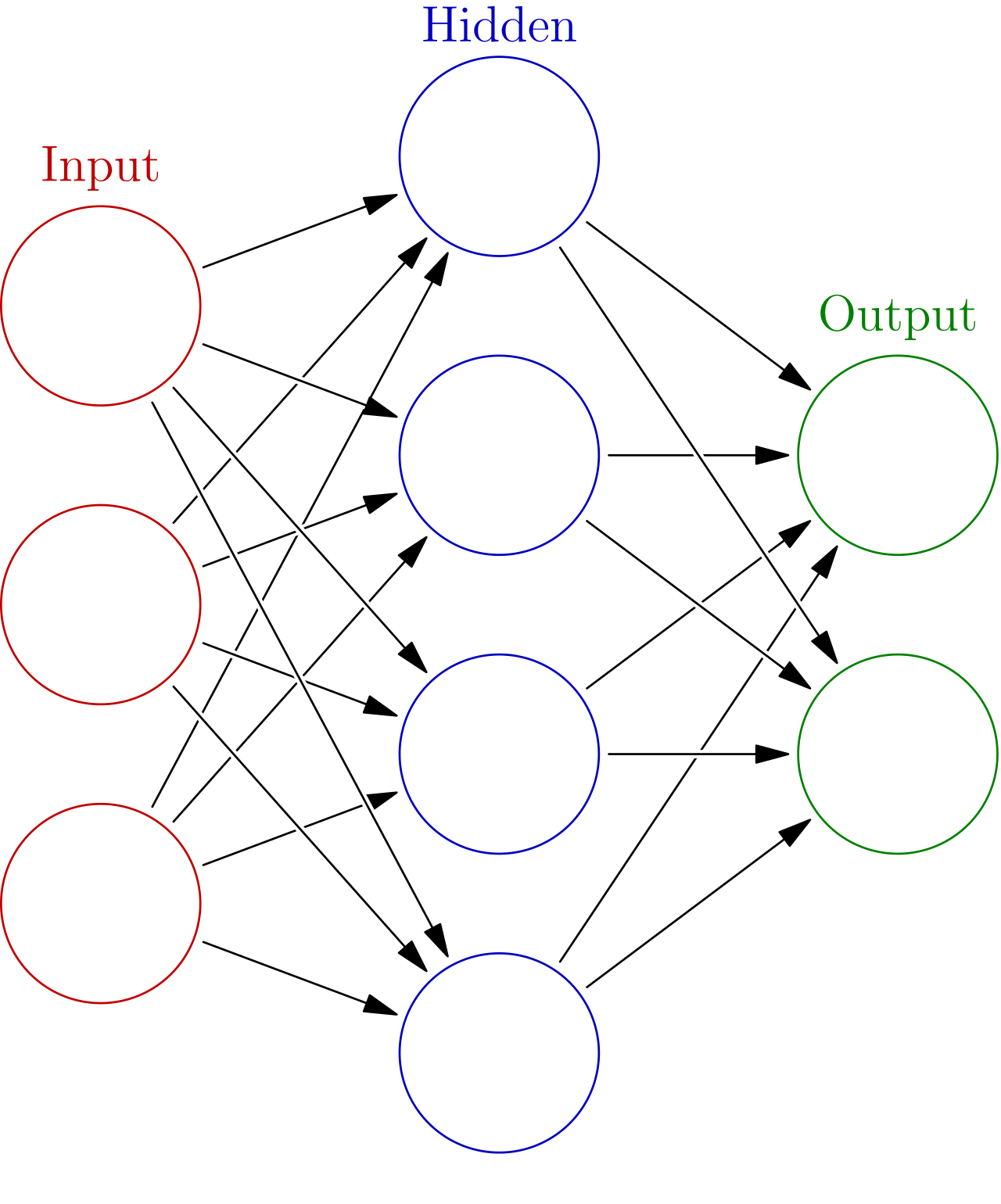
▶ Start the storyA neural network learns to recognise a cat by adjusting a great many numbers, called weights, until its answers stop being wrong. It is a computer model loosely inspired by the brain: artificial neurons pass numbers to one another along connections, and each connection has a weight that sets how strongly one neuron's signal counts for the next. Signals flow from an input layer, through hidden layers, to an output layer. Training means nudging the weights so the output gets closer to the right answer.
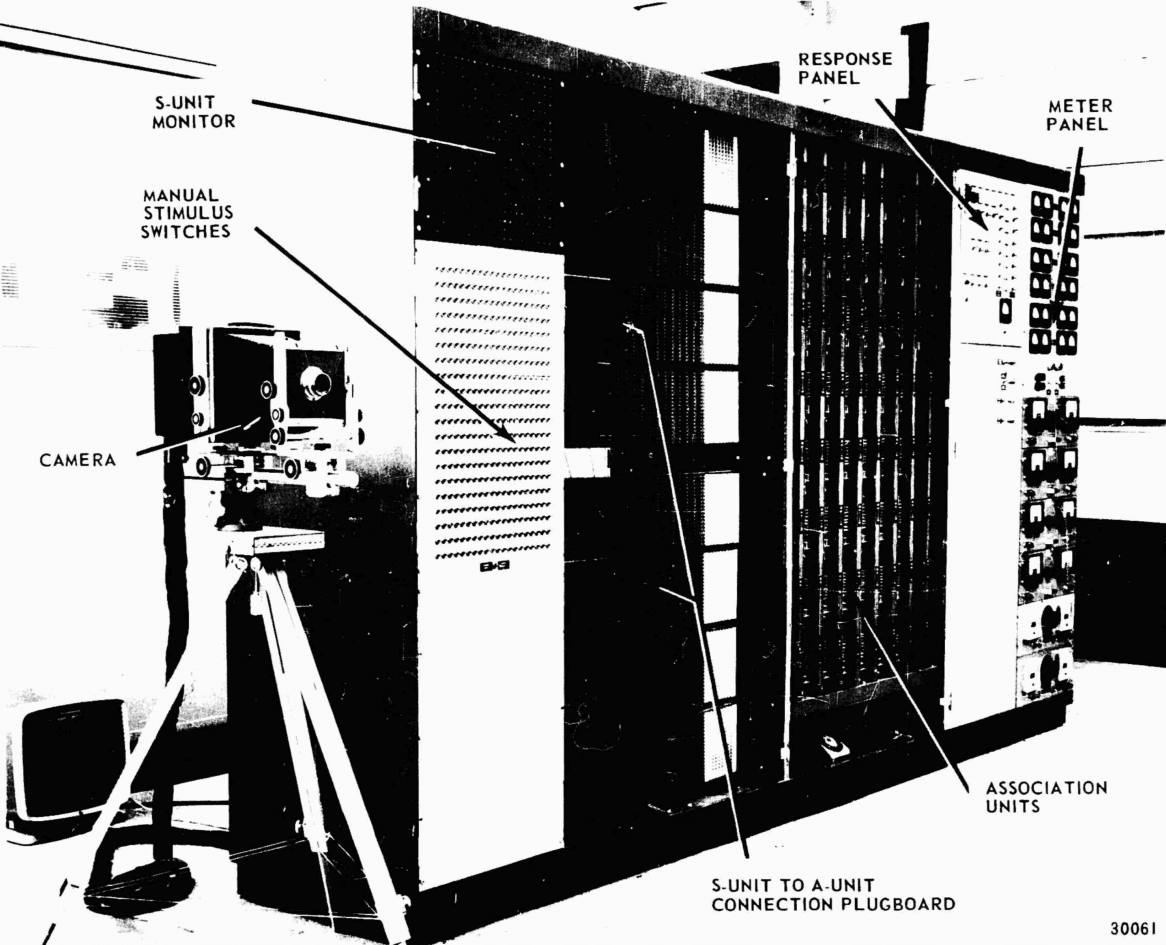
The idea is old. In 1958 the psychologist Frank Rosenblatt described the perceptron, one of the first neural networks ever built, with funding from the US Navy. Its machine version, the Mark I Perceptron, looked at the world through 400 light sensors, and electric motors turned knobs to adjust its weights as it learned. After a Navy press conference, The New York Times called it the embryo of a computer that would walk, talk, see and be conscious of its existence.
Reality was humbler. Early networks with a single layer could only solve simple problems, and a 1969 book by Marvin Minsky and Seymour Papert cooled interest for years. The revival came in the 1980s with backpropagation, a way to share out blame for each error backwards through many layers. With graphics chips and huge datasets, networks then took off: in 2012 one learned to recognise cats from unlabelled images alone. Today they power chatbots, image generators and robots.
Quiz me
0/3
Recap
A neural network learns by nudging its weights to shrink its errors, layer by layer.
Surprising fact · In 1958 The New York Times reported the perceptron as the embryo of a computer that would one day be conscious of its existence.
Sources (2)
No source, no claim. Every fact in this lesson (21 claims) cites at least one of these.