How can one author's name actually be many different writers?
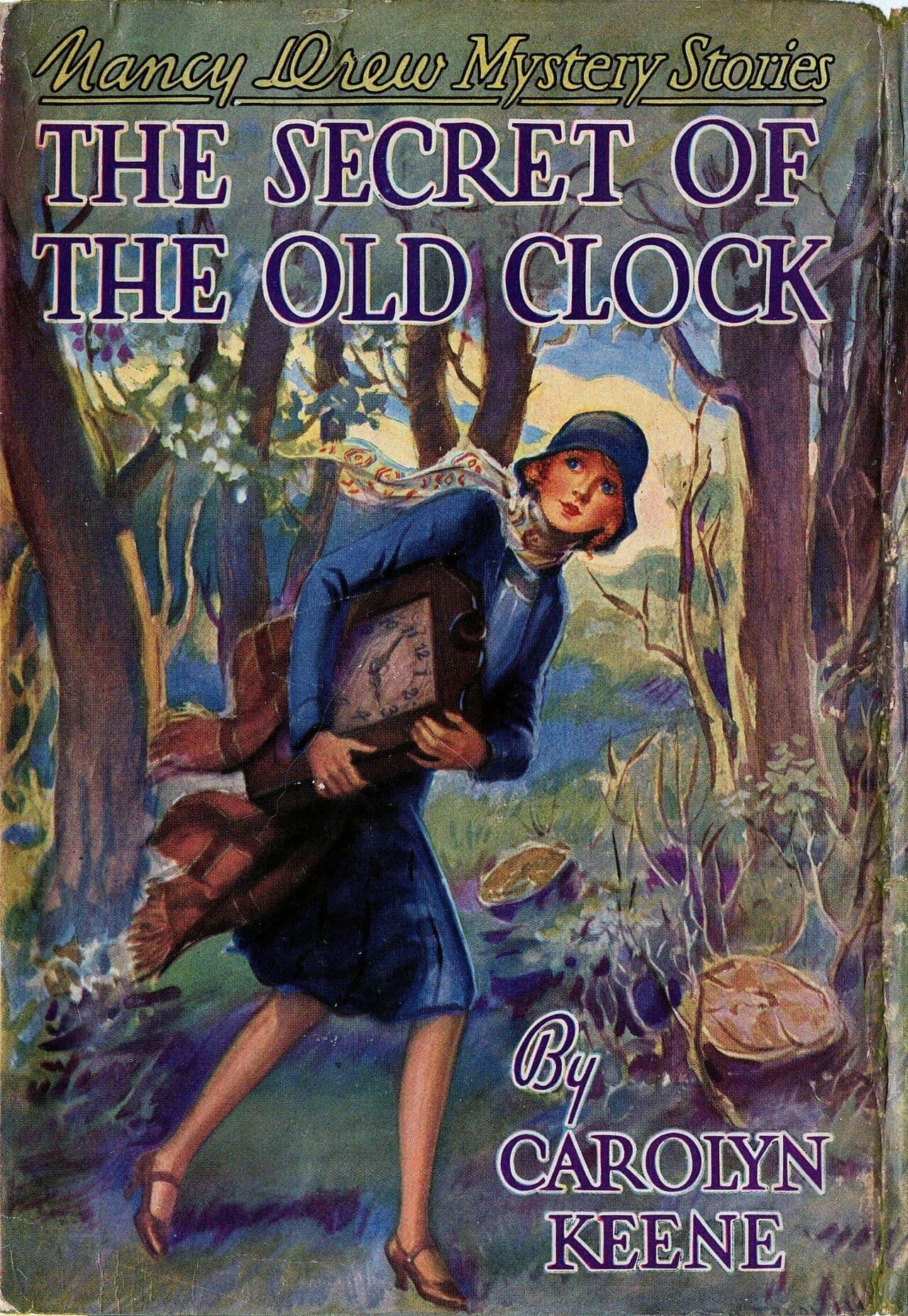
Carolyn Keene has signed Nancy Drew mysteries since 1930. She never existed: her books were written by hired ghostwriters sworn by contract to secrecy.
▶ Start the storySince 1930, readers have trusted Carolyn Keene to deliver a new Nancy Drew mystery. There is no Carolyn Keene, and there never was. Nancy Drew mystery books are published as though they were written by Carolyn Keene, the Hardy Boys books as the work of Franklin W. Dixon, and the Bobbsey Twins series credited to Laura Lee Hope, although numerous authors have been involved in each series. These are what's called collective names, or house names: one pen name used for works published by the same publishing house even though more than one author contributed to the series. Nancy Drew's first writer, Mildred Wirt, was paid $125 a book and had to sign away all rights and keep the secret.
The pen name, more broadly, is a versatile tool, used to make an author's name more distinctive, disguise their gender, distance them from other work, protect them from retribution, or merge multiple people into a single identifiable author. That last use covers some surprising partnerships. Frederic Dannay and Manfred B. Lee published their mystery novels under the pen name Ellery Queen, a name that, from 1961 on, also covered thrillers by ghostwriters they commissioned. More recently, Erin Hunter, author of the Warriors series, is actually a collective pen name for four different people: three novelists and an editor.
Sometimes the shared name is built out of the collaborators themselves. The credited author of the science-fiction series The Expanse, James S. A. Corey, is an amalgam of the middle names of two collaborating writers, Daniel Abraham and Ty Franck, with the initials belonging to Abraham's own daughter. Even politics got in on it: in the 1780s, the Federalist Papers were written under the pseudonym Publius by three different men, Alexander Hamilton, James Madison, and John Jay, who chose a name recalling the founder of the Roman Republic. And mathematics has its own version: Nicolas Bourbaki is the shared pseudonym of a group of mostly French-connected mathematicians, writing up their field as a single fictional author.
Of course, pen names also protect a single real person, often a woman working in a field that doubted her. Mary Ann Evans became George Eliot, and Charlotte, Emily, and Anne Brontë published as Currer, Ellis, and Acton Bell, so that before any reader knew who Carolyn Keene or Ellery Queen really were, writers were already using invented names to get taken seriously at all.
Quiz me
0/3
Recap
A name on a book's cover tells you what the publisher wants you to see, not necessarily how many real people actually wrote the words inside.
Surprising fact · Carolyn Keene, author of the Nancy Drew mysteries, never existed; her books were written by hired ghostwriters who were bound by contract to keep quiet.
Sources (4)
No source, no claim. Every fact in this lesson (14 claims) cites at least one of these.