How do children turn a rough trade jargon into a full language?
Adults cobble together a patchy mix of words just to trade. Their children, hearing only that patchwork, somehow grow up speaking a complete language nobody ever actually taught them.
▶ Start the storyA pidgin is a patchy, makeshift way of talking that adults throw together when they share no common language but still need to trade or work alongside each other — a simplified mix of the languages involved, without enough structure to work as a full language. The remarkable thing is what happens next: when children grow up hearing nothing but that patchy pidgin around them, they don't just repeat its gaps and shortcuts. According to linguist Derek Bickerton, those children use their own innate capacity for language to fill in the missing structure themselves, turning an incomplete pidgin into a full, grammatically consistent creole. The broader process, a pidgin becoming the native language of a new generation, is called nativization.
About a hundred creole languages have emerged this way since 1500, most of them built from European languages like English and French because of colonization and the Atlantic slave trade. Not every linguist agrees creoles form only through this exact pidgin-to-child pipeline, though: Salikoko Mufwene argues that pidgins and creoles actually arise under quite different circumstances. In his account, pidgins grew up in trading posts where people kept their own native languages for daily life and used the pidgin only for business, while creoles took shape in colonies where settlers lived alongside enslaved people in much closer, constant contact, with the settlers absorbing words and features from the enslaved people's languages until the result became an everyday vernacular, not just a trade tool.
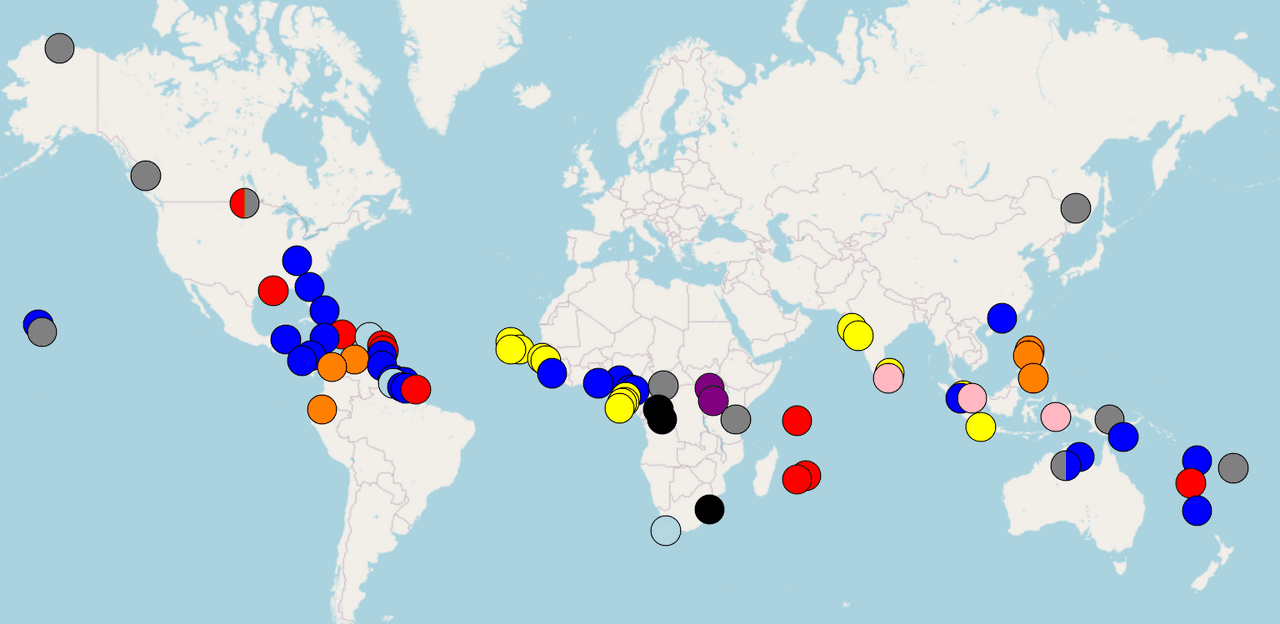
For a long time, that origin story worked against creoles rather than for them. Like most non-official and minority languages, creoles were widely dismissed as degenerate versions of their parent languages, a prejudice that pushed many of them toward extinction. That has shifted in recent decades: creoles are now studied seriously as languages in their own right, and some, including Haitian Creole — which linguist John McWhorter has called 'the most creole of creoles' because it has little or no inflection, little or no tone, and transparent word formation — have gained official or semi-official status in the places where they're spoken.
Quiz me
0/3
Recap
A pidgin becomes a creole through nativization: the moment it becomes a child's native first language rather than an adult's improvised second one.
Surprising fact · Derek Bickerton argues that children, not adults, effectively invented creole grammars on plantations where only unstructured pidgins were spoken around them.
Sources (1)
No source, no claim. Every fact in this lesson (12 claims) cites at least one of these.