How did a tiny, soggy republic become a world trading power?
In the 1600s, one of Europe's leading commercial powers wasn't a vast empire. It was a small, canal-laced republic running on windmills, peat, and shares in a trading company.
▶ Start the storyA small republic, born from provinces in revolt against the king of Spain, became one of the leading commercial and maritime powers of 17th-century Europe. The Dutch Republic's edge was finance, ships, and cheap energy. In 1602 the Dutch East India Company (the VOC) became one of the first multinational corporations, raising money by selling shares, which created the Amsterdam Stock Exchange. A few years later the Bank of Amsterdam opened, a precursor to the modern central bank. Cheap energy from windmills and from peat, easily carried by canal to the cities, made its trade and industry possible.
That capital bought the Republic a stranglehold on trade: Dutch ships carried well over half of all European shipping tonnage for most of the century, and from 1640 the VOC held the sole right to trade with Japan through the island of Dejima, making the Dutch the only Western country Japan dealt with until 1854. Wealth went hand in hand with a rare freedom of thought. Bertrand Russell later wrote that it was impossible to exaggerate how important Holland was as the one country with freedom of speculation: Descartes lived there for twenty years, Hobbes had his books printed there, Locke took refuge there, and Spinoza could hardly have worked anywhere else.
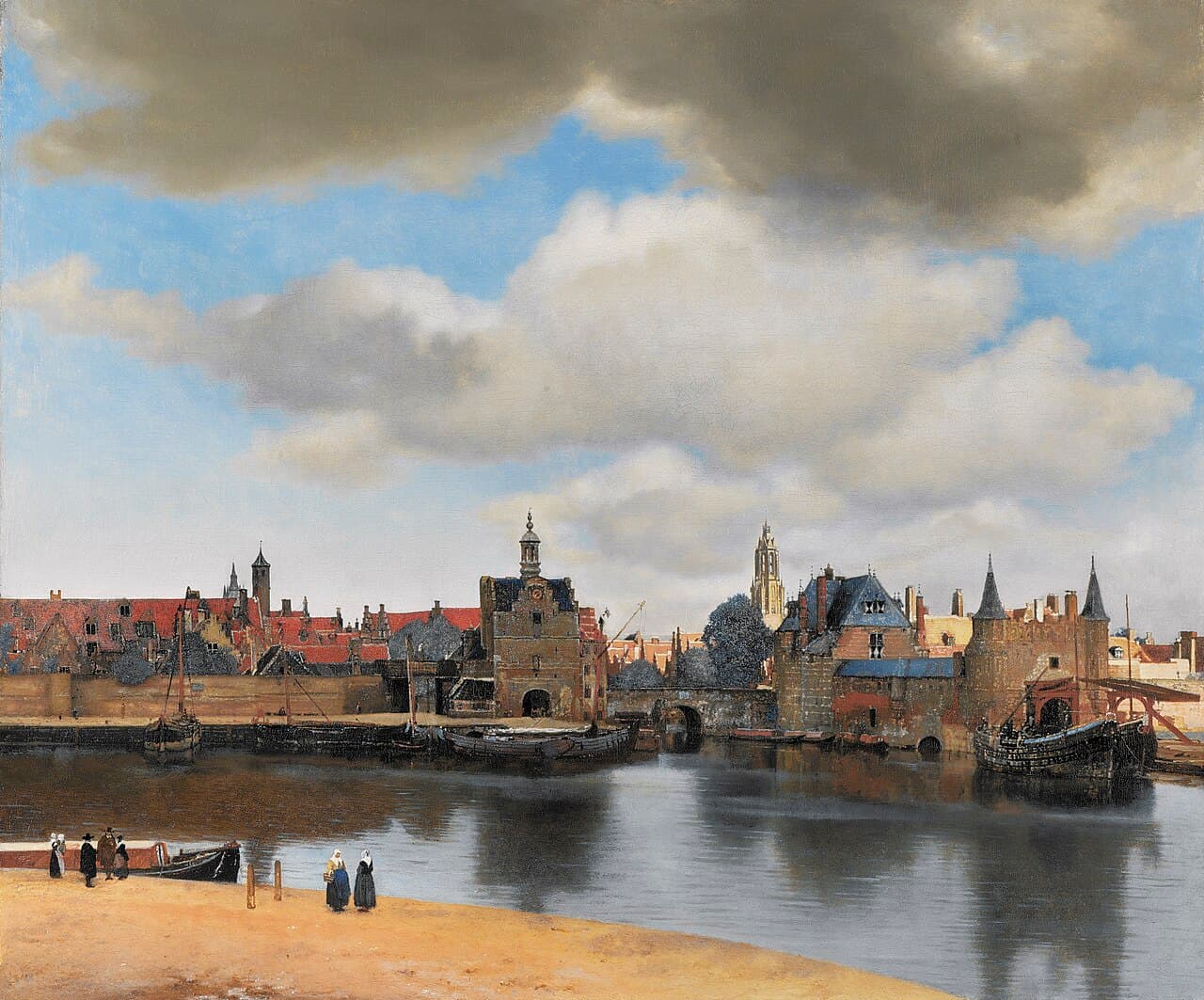
In the same Republic, a largely self-taught Delft draper named Antonie van Leeuwenhoek ground lenses fine enough to become the first person to describe bacteria, laying the foundations of microbiology. But the Republic's fortune had a dark ledger too: its wealth was entangled with colonial conquest and the transatlantic slave trade, which is why many Dutch museums today avoid the term "Golden Age" altogether.
Quiz me
0/3
Recap
The VOC's 1602 shares created the Amsterdam Stock Exchange, and that capital, plus cheap windmill and peat energy, bought the Republic an outsized share of world trade and a rare climate of tolerance.
Surprising fact · A largely self-taught cloth merchant, Antonie van Leeuwenhoek, used homemade lenses to become the first person to describe bacteria.
Sources (2)
No source, no claim. Every fact in this lesson (19 claims) cites at least one of these.