How did coffeehouses and anonymous contests spread the Enlightenment past the aristocracy?
The Enlightenment is remembered for famous philosophers, but it also spread through coffee shops, salons run by women, and essay contests judged blind so no one could tell a duke's entry from a servant's.
▶ Start the storyThe Enlightenment is remembered through a short list of famous names, Locke, Voltaire, Kant, but it also spread through rooms where nobles, commoners and women met. Coffeehouses, literary salons, Masonic lodges, and a booming print culture carried its central idea, that reason and evidence should outrank inherited authority, far beyond the handful of philosophers who get credit for it. Kant later summed up the whole project in two Latin words: sapere aude, dare to know.
One great vehicle was the Encyclopédie, a 35-volume, 71,000-entry attempt to record all human knowledge, written by Diderot, d'Alembert, and about 150 collaborators. It was actually plotted inside a coffeehouse, the Café Procope in Paris, and it narrowly escaped seizure after condemnation by both the King and the Pope: it was saved by Malesherbes, the very man in charge of French censorship. An estimated 25,000 copies circulated through France and Europe before the French Revolution.
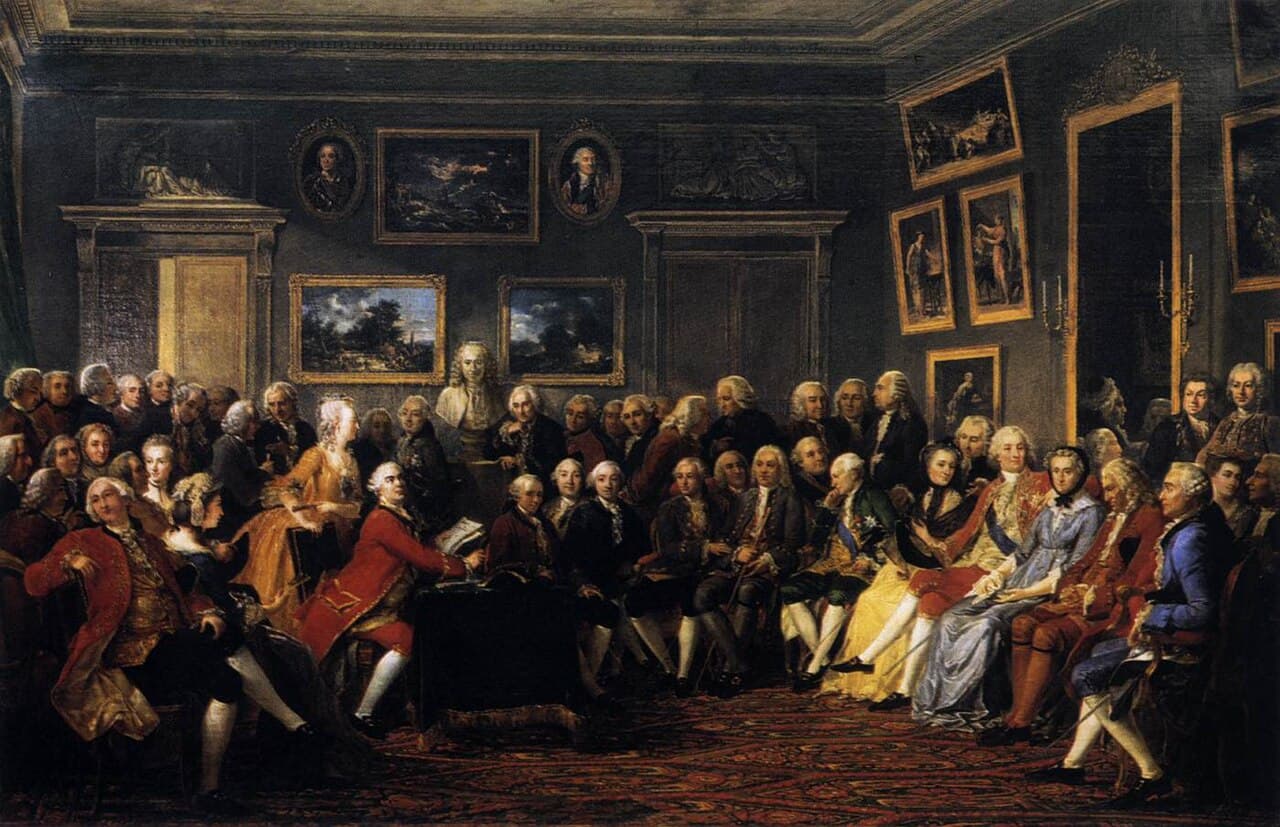
But the rooms where this all happened weren't evenly open. In Paris, it was women, as salonnières, who ran and governed the most important salons, serving as the "legitimate governors" of the discussion, even though women were marginalized in the public culture of the Old Regime. Oxford's coffeehouses, meanwhile, became what one historian calls "penny universities," places of learning less formal than the colleges, where nobles and commoners could mix. And French academic essay contests, of all things, used blind judging: they were open to all, and submissions were anonymous, so neither gender nor rank could sway the result. Out of 2,300 such prizes, women won 49, a small number by today's standards, but striking in an age when almost no woman received formal academic training.
Quiz me
0/3
Recap
The Encyclopédie, the Enlightenment's 35-volume, 71,000-entry reference work, was plotted in a Paris coffeehouse and saved from seizure, after royal and papal condemnation, by the very official in charge of censorship.
Surprising fact · Out of 2,300 blind-judged French academic essay contests, women won 49, despite almost no woman having formal academic training at the time.
Sources (1)
No source, no claim. Every fact in this lesson (18 claims) cites at least one of these.