How did painters fake dramatic candlelight centuries before cinema?
Three hundred years before film noir and Stanley Kubrick's space-grade camera lens, Italian painters had already figured out how to turn a single hidden light source into pure drama. They called the trick chiaroscuro.
▶ Start the storyLong before electric lighting, or even film, painters had already solved the problem of making a single beam of light feel dramatic. The Italian technique is called chiaroscuro, literally "light-dark," the use of strong contrasts between bright and shadowed areas to make flat paint look three-dimensional and make a scene feel urgent. It took root in the Renaissance and is most closely associated with Baroque art, used by Leonardo da Vinci, Caravaggio, Rembrandt, Vermeer, and Goya, among others.
The basic trick is far older than any of them: the Ancient Greeks already had a word for it, "skiagraphia," or shadow-painting, credited to the fifth-century-BC painter Apollodoros, and a mosaic from the following century is even inscribed "knowledge did it." Caravaggio pushed the idea to its extreme around 1600, lighting dark scenes with a single shaft of light from an unseen source, a style so intense it earned its own name, tenebrism. A whole genre followed: night scenes lit by a single candle, painted by Caravaggio's followers in Utrecht and by the young Rembrandt in the 1620s. Not everyone approved: Queen Elizabeth I reportedly disliked shadow in portraits so much that she insisted on sitting for hers in an open garden alley, with no tree and no shadow anywhere near her.
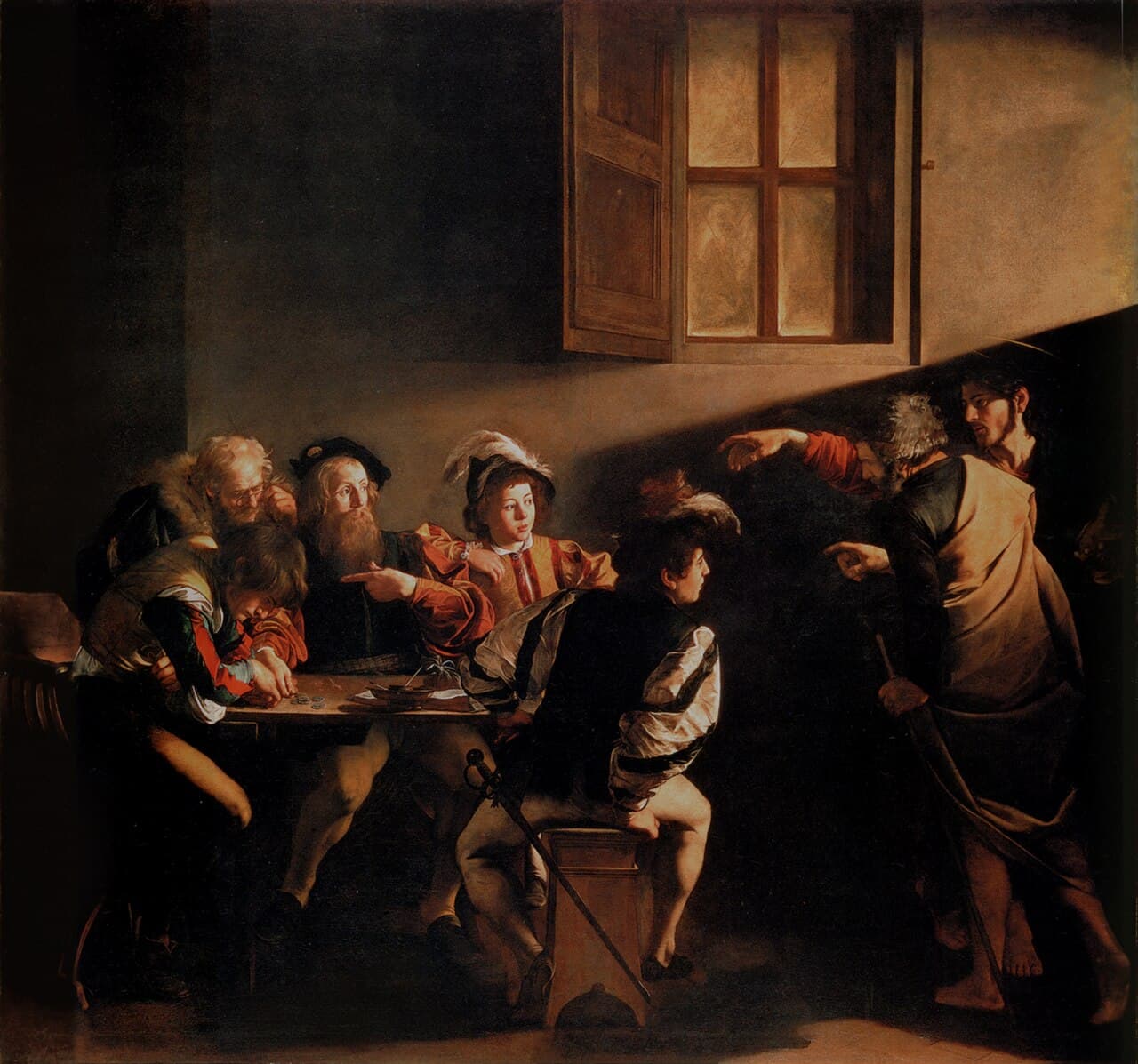
The technique never really left. Filmmakers took it up for high-contrast lighting, especially in black-and-white films such as Metropolis, where stark light and shadow visually separate a wealthy elite from the workers below them. In 1975, Stanley Kubrick wanted to film Barry Lyndon lit by nothing but real candles; no lens then had a wide enough aperture to make that possible, so he bought and modified a Zeiss lens originally built for space photography just to shoot 18th-century palace interiors by candle flame.
Quiz me
0/3
Recap
Caravaggio's single-source lighting, tenebrism, is a direct ancestor in spirit of the high-contrast lighting of silent film, film noir and Kubrick's candlelit Barry Lyndon.
Surprising fact · Kubrick retrofitted a lens built for space photography just to film Barry Lyndon lit only by real candles, centuries after painters first mastered the same lighting trick by hand.
Sources (1)
No source, no claim. Every fact in this lesson (13 claims) cites at least one of these.