How does the internet deliver your data without ever giving you a line of your own?
Your video call is chopped into thousands of little parcels that may take different roads and arrive out of order, and it still works.
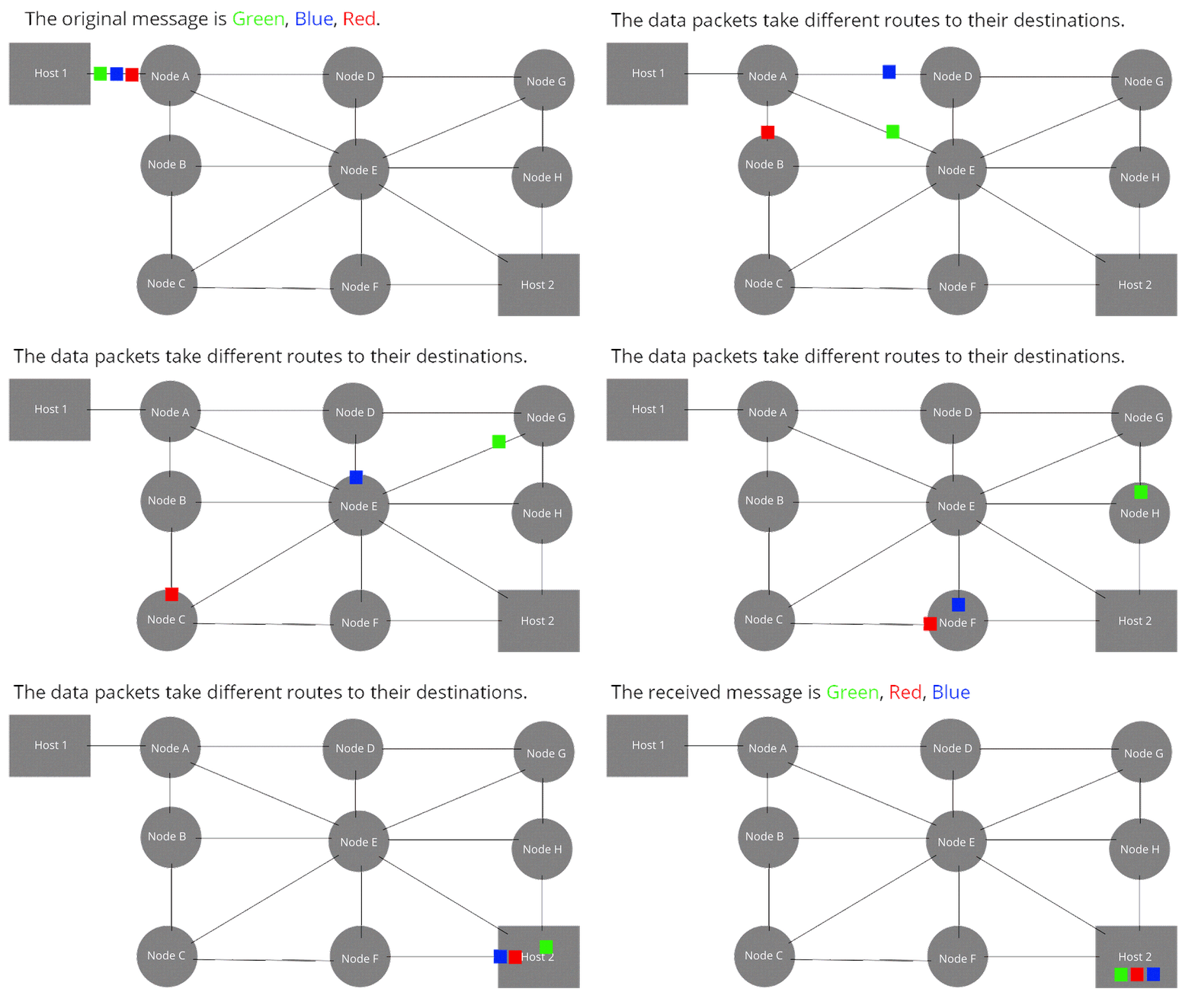
▶ Start the storyIt chops everything into packets and lets them share the road. A packet is a short message in a fixed format: a header, which works like an address label, and a payload, the piece of your data. Each packet is handed from router to router towards its destination, and a link is busy only while a packet is actually crossing it. The rest of the time, it carries everyone else's packets. That is how packet switching became the basis of computer networks worldwide.
The old telephone network worked the opposite way. Circuit switching reserved a dedicated line for each call, whether anyone was talking or not. The British computer scientist Donald Davies spotted why that was wasteful for computers: their traffic comes in bursts with long silences, unlike a steady phone conversation. Sharing links packet by packet fills those silences.
Circuit switching
- A dedicated line is reserved per session
- Constant rate and delay
- The line stays reserved through silences
Packet switching
- Data cut into addressed packets
- A link is busy only while a packet crosses it
- Delay varies with traffic
Sharing has a price. Routers store packets, queue them and forward them, so delays vary with traffic, and packets can be lost, duplicated or arrive out of order. The internet's answer is a division of labour. The network itself, through IP, just does its best to move packets. The computers at each end, through TCP, number the data, confirm what arrived, resend what got lost and put everything back in order.
The idea was born twice. In the US, Paul Baran at RAND wanted a network that could survive nuclear damage during the Cold War. In Britain, Davies invented the same concept in 1965 and named it "packet", a word chosen with a linguist because it translates easily into other languages.
Quiz me
0/3
Recap
Dumb network, smart edges: IP does its best to move packets, TCP at each end numbers, confirms, resends and reorders.
Surprising fact · Donald Davies chose the word "packet" with a linguist because it translates well into other languages.
Sources (5)
No source, no claim. Every fact in this lesson (26 claims) cites at least one of these.