Should you switch doors in the Monty Hall problem?
Switching doubles your chances of winning the car, and thousands of readers, PhDs included, wrote in to insist it didn't.
▶ Start the storyYes: you should switch. It doubles your chances, from 1/3 to 2/3.
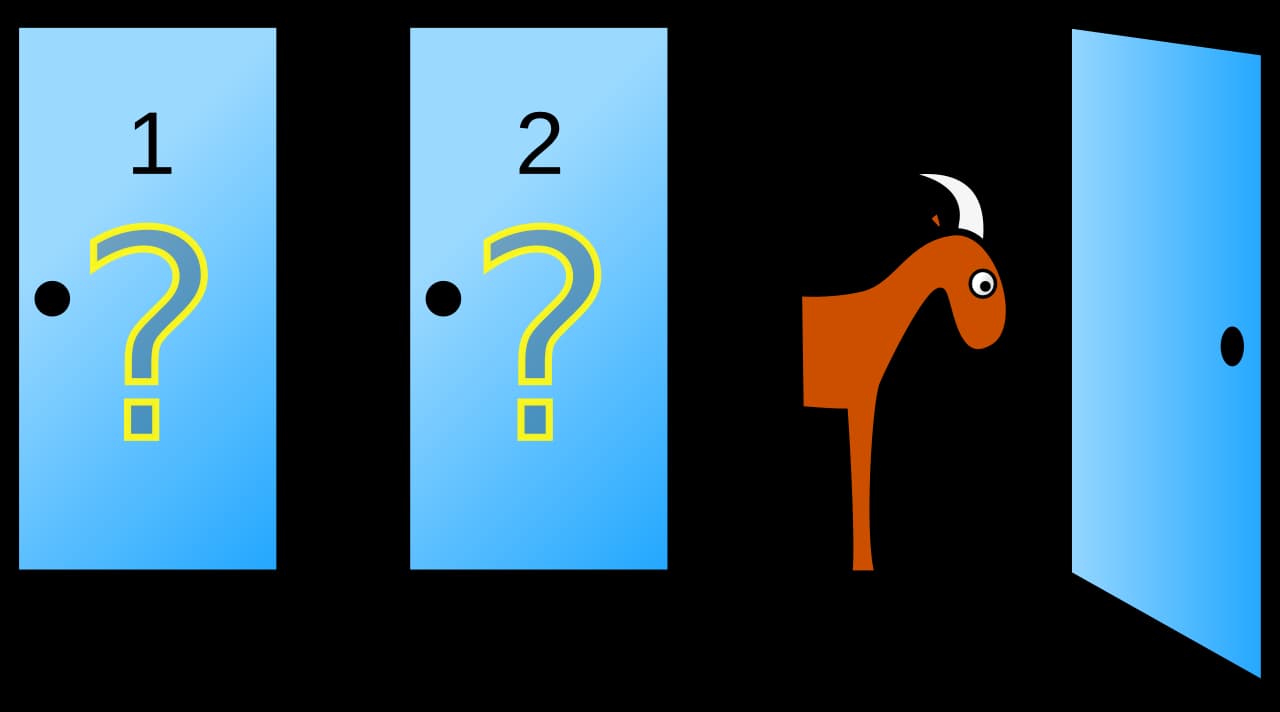
Here's the setup. On a game show there are three doors: a car behind one, goats behind the other two. You pick a door. The host, who knows where the car is, opens one of the other doors to reveal a goat, then asks if you want to switch. The key rule is that the host always shows a goat, never the car.
Now think about your first pick. Two times out of three, you picked a goat. In that case, the host had to reveal the other goat, so the remaining closed door must hide the car, and switching wins. Only one time in three did you pick the car first, and only then does switching lose. So switching wins 2/3 of the time.
Chance of winning the car
%
| Probability | |
|---|---|
| Stay | 33.3% |
| Switch | 66.7% |
Most people feel the two remaining doors are 50/50. That would be true if the host opened a door at random, but he doesn't: his choice is steered by where the car is. When Marilyn vos Savant gave the right answer in Parade magazine in 1990, about 10,000 readers wrote in, most of them telling her she was wrong.
Quiz me
0/3
Recap
Your first pick is a goat 2 times in 3, and whenever it is, switching wins.
Surprising fact · About 10,000 readers, including nearly 1,000 PhDs, wrote to Parade magazine, most insisting the right answer was wrong.
Connects to
- 👥 Why do your friends have more friends than you do?
- 🛋️ Why do we stick with what we have, even when something better is on offer?
- ☕ Why does a mug feel more valuable the moment it becomes yours?
- 🧮 Why does a positive result from a 99% accurate test often mean so little?
- 🎂 How many people does it take for two to share a birthday?
Sources (1)
No source, no claim. Every fact in this lesson (13 claims) cites at least one of these.