Why does a mug feel more valuable the moment it becomes yours?
Students handed a plain coffee mug wanted about $7 to sell it. Students without one would pay about $3. Same mug, minutes of ownership.
▶ Start the storyA mug feels more valuable once it's yours because of the endowment effect: we value things more as soon as we own them. The least we would accept to give something up is typically higher than the most we would pay to get it, even when we have no reason to be attached and have owned it for only minutes.
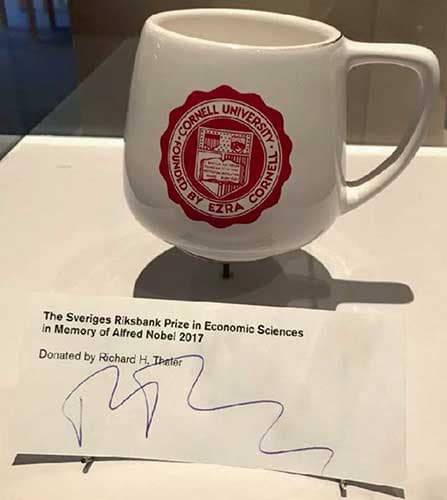
The classic demonstration used coffee mugs. Daniel Kahneman, Jack Knetsch and Richard Thaler gave mugs to some Cornell students and let them sell. Owners asked about $7; would-be buyers offered about $3. Swap the mug for a pen of equal value and the same thing happens in reverse: whoever got the pen won't trade it for the mug, and whoever got the mug won't trade it for the pen.
The same mug, two prices
US dollars
| Price for one mug | |
|---|---|
| Owners asked to sell | 7 US dollars |
| Non-owners willing to pay | 3 US dollars |
The leading explanation is loss aversion: selling feels like losing something, and losses weigh more than gains. Brain scans fit that idea: a region linked to loss aversion lights up when people consider giving up what they own. Still, some researchers argue that inertia or simply seeing an object as part of yourself matter more, and some economists say the gap partly comes from how experiments are designed.
The idea is ancient, but Thaler gave it its name in 1980. Businesses use it every day: a free trial makes a service feel like yours, so cancelling it feels like a loss.
Quiz me
0/3
Recap
Owning something moves it from the 'gain' column to the 'loss' column, so giving it up costs more than getting it was worth.
Surprising fact · Cornell students given a mug asked about $7 to sell it, while those without one would pay only about $3.
Sources (2)
No source, no claim. Every fact in this lesson (18 claims) cites at least one of these.