How did electricity start a second industrial revolution?
A generator built in 1831, a theatre lit without a single flame, and a power station pushing 10,000 volts across London: electricity cut the belts that tied every machine to one giant engine.
▶ Start the storyElectricity started a second industrial revolution by changing how power reached machines. Instead of hanging off one big engine through shafts and belts, each machine could have its own electric motor.
It wasn't the only change. Between about 1870 and 1914, steel, oil and the telegraph also reshaped industry. But electricity remade the factory floor itself.
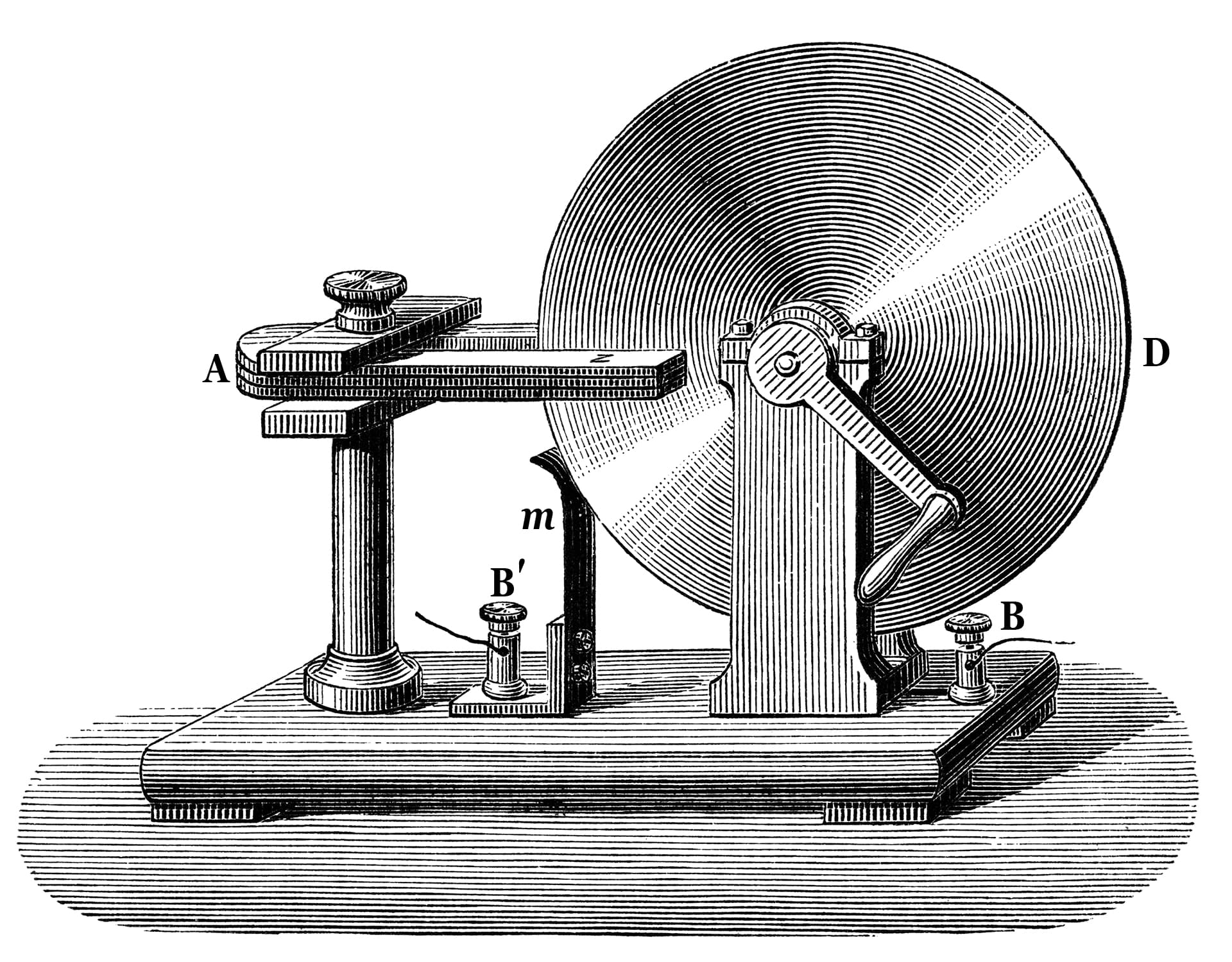
The science came first. Michael Faraday invented the generator in 1831. It then took nearly fifty years for the technology to catch up. In 1879, Joseph Swan's light bulbs lit Mosley Street in Newcastle, the world's first electric street lighting. In 1881, about 1,200 of his lamps lit London's Savoy Theatre, the first public building lit entirely by electricity.
Then came power stations. London's Holborn Viaduct plant opened in 1882. In 1891, Sebastian de Ferranti's station at Deptford sent alternating current at 10,000 volts into central London. Transformers stepped it down on each street. Power now travelled by wire.
1831
Faraday invents the generator
1879
Swan's bulb lights Mosley Street, Newcastle
1881
The Savoy Theatre becomes the first building lit entirely by electricity
1891
Ferranti's Deptford station transmits 10,000V AC across London
That changed the factory. Before, one central engine drove every machine through line shafts and belts. Now factories switched to electric motors. Henry Ford said mass production needed electricity, because it let him place machines in the order of the work. His Model T used 32,000 machine tools, most of them electric. Electric light also replaced hot, smoky gas lamps.
Quiz me
0/3
Recap
Faraday invented the generator in 1831; Swan's bulbs lit a street and a theatre by 1881; Ferranti's 1891 Deptford station sent high-voltage power across London; electric motors then replaced line shafts in factories.
Surprising fact · Henry Ford said mass production on his Model T line, with 32,000 machine tools, would have been impossible without electricity.
Sources (4)
No source, no claim. Every fact in this lesson (13 claims) cites at least one of these.