Which of Aristotle's "fanciful" animal claims turned out to be true?
A philosopher with no microscope said a shark gives birth to live young and a catfish father babysits the eggs. Nineteenth-century zoologists checked, and he was right.
▶ Start the storySeveral of Aristotle's strangest-sounding animal claims about the waters around the Greek island of Lesbos turned out to be true. He wrote that the octopus could change colour and had a sperm-transferring tentacle, that baby dogfish grow inside their mother's body rather than hatching outside it, and that the male of a river catfish stays behind to guard the eggs after the female swims off. For a long time these were treated as fanciful stories. Then nineteenth-century zoologists checked: Georges Cuvier described the octopus tentacle in 1817, Johannes Müller confirmed the dogfish in 1842, and Louis Agassiz found the catfish story correct. Aristotle had been right.
What set him apart was his method: in the History of Animals he set out to investigate the existing facts about animals before asking why those facts held. He grouped animals by shared features, for instance noting that every bird has feathers, wings, beaks and two bony legs, so that having those features and being a bird imply each other.
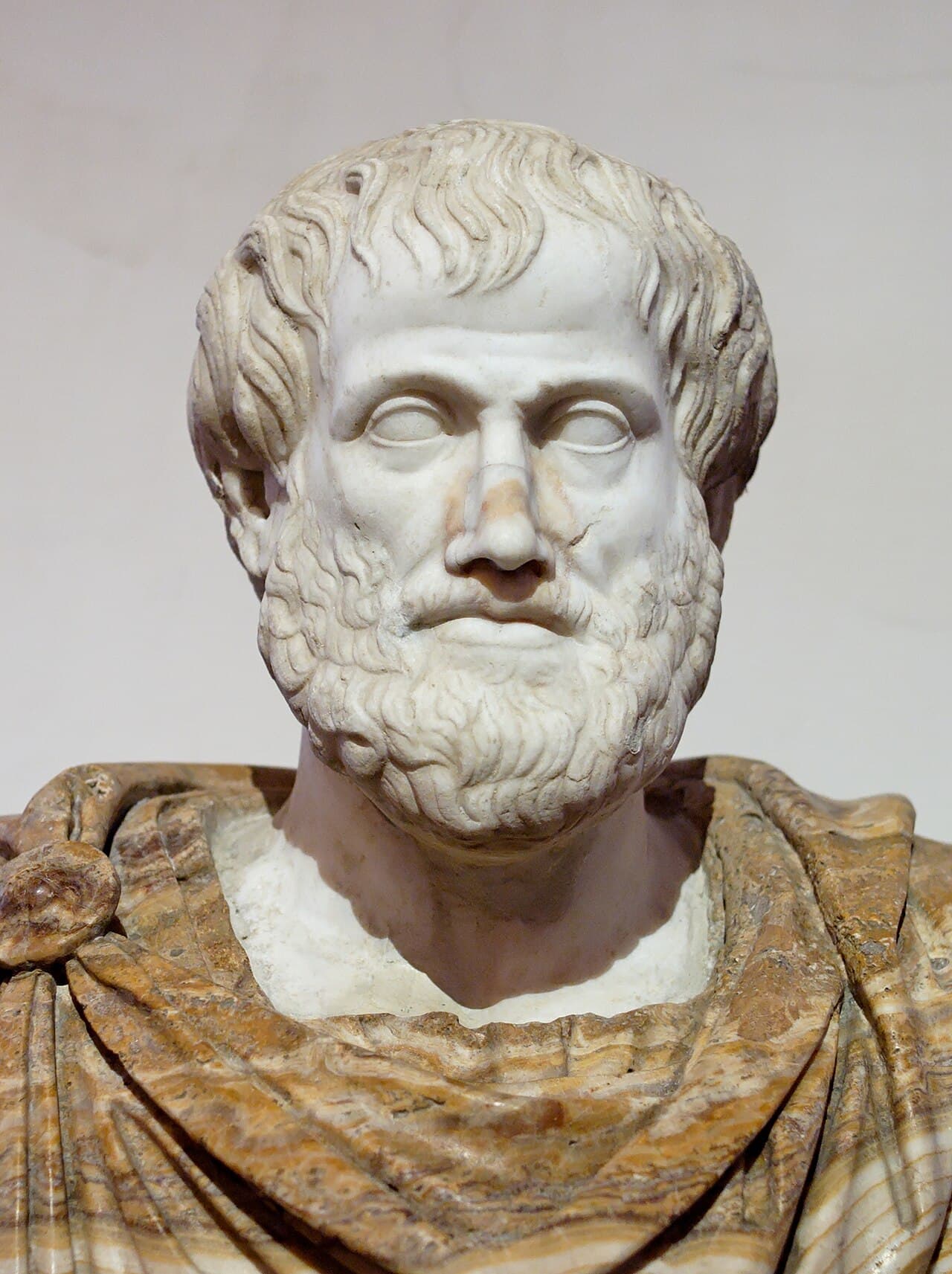
This was unusual for a philosopher of his time. Like Plato, he looked for universals, but unlike Plato he backed up his ideas with detailed observation of the natural history of Lesbos and the marine life in the island's lagoon at Pyrrha, working there with his colleague Theophrastus after earlier research together at Assos. That hands-on study made him the earliest natural historian whose written work survives.
The result stayed unmatched for a very long time: no similarly detailed zoology book appeared until the sixteenth century, so the History of Animals shaped the field for about two thousand years. Aristotle wasn't infallible, though. He has also been accused of errors, though some come from later misreadings of his text, and he did lean uncritically on reports from travellers and beekeepers.
Quiz me
0/3
Recap
Aristotle investigated the "what" of animals before the "why," and grouped them by shared features he called universals.
Surprising fact · His description of the octopus's sperm-transferring tentacle was dismissed as fanciful until Georges Cuvier described it in 1817.
Sources (2)
No source, no claim. Every fact in this lesson (16 claims) cites at least one of these.