Why did ancient kings start stamping their own faces onto metal?
Before coins, paying with gold meant weighing a lump of metal and hoping nobody had mixed in something cheaper. A ruler's stamp promised the weight was already checked.
▶ Start the storyA ruler's mark worked as a guarantee. Before coins, people paid with lumps of precious metal valued by weight, called bullion. Every deal meant weighing the metal and checking its purity. A ruler's stamp promised in advance that this was already done. Historians think stamping busts and designs probably began this way, though showing off a ruler's glory may also have played a part.
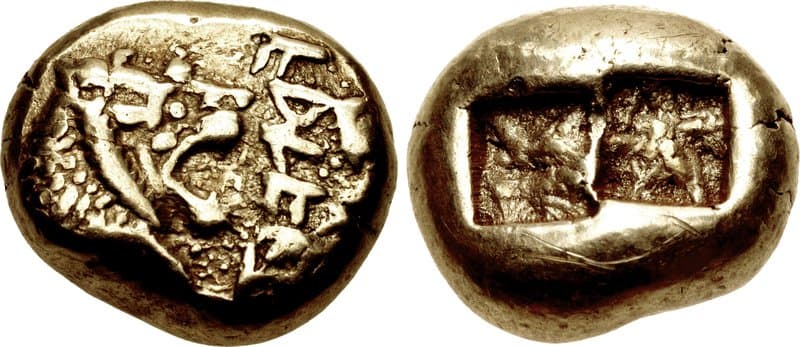
Yet the very first coins showed no face at all. They appeared in the kingdom of Lydia, in what's now western Turkey, in the late 7th century BC. King Alyattes had his stamped with a lion's head, his dynasty's symbol. They were made of electrum, a natural mix of gold and silver. Its gold content varied wildly, so even a stamped coin's true value stayed uncertain.
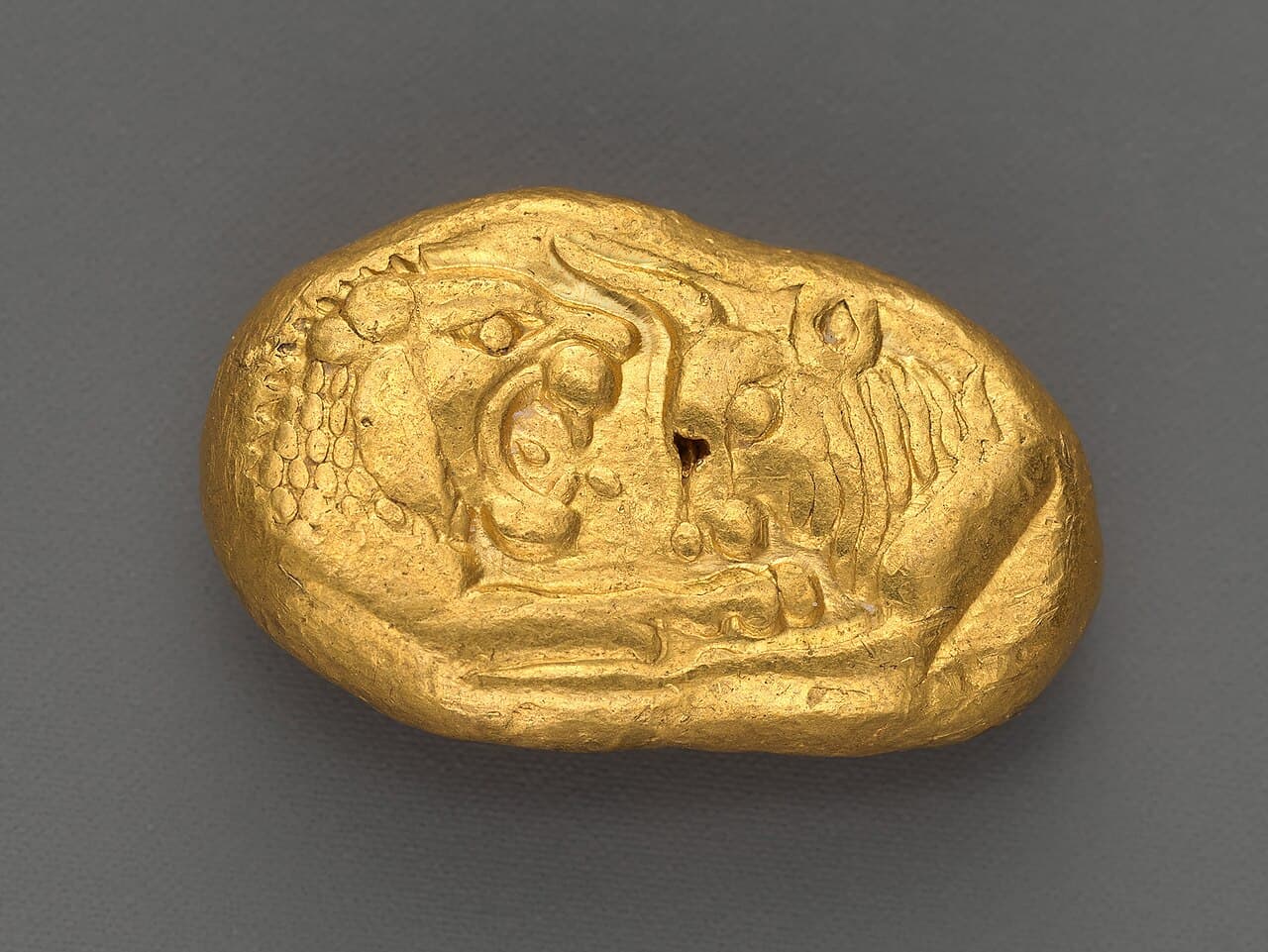
His son Croesus fixed that. Lydia's gold was purified by heating it with salt to remove the silver. Croesus is credited with the first true gold coins of standardized purity, made for everyday use. Buyers no longer had to test the metal: the stamp did it for them.
Real faces came later. The first portraits of actual rulers appeared on coins from Lycia, in the 5th century BC. From Alexander the Great onward, the ruler's portrait became standard. The stamp also invited a new trick: clipping slivers of metal off the edge, then spending the lighter coin as if nothing was missing.
late 7th c. BC
Lydia mints the first electrum coins, with a lion's head
c. 560 BC
Croesus issues gold coins of standard purity
5th c. BC
First portraits of real rulers, in Lycia
from Alexander the Great
The ruler's portrait becomes standard
Quiz me
0/3
Recap
A coin is a promise about weight and purity, stamped so you don't have to check it yourself.
Surprising fact · The first coins bore a lion's head; real portraits of rulers only appeared about two centuries later.
Sources (4)
No source, no claim. Every fact in this lesson (17 claims) cites at least one of these.