How did scholars learn to read the world's oldest writing again?
Cuneiform was written for 3,000 years, then forgotten. Cracking it began with one word, "king," spotted on a copy of a Persian royal inscription.
▶ Start the storyStarting from a copy of a Persian king's inscription. Cuneiform, the earliest known writing system, was used for more than three thousand years, until alphabetic writing completely replaced it during the Roman era; the last firmly dated tablet, from Uruk, was written in AD 79 or 80. By the 19th century nobody could read it, and scholars had to decipher it as a completely unknown script. Their way in was the royal inscriptions at Persepolis, in Iran. In 1778 Carsten Niebuhr published the first complete and accurate copy of them, and in 1802 Georg Friedrich Grotefend used it to make the first breakthrough: he realized it showed three different languages side by side, and he recognized the word "king."
That first foothold was in Old Persian, the cuneiform script with the simplest, most logical structure. Others built on it, such as Rasmus Rask, who in 1823 deciphered the name Achaemenides, and inscriptions written in two or three languages then let scholars work back to older, more complicated scripts, as far back as Sumerian. Henry Rawlinson and Edward Hincks completed the decipherment of the trilingual Behistun Inscription, and by 1857 cuneiform was successfully deciphered.
What they unlocked had started as bookkeeping. From the 9th millennium BC, people in the Near East used clay tokens to record amounts of livestock or other goods, pressing them into round clay envelopes and storing them inside, until flat tablets marked with a stylus replaced them. Writing is first recorded at Uruk at the end of the 4th millennium BC.
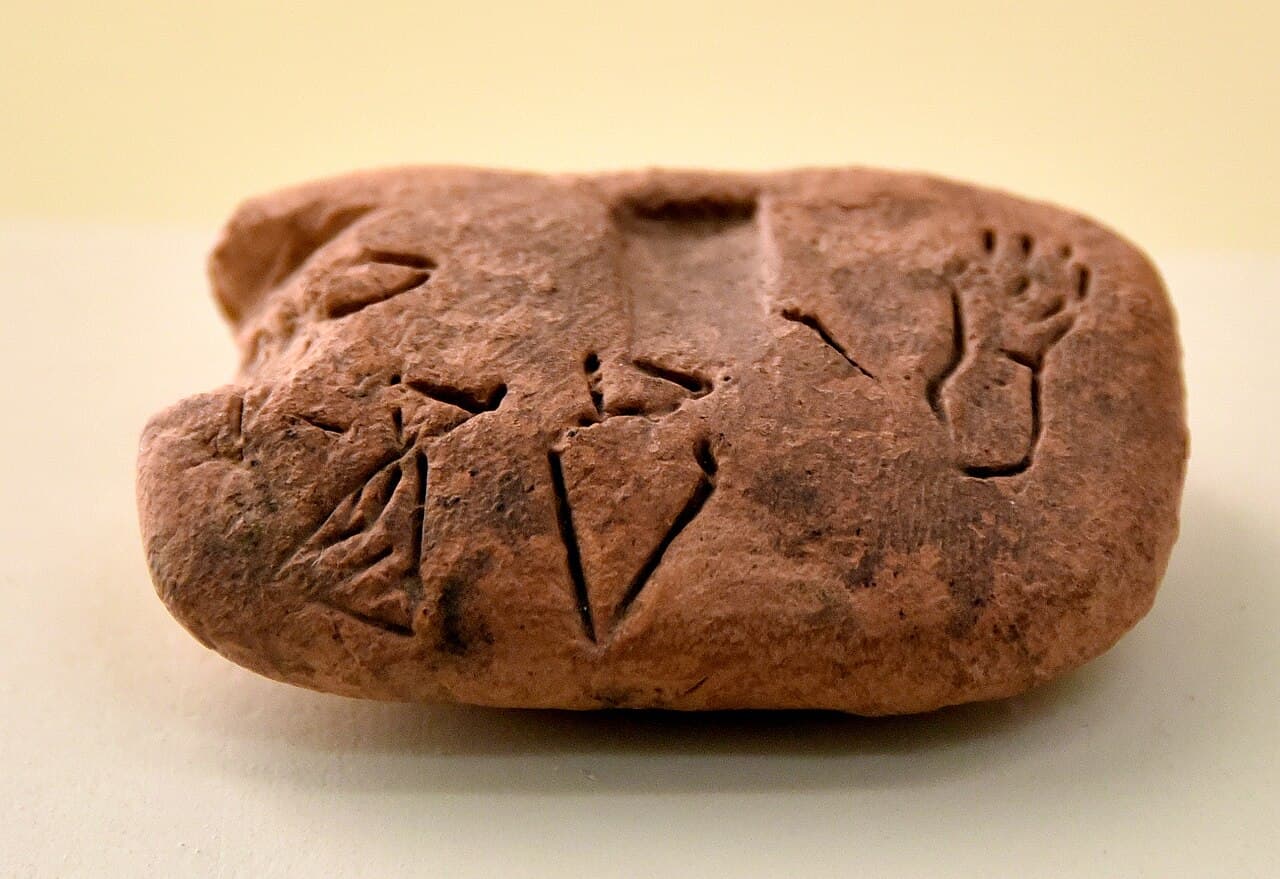
The work is far from finished. Between 500,000 and 2 million tablets are thought to have been dug up, but only about 30,000 to 100,000 have been read or published, and there are only a few hundred qualified cuneiformists in the world.
Quiz me
0/3
Recap
Cuneiform was cracked from the youngest end, Old Persian, back to the oldest, Sumerian.
Surprising fact · Decipherment began in 1802 when Grotefend saw that a copied Persepolis inscription held three languages side by side, and recognized the word "king."
Sources (1)
No source, no claim. Every fact in this lesson (20 claims) cites at least one of these.