Why did some astronomers insist the universe never had a beginning?
The man who coined the term 'Big Bang' rejected the theory it named. A faint glow of microwaves from every direction in the sky made his own theory very hard to defend.
▶ Start the storyBecause they held to a principle: that the universe should look the same at every time and every place. In 1948, Hermann Bondi, Thomas Gold and Fred Hoyle published influential papers on the steady-state model, which squared that 'perfect cosmological principle' with an expanding universe: as galaxies spread apart, new matter is continually created, so the density never drops. No start, no end. Hoyle became the idea's most famous defender, and on BBC Radio he jokingly coined a name for the rival theory, the 'Big Bang', though he later denied doing so in derision.
For a while the two theories looked like a genuine toss-up. But evidence piled up against the steady-state picture. Powerful radio-emitting objects like quasars turned up only very far away, meaning they existed only in the distant past, as the Big Bang theory predicted, whereas the always-the-same steady-state model predicted such objects everywhere, including nearby. By 1961, statistical tests based on radio-source surveys gave strong evidence against it.
The knockout blow came in 1964, with the discovery of a faint microwave radiation coming evenly from every direction in the sky, the cosmic microwave background, as the Big Bang theory had predicted. Steady-state supporters scrambled to explain it as starlight scattered by galactic dust, but the signal was too even in all directions to come from countless point sources, it lacked the polarization that scattering produces, and its spectrum was too close to that of an ideal black body. As physicist Steven Weinberg wrote in 1972, if that radiation really was black-body radiation, it would be difficult to doubt that the universe had evolved from a hotter, denser early stage.
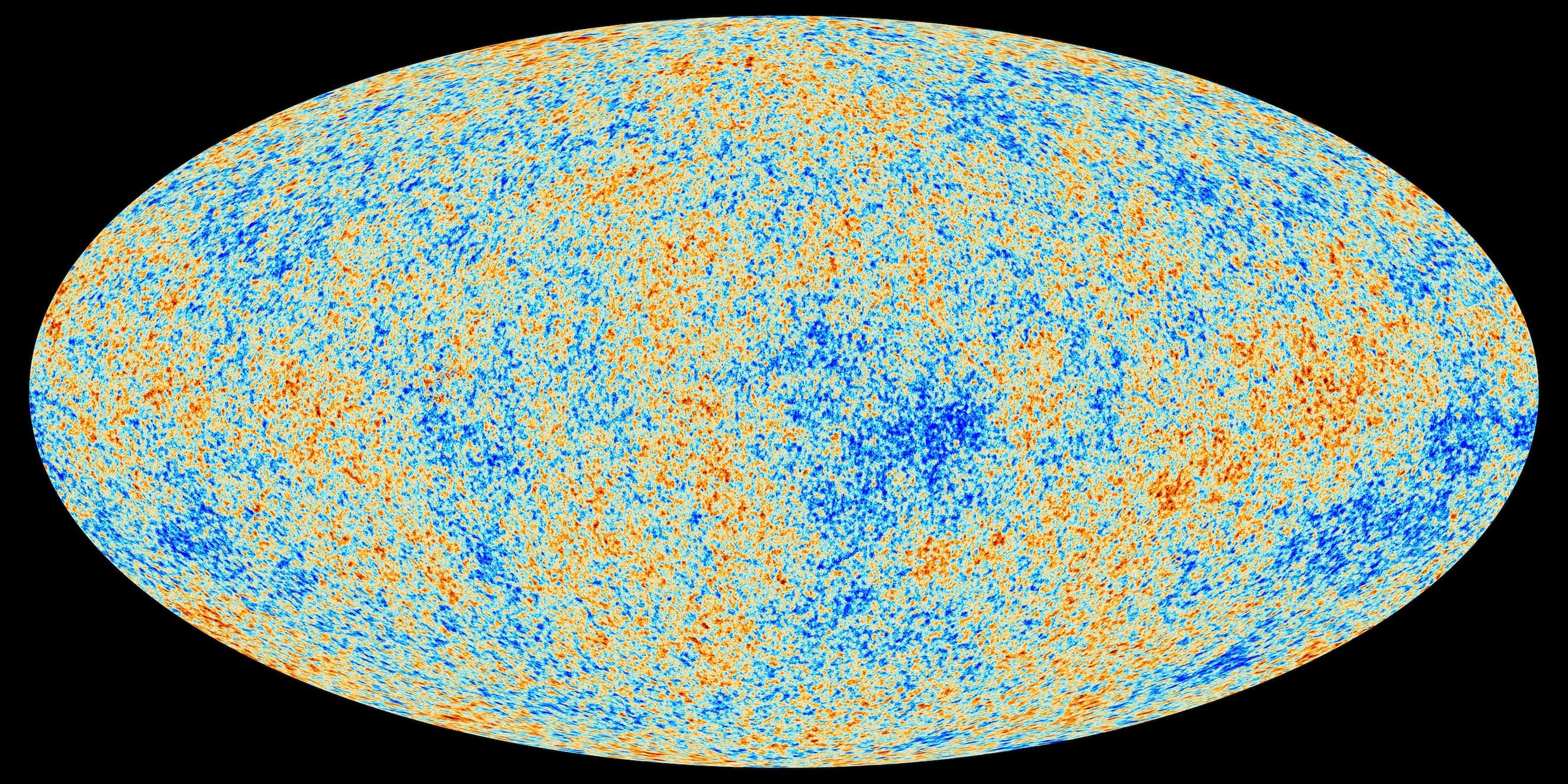
After that, most astronomers accepted the Big Bang as the best explanation for the universe's origin. Hoyle never fully gave up: in 1993 he and two colleagues proposed a modified 'quasi-steady-state' version with repeated small 'minibangs.' The Big Bang nonetheless remained the accepted basis of most astrophysics, and the man who most opposed it is remembered for giving it its name.
Quiz me
0/3
Recap
The steady-state model fell apart once the evenly spread, black-body-like cosmic microwave background was discovered in 1964, exactly what a hot, dense early universe would leave behind, and something an eternal, unchanging universe could not convincingly explain.
Surprising fact · Fred Hoyle, the steady-state model's chief defender, gave the Big Bang theory its name in a joke on BBC Radio.
Sources (2)
No source, no claim. Every fact in this lesson (12 claims) cites at least one of these.