Why did ten days vanish from the calendar in October 1582?
Thursday 4 October 1582 was followed by Friday 15 October. No one slept through ten days — the calendar just skipped them.
▶ Start the storyIn 1582, Pope Gregory XIII made ten days disappear. Thursday 4 October was followed, by papal decree, directly by Friday 15 October — nobody skipped a sleep, the calendar simply jumped. The reason went back over a thousand years, to a mistake baked into the Julian calendar: it assumed a year was exactly 365.25 days long, which overshoots the real solar year by a little under a day every century. Centuries of writers had noticed the slippage growing. Bede measured it at more than three days in the 8th century; Roger Bacon put it at seven or eight days around 1200; Dante was still worrying about it a century later. By 1582, the drift had reached a full ten days.
That drift was not just an abstract nuisance. The date of Easter depends on the spring equinox, which the Church had fixed at 21 March based on its position at the First Council of Nicaea in 325. As the Julian calendar's extra leap days accumulated, the real equinox kept arriving earlier and earlier against the calendar date, until by Gregory's time it was falling on 10 or 11 March instead. Fixing that meant deleting the extra days the Julian calendar had wrongly added. The man whose proposal the reform was based on, the Calabrian doctor Aloysius Lilius, had actually proposed doing it gently, skipping a leap day ten separate times over forty years so the shift would barely be noticed. Gregory's bull did it in one stroke instead: ten days, gone in a night.
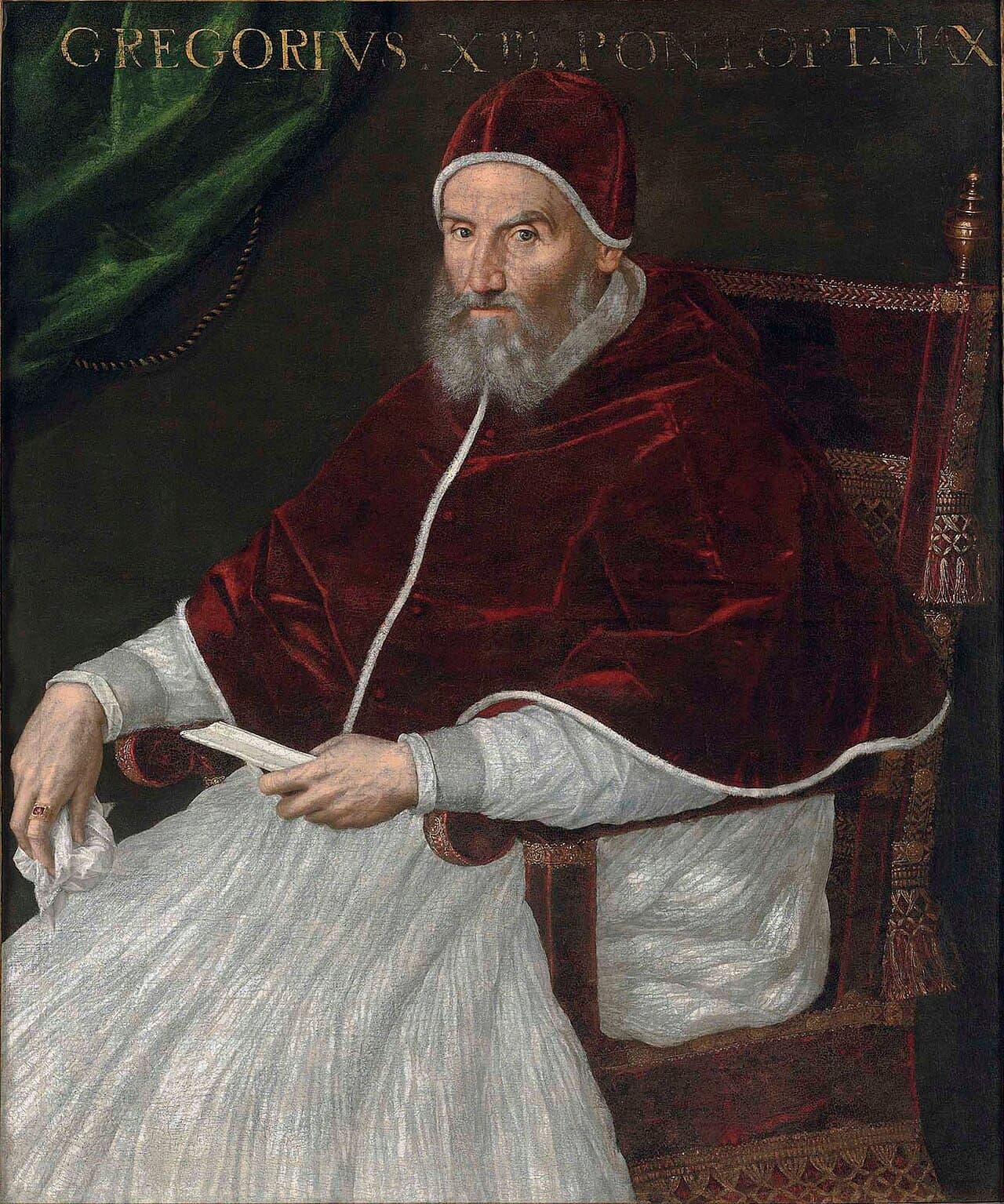
The new calendar's law applied only where the Pope's authority reached. Catholic countries adopted it immediately, but Protestant and Eastern Orthodox states held out for centuries, switching gradually to what they called the 'Improved calendar'; Greece didn't make the full switch until 1923, and many Orthodox churches still use the old Julian calendar for religious holidays today. For a long stretch, that meant neighbours living ten days apart on paper, and Britain had to remove eleven days when it finally switched in 1752; and Easter — the very holiday the whole reform had been designed to fix — ended up observed on different dates by different churches all over again.
Quiz me
0/3
Recap
Not everyone adopted the new calendar together: Protestant and Orthodox countries held out for centuries, and some Orthodox churches still use the old one for religious dates.
Surprising fact · The reform's own source, Aloysius Lilius, proposed correcting the ten-day error gradually over forty years, but Gregory's decree simply deleted ten days overnight.
Connects to
- ⛪ How did a Roman emperor get bishops to agree on the nature of Jesus?
- 🌙 Why is a month longer than the Moon's actual trip around the Earth?
- 🌍 Why do we have seasons, and why does Uranus seem to spin on its side?
- 🐣 Why does Easter fall on a different date every year?
- 🌙 Why does Ramadan move through the seasons?
Sources (1)
No source, no claim. Every fact in this lesson (15 claims) cites at least one of these.