Why are diamonds expensive when water is cheap?
You can't live without water and you can easily live without diamonds, yet one costs almost nothing and the other a fortune.
▶ Start the storyBecause prices don't reflect how useful something is overall, but how much one extra unit is worth to you. Water is vital, but it is so plentiful that one more glass adds little, so its price is low. Diamonds are scarce, so one more diamond is worth far more to buyers than one more glass of water. Economists call the puzzle the paradox of value, or the diamond–water paradox, and the answer marginal utility.
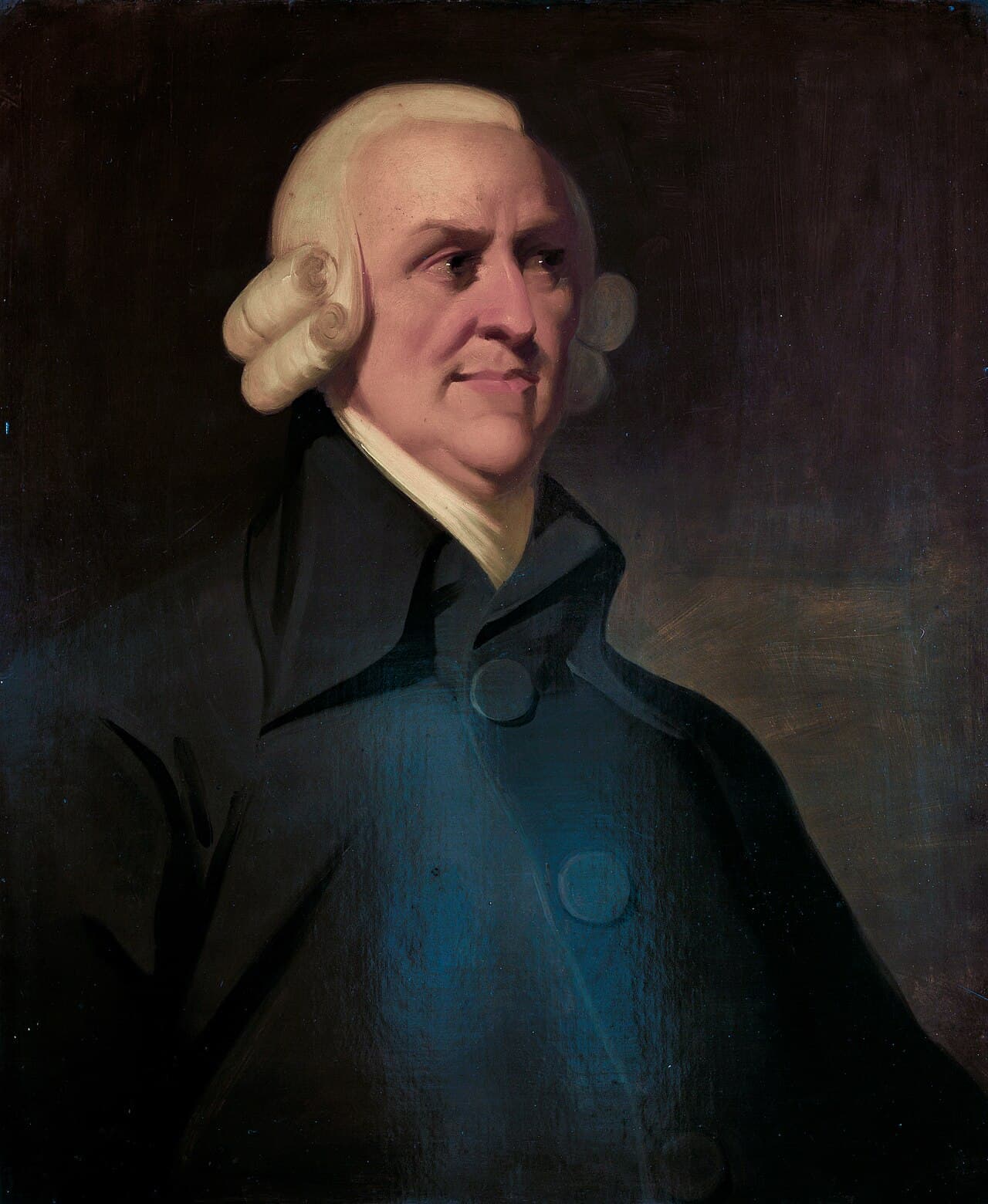
Adam Smith made the paradox famous: nothing is more useful than water, he wrote, yet it will buy scarcely anything, while a diamond has scarcely any use but can be swapped for a great quantity of goods. Smith thought prices came from the toil and trouble of producing things. The better answer came later, from economists like Jevons, Menger and Walras. The economist Eugen von Böhm-Bawerk explained it with a farmer who has five sacks of grain: bread to survive, more bread to work, feed for his animals, whisky, and grain for the pigeons. Lose one sack and he doesn't cut everything by a fifth; he just stops feeding the pigeons. That last, least important use sets the value of a sack.
The picture flips in a desert: someone dying of thirst would pay more for water than for diamonds. And diamond scarcity has had help. For more than a century the company De Beers controlled 80 to 85% of rough diamond distribution and stockpiled stones to limit supply.
Quiz me
0/3
Recap
Plentiful things are cheap even when vital, because the next unit goes to a low-priority use; scarce things are dear.
Surprising fact · Lab-grown diamonds were about 90% cheaper than mined ones by 2025, up from a 10% gap in 2018.
Connects to
- 🥩 Why did Adam Smith say self-interest feeds a nation, not kindness?
- ⚖️ Who actually decides what things cost?
- Marginal utility
- Labor theory of value
- Diamond
Sources (3)
No source, no claim. Every fact in this lesson (16 claims) cites at least one of these.