Does the Gulf Stream really keep Europe warm?
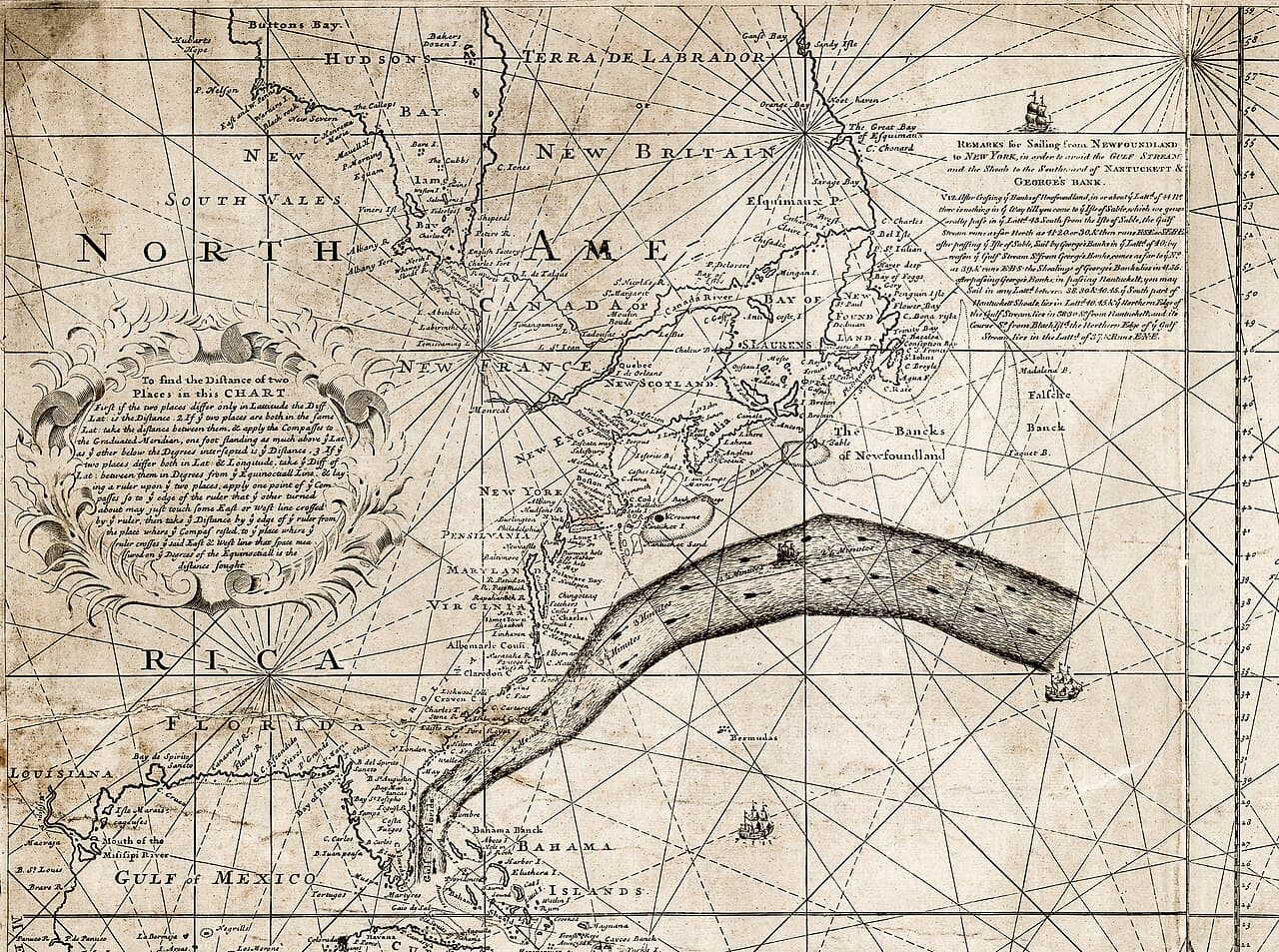
Benjamin Franklin mapped it with help from a whaling captain, and British sea captains mostly ignored the map.
▶ Start the storyYes, but less than the popular story says. The Gulf Stream and its extension, the North Atlantic Current, carry warm water from the tropics toward Northwest Europe, and scientists agree this helps make Europe warmer than other places at the same latitude. The ocean's overturning circulation is estimated to keep northern and western Europe 4 to 10 °C warmer, depending on the area. That is why almost all of Norway's coast stays free of ice, and why a sizeable city like Tromsø can thrive north of the Arctic Circle.
The myth is the bigger claim: that without ocean currents, northern Europe would be as cold as northern North America, up to 15–20 °C colder. That is generally considered wrong. Most of the heat moving from the tropics toward the poles is carried by the atmosphere, not the ocean, and the main reason European winters are milder than North American ones seems to be the winds.
The current itself is a giant. It moves 30 million cubic metres of water per second through the Florida Straits, fifty times more than all the rivers flowing into the Atlantic combined.
Its first famous mapmaker was Benjamin Franklin. In 1768 he heard that British mail ships took weeks longer to cross the Atlantic than American merchant ships. His cousin, the Nantucket whaling captain Timothy Folger, explained why: the merchants knew where the current was, from the whales, the water's temperature and its colour, and crossed it, while the mail captains sailed straight against it. Franklin printed a chart in 1769. British captains mostly ignored it.
Quiz me
0/3
Recap
The ocean warms Europe by a few degrees; the winds do most of the rest.
Surprising fact · Benjamin Franklin's chart of the current, drawn with a whaling captain's help, was mostly ignored by British sea captains.
Sources (3)
No source, no claim. Every fact in this lesson (18 claims) cites at least one of these.