Did the Dutch really give up Manhattan for a nutmeg island?
In 1667, a peace treaty let England keep Manhattan and handed the Dutch a tiny island 3 kilometres long, because it grew nutmeg.
▶ Start the storySort of. In 1667, at the end of the Second Anglo-Dutch War, the Treaty of Breda settled things as they stood: England kept Manhattan, which it had seized in 1664 and renamed New York, and in return Run, a speck of an island in what is now Indonesia, was formally abandoned to the Dutch. It wasn't a straight swap so much as each side keeping its prize. Still, the Dutch had fought hard for that speck: Run is just 3 kilometres long, and it grew nutmeg.
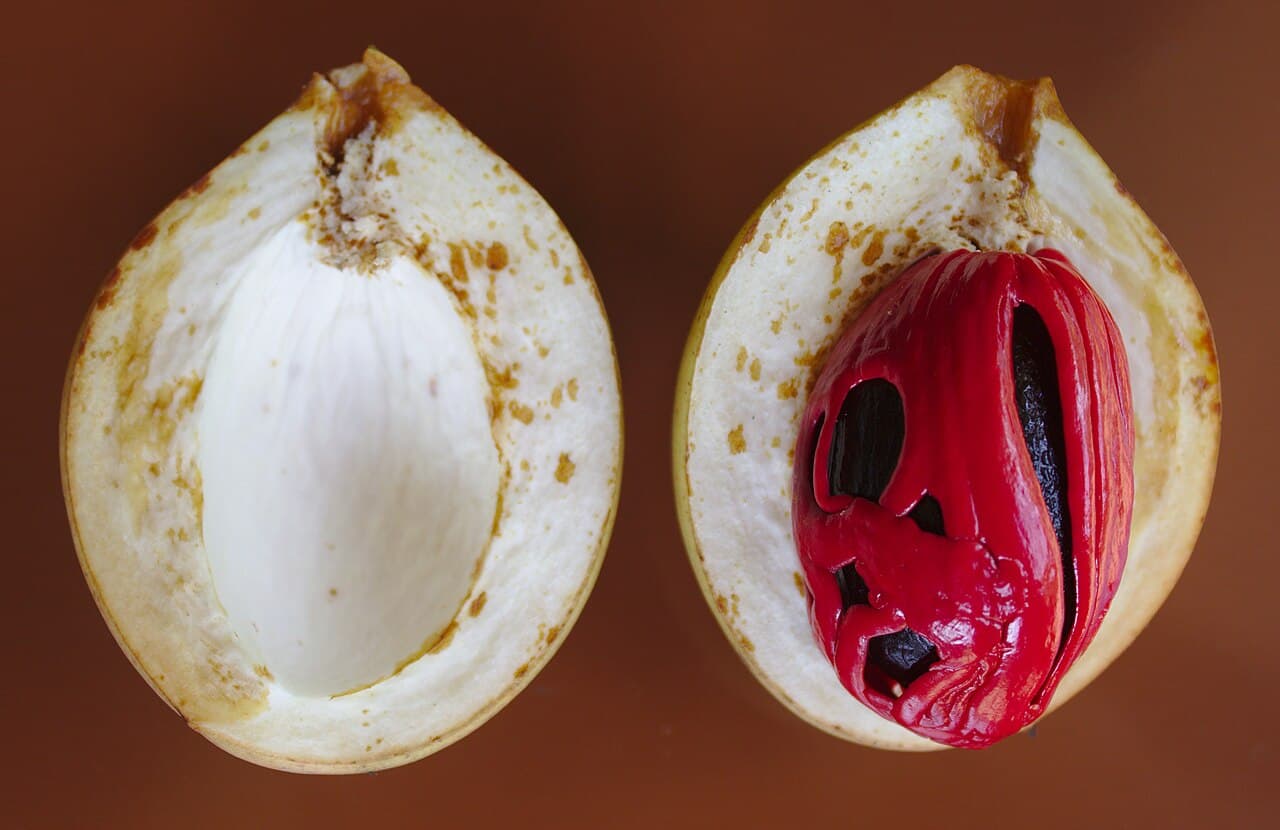
That was the point. The Banda Islands, Run among them, were the world's only source of nutmeg and mace, two spices that come from the same fruit. Europeans prized them, and for centuries Arab traders sold them to Venice at exorbitant prices while keeping the islands' location a secret. Once Europeans found the source, the profits were staggering: spices sold for 300 times what they cost in Banda.
Such profits bred terrible violence. To lock in its monopoly, the Dutch East India Company waged a bloody campaign in 1621 that left only about 1,000 of roughly 15,000 islanders. On Run, the Dutch even cut down every nutmeg tree so the English couldn't come back. The monopoly ended only in 1817, when the British transplanted nutmeg trees to their own colonies.
Quiz me
0/3
Recap
Only Banda had nutmeg; controlling it was worth a war, a massacre and, as the story goes, Manhattan.
Surprising fact · Nathaniel Courthope held tiny Run against the Dutch for 1,540 days.
Connects to
- 🐙 Why did breaking up America's oil monopoly create two new giants?
- Nutmeg
- Dutch east india company
Sources (3)
No source, no claim. Every fact in this lesson (16 claims) cites at least one of these.