Why did Egyptians lose the ability to read their own writing?
Hieroglyphs covered Egypt's temple walls for more than three thousand years. Then, for over a thousand years, nobody could read them.
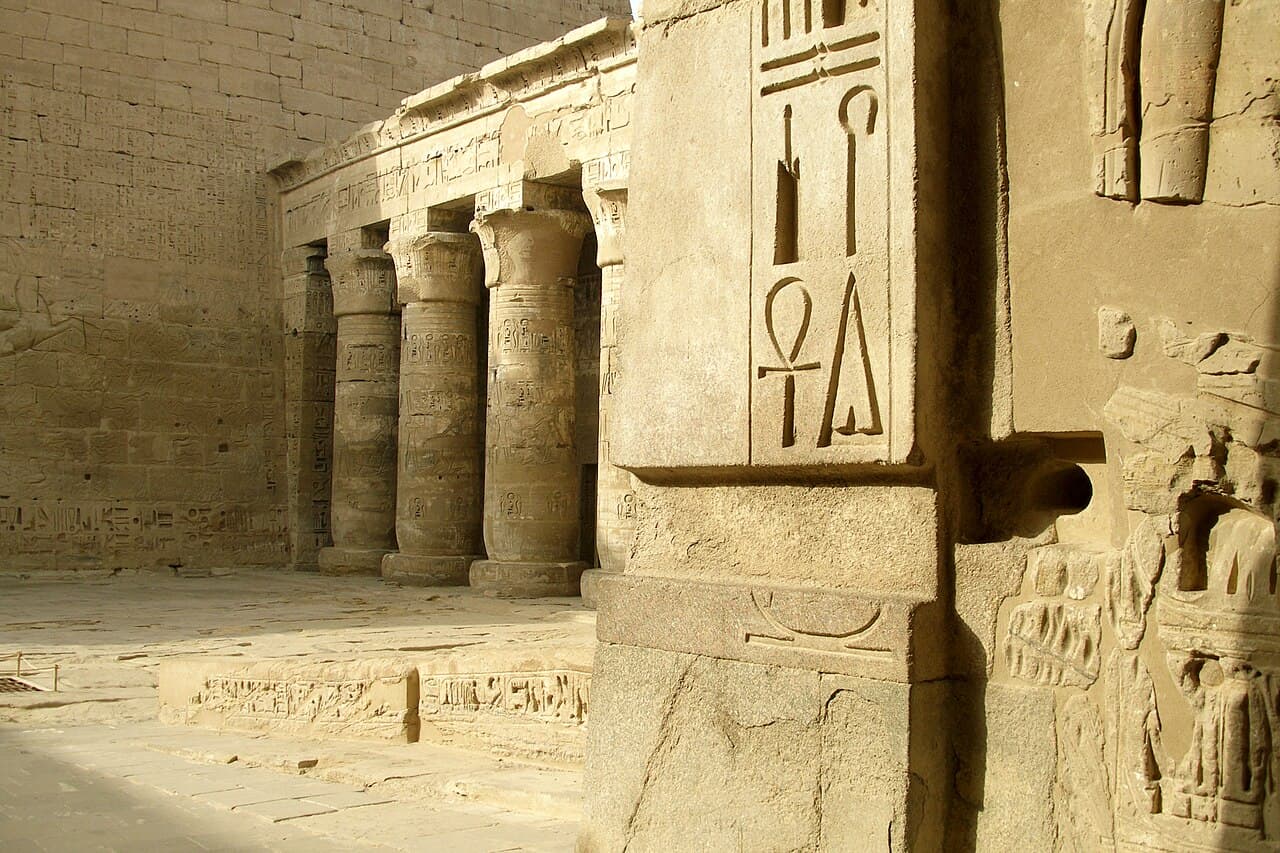
▶ Start the storyFor more than three thousand years, from the first decipherable sentence in the 28th century BC, hieroglyphs covered Egypt's temples, tombs and monuments. Then the people who could read them disappeared. In the 5th century AD, the permanent closing of the pagan temples across Roman Egypt took with it the last fluent scribes, the trained readers and writers of the script. The signs stayed carved into stone all over the country, perfectly visible and completely unreadable, and the nature of the script remained unknown through the Middle Ages and the early modern period.
That didn't stop people from trying. A mix of medieval Arab and Egyptian people kept the fascination alive, and scholars, spiritualists and treasure hunters collected artifacts, trying to decode the writing through similarities between hieroglyphs and Coptic. For a long time, scholars didn't think the signs stood for sounds at all; only in the mid-17th century did Athanasius Kircher, who knew Coptic, begin to suspect they might. Even Kircher was held back by his belief that the symbols were mystical.
The real breakthrough needed a text people could check their guesses against, and that arrived with the Rosetta Stone, which carries the same text in hieroglyphs, in demotic and in Greek. In the early 19th century, scholars such as Silvestre de Sacy, Johan David Åkerblad and Thomas Young made some headway, before Jean-François Champollion completed the decipherment in the 1820s. What they recovered was enormous: the surviving body of Ancient Egyptian writing, hieroglyphic and hieratic combined, runs to roughly five million words, all of it unreadable for well over a thousand years because the temples that trained its readers had closed.
Quiz me
0/3
Recap
Cracking hieroglyphs required a text whose translation could actually be checked, which the trilingual Rosetta Stone finally provided.
Surprising fact · The 5th-century closure of Egypt's pagan temples wiped out the last scribes who could read hieroglyphs fluently, leaving the script unreadable for well over a thousand years.
Sources (1)
No source, no claim. Every fact in this lesson (13 claims) cites at least one of these.