Is there any human society anywhere that has no music at all?
Bone flutes firmly date human music to around 38,000 BC, and no known culture since has gone without it, even though nobody agrees on why.
▶ Start the storyNone that we know of. Music is generally agreed to be present in all human societies: definitions of music vary wildly around the world, but every known culture takes part in it. That makes it what anthropologists call a cultural universal, a trait common to all known human cultures, and evolutionary psychologists see such universal traits as good candidates for evolutionary adaptations.
The habit is old. The music of prehistoric cultures is first firmly dated to around 38,000 BC, in the Upper Paleolithic, thanks to bone flutes, and it is still unclear whether its real origins lie even earlier, in the Middle Paleolithic. Most cultures also have their own myth about how music was invented, usually rooted in their religious or philosophical beliefs.
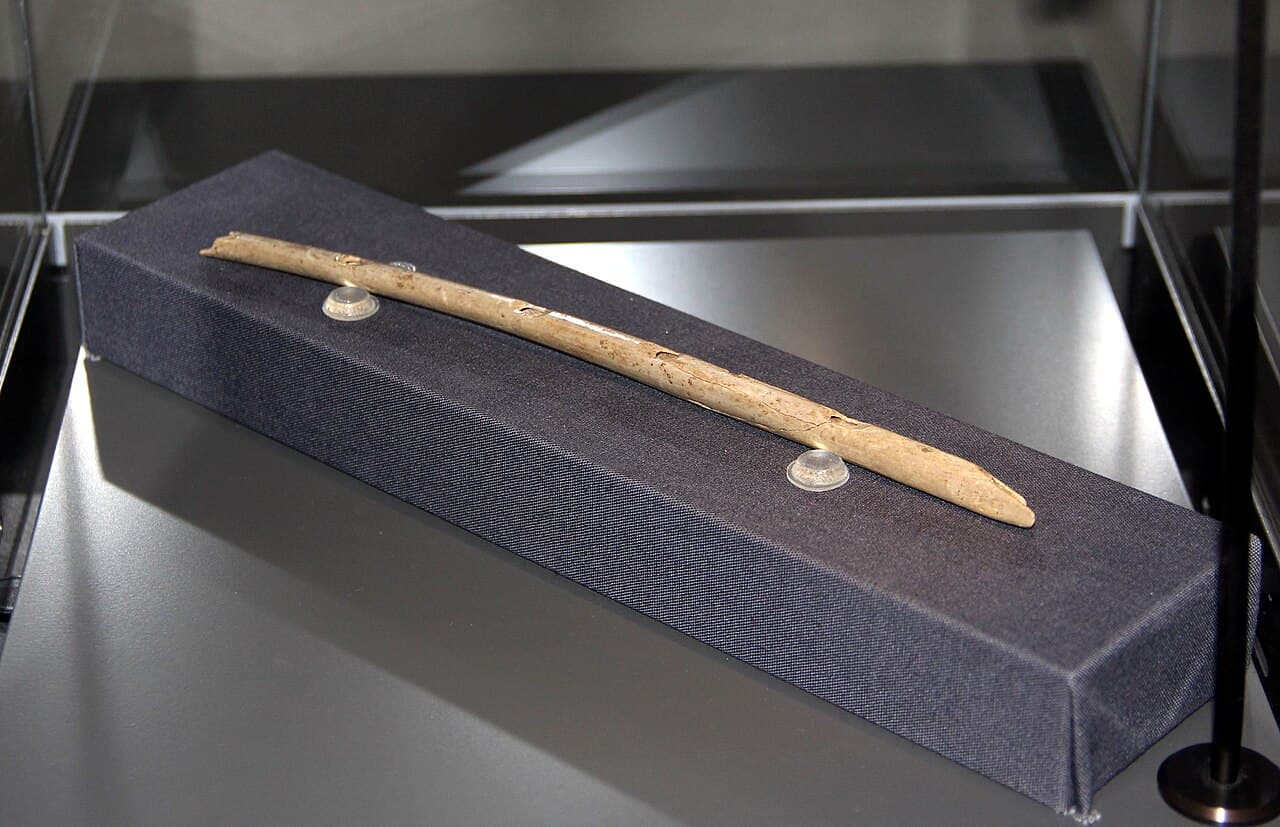
Why humans make music at all is much less settled, and scholars from archaeology to neuroscience have found little consensus. Charles Darwin suggested in 1871 that it began through sexual selection, perhaps in mating calls, but critics point out that no human sex is "more musical", while every other known case of sexual selection comes with clear differences between the sexes. Others have proposed practical origins: organising group labour, carrying messages over long distances, or holding families and communities together.
Darwin: sexual selection
- Proposed in 1871
- Compares music to an elaborate mating call
- Criticized: no human sex is 'more musical'
Practical-need theories
- Proposed by Bücher, Stumpf, and others
- Music as a tool for group labor or long-distance signaling
- Framed as building cooperation and cohesion in communities
Quiz me
0/3
Recap
No human society has ever been found without music, even though no one theory explains why that's true.
Surprising fact · Bone flutes firmly date the music of prehistoric cultures to around 38,000 BC, in the Upper Paleolithic.
Sources (3)
No source, no claim. Every fact in this lesson (12 claims) cites at least one of these.