Why did it take a court fight to decide who owned Kafka's papers?
When Max Brod died in 1968, his secretary took charge of his trove of Franz Kafka's papers. Nobody could say whether they were now hers, and the question lasted until a court ruling in 2016.
▶ Start the storyWhen Max Brod died in 1968, stewardship of his enormous trove of Franz Kafka's remaining papers passed to his secretary, Esther Hoffe. The trouble was that nobody could agree on what Brod had actually meant by that. Differing interpretations of his final wishes left it unclear whether Hoffe was simply the new owner of the papers, free to do as she liked, or an executor who was supposed to eventually hand them over to the National Library of Israel. That ambiguity was never resolved while Hoffe was alive, and it would take a highly controversial court decision, decades later in 2016, to finally assign ownership to the Israeli National Library.
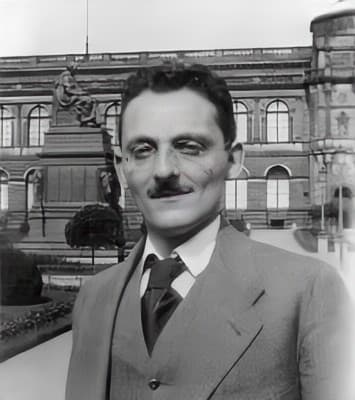
Brod himself had refused Kafka's own dying request to burn his unpublished manuscripts, publishing them instead, and by 1961 two-thirds of Kafka's surviving papers had already been handed over to Oxford's Bodleian Library at the request of Kafka's own nieces. The rest stayed with Brod, and then with Hoffe, who had met Brod in Israel soon after he fled Prague in 1939 and grew close to him after his wife's death in 1942, eventually working as his secretary with an office in his own apartment.
The unclear nature of Hoffe's rights did not stop her from selling some of them. In 1974 she sold roughly 22 letters and 10 postcards from Kafka to Brod to buyers in Germany, and the following year she was arrested at the Tel Aviv airport on suspicion of trying to remove original manuscripts without first filing the photocopies required by law; a search of her luggage turned up photocopies of Kafka's letters and what was reportedly an original diary by Brod. In 1988 she auctioned an original manuscript of The Trial for roughly two million dollars.
Many of the papers sat in Swiss bank deposit boxes, which is one reason the official inventory made after her arrest is believed to be very incomplete. Hoffe kept the archive until her death in 2007. The papers and roughly a million dollars in cash then passed to her daughters Eva and Ruth. Eva kept control of them until 2016, when the controversial court ruling finally assigned the archive to the Israeli National Library, nearly fifty years after Brod's death first raised the question of who actually owned it.
Quiz me
0/3
Recap
Because Max Brod's will did not make clear whether Esther Hoffe owned Kafka's remaining papers outright or merely held them for an eventual public donation, the question was not settled until a controversial 2016 court ruling, nearly fifty years after his death.
Surprising fact · Hoffe was arrested at the Tel Aviv airport in 1975 on suspicion of trying to remove original Kafka manuscripts without filing required photocopies.
Sources (2)
No source, no claim. Every fact in this lesson (14 claims) cites at least one of these.