Why would people buy more of something after its price goes up?
Researchers made rice cheaper for very poor families in rural China, and they bought less of it: backwards from basic economics, and just what Victorian economist Robert Giffen's bread paradox implies.
▶ Start the storyBecause for the very poorest buyers, a pricier staple food can leave them unable to afford anything better, forcing them to buy even more of that same staple just to fill their stomachs. Economists call this strange, demand-curve-breaking pattern a Giffen good, named after Scottish economist Sir Robert Giffen, who noticed it in the spending habits of Victorian-era poor families. Normally, when something gets more expensive, people buy less of it and switch to substitutes. A Giffen good flips that: because it's an inferior good eaten mainly out of necessity, with no good substitute available, a price rise eats so deeply into a poor family's budget that they can no longer afford pricier alternatives, like meat, and end up buying even more of the cheap staple just to get enough to eat.
Economist Alfred Marshall, who credited Giffen with the idea in 1890, illustrated it with bread: when bread's price rises, it drains poorer families' money so much that they must cut back on meat and other better foods, and since bread is still the cheapest food they can get, they end up eating more of it, not less. For this to happen, three things need to be true: the good has to be inferior, meaning demand for it falls as income rises, there has to be no close substitute, and the good has to take up a big enough share of the budget to matter but not so much that nothing else gets bought at all.
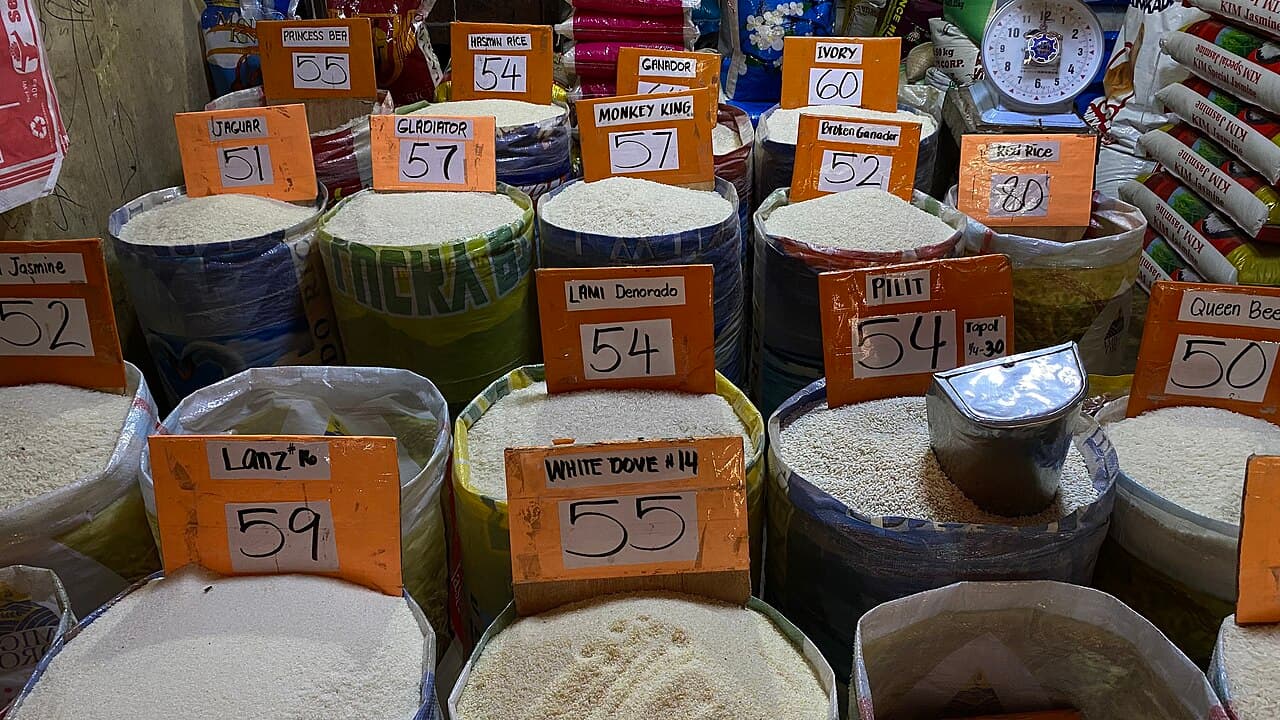
Finding real-world proof has been hard. A 2008 study by Robert Jensen and Nolan Miller tested the idea directly by subsidizing rice for poor households in Hunan province and wheat for poor households in Gansu province, China. When the subsidy made rice cheaper in Hunan, demand for rice actually fell, the opposite of what ordinary economics would predict and just what the Giffen idea implies in reverse: raise the price back up, and the poorest buyers would need to eat more of it, not less. The wheat result in Gansu was weaker. Giffen goods are often confused with 'Veblen goods,' whose demand rises with their price because the price is seen as a sign of quality or status, but the logic is the opposite: a Giffen good gets bought more out of desperation, not desire.
Giffen good
- Price rises, demand rises too
- Bought out of necessity by the poor
- No good substitute available
Veblen good
- Price rises, demand rises too
- Bought for status or exclusivity
- Price itself signals quality
Quiz me
0/3
Recap
A Giffen good gets bought more out of desperation when it gets pricier; a Veblen good gets bought more out of desire for exactly the same reason.
Surprising fact · Economists tested the theory by subsidizing rice for poor households in China and saw demand for rice fall as it got cheaper, consistent with the Giffen prediction running in reverse.
Sources (1)
No source, no claim. Every fact in this lesson (10 claims) cites at least one of these.