Why did Alexander the Great order a looted enemy king's tomb restored?
Alexander had just conquered Persia. When he found the tomb of its founder robbed and the body moved, he was grieved — and ordered it put back together.
▶ Start the storyBecause, according to the ancient accounts, he was grieved by the outrage. After conquering the Persian Empire, Alexander the Great wanted to enter the tomb of its founder, Cyrus the Great, at Pasargadae. The historian Arrian, drawing on an account by Alexander's companion Aristobulus, says he found it dug through and pillaged, with everything carried off except the golden coffin and couch. A simple inscription on the tomb had asked passersby not to begrudge Cyrus his monument; someone had ignored it anyway.
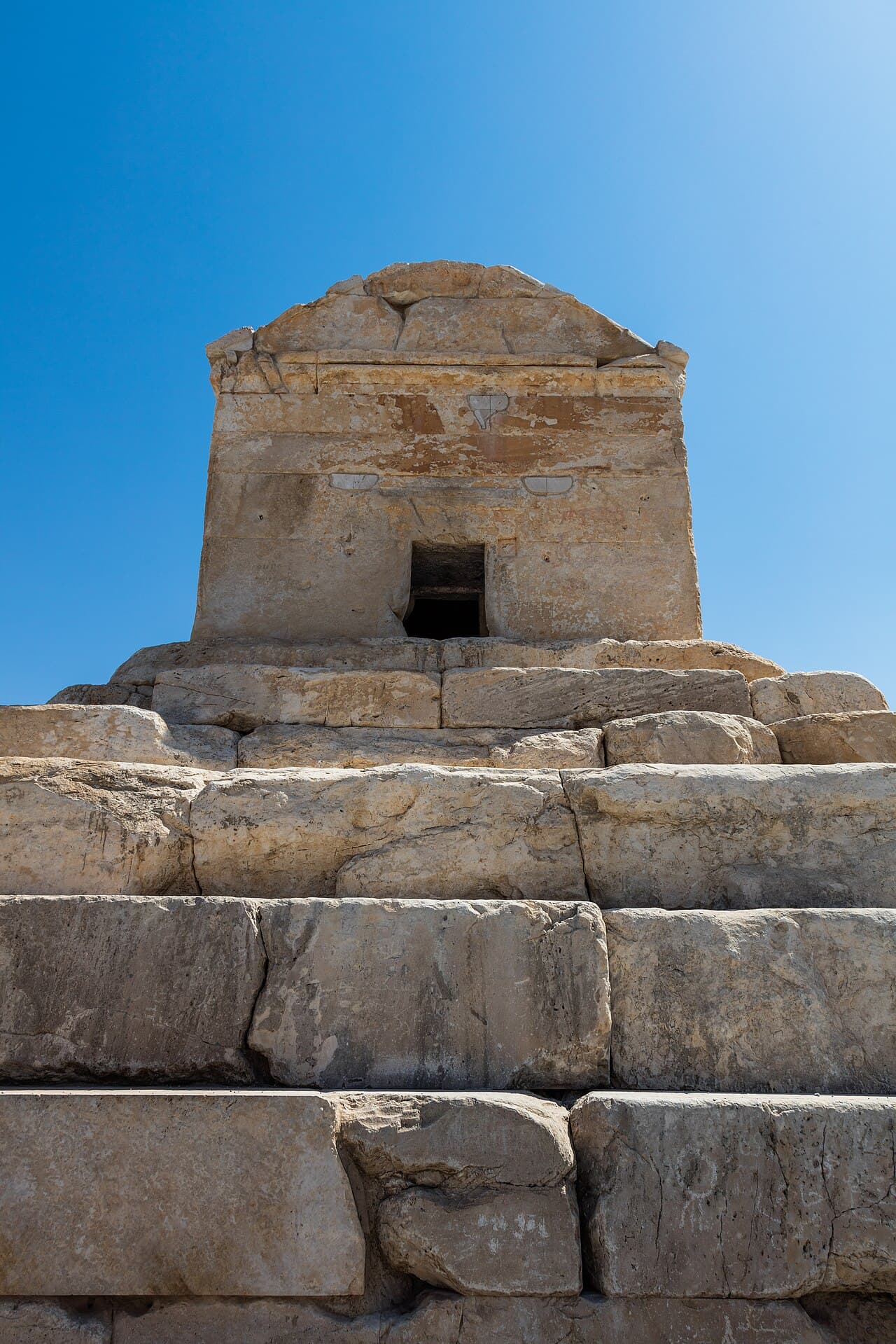
The tomb hadn't been unguarded. A guard of Magi had watched over it since the reign of Cyrus's son, receiving a sheep every day for their upkeep. To Aristobulus the robbery looked like the work of plunderers rather than of the local governor, since the thieves had left behind only what could not easily be carried off. Alexander questioned the guards directly, but they claimed to know nothing about who had done it. Rather than let the matter drop, he ordered the tomb put back together, had its missing grave-goods repaired or replaced, and then had the entrance sealed shut to stop it from happening again.
Even the ancient accounts of what exactly stood there disagree. One source described a small stone building with a narrow door holding a golden coffin on a couch; another claimed the structure had ten full stories with Cyrus buried at the very top. Much later, the tomb's true owner was forgotten: legendary accounts attributed it to a 'Mother of Solomon', and only women were allowed to hold its key and step inside. It wasn't identified as Cyrus's tomb again until 1812, by the British diplomat James Justinian Morier, a conclusion another traveler reached nine years later.
Quiz me
0/3
Recap
Alexander the Great found Cyrus's tomb robbed, interrogated its guards, and ordered it rebuilt and sealed rather than left in ruins.
Surprising fact · Ancient sources disagree sharply on the tomb's structure, with one describing a small stone building and another claiming it was a ten-story tower.
Connects to
- 🏥 How can putting a building on rubber pads protect it from an earthquake?
- Alexander the great
- Achaemenid empire
Sources (1)
No source, no claim. Every fact in this lesson (14 claims) cites at least one of these.