Why did an elevator company cut its own cable in front of reporters?
At the 1889 Paris World's Fair, journalists watched technicians axe an elevator cable on purpose. It was the sales pitch.
▶ Start the storyTo prove that its brakes worked. At the 1889 Paris World's Fair, the new American company Otis Elevator was promoting its 'safety elevator', and it had built the elevators that carried visitors up the legs of the brand-new Eiffel Tower to the first level. When journalists worried about whether those elevators were safe, Otis technicians loaded a car with three thousand kilograms of lead to simulate passengers, then cut the cable with an axe in front of journalists from around the world. The elevator fell, and the Otis safety brakes halted it ten feet above the ground.
The fair itself was a huge undertaking, timed to mark the 100th anniversary of the storming of the Bastille and meant to help pull France out of an economic slump. That choice of anniversary came at a political cost: because the fair celebrated the overthrow of the French monarchy, nearly every European country that still had a king or queen officially boycotted it, from Germany and Austria-Hungary to Britain, Spain and Russia. In practice the boycotts were leaky: many citizens and companies from those same countries took part anyway, and some countries' participation was funded entirely by private sponsors.
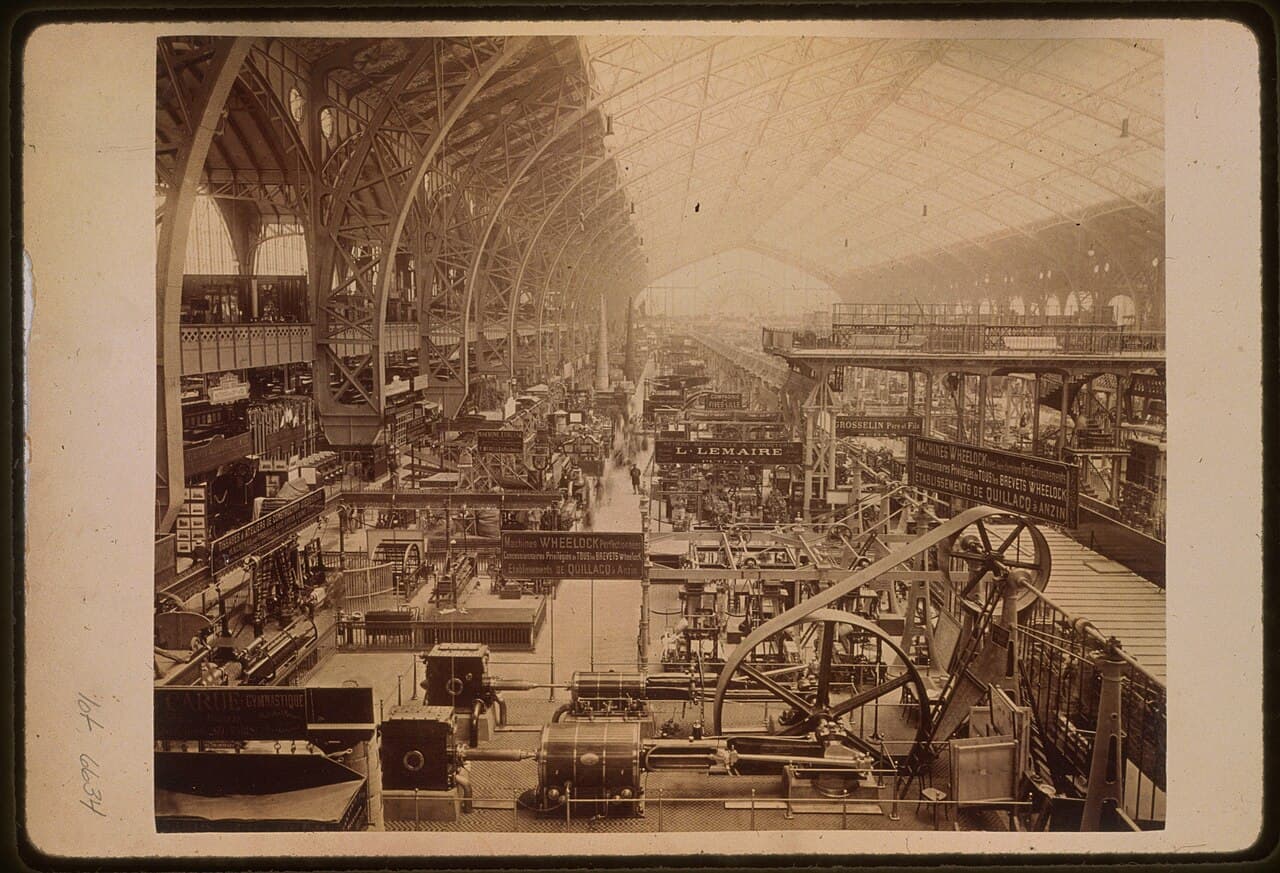
The Eiffel Tower wasn't even the fair's most expensive structure. The Galerie des Machines, a vast hall of iron and glass built to house industrial exhibits, cost seven times as much as the tower and, at 111 meters, spanned the longest unbroken interior space in the world at the time. In its first week, before the tower's own elevators were even running, nearly 30,000 visitors climbed the tower's narrow stairs by hand; by the time the 173-day fair closed, almost two million had made the ascent. It turned out to be the last Paris World's Fair to actually turn a profit.
1,968,287
Quiz me
0/3
Recap
Otis proved its elevator was safe by cutting its cable on purpose, in public, with a loaded car and journalists watching.
Surprising fact · Nearly every European monarchy officially boycotted the fair because it celebrated the 100th anniversary of the French Revolution's overthrow of the monarchy.
Sources (1)
No source, no claim. Every fact in this lesson (14 claims) cites at least one of these.