Why did the poor once live on the top floors?
Before elevators, the top floor was the worst address in the building. One brake that grabs a falling car turned it into the penthouse.
▶ Start the storyFor most of history, the higher you lived, the poorer you were, because the only way up was your own legs. Before elevators were widespread, most residential buildings stopped at about seven stories. The wealthy took the lower floors, while poorer residents, who had to climb flight after flight of stairs, lived at the top. The elevator flipped that order upside down, which is why the priciest home in a modern tower is the penthouse.
The breakthrough was not lifting but trust. In 1852 Elisha Otis was installing machinery at a bedstead factory in Yonkers, New York, that needed a hoist for heavy equipment, and hoists were dangerous. His answer was a hoist that stopped itself automatically if the rope broke. In 1854 he showed it off at New York's Crystal Palace exhibition in a dramatic, death-defying demonstration, and demand began to rise.
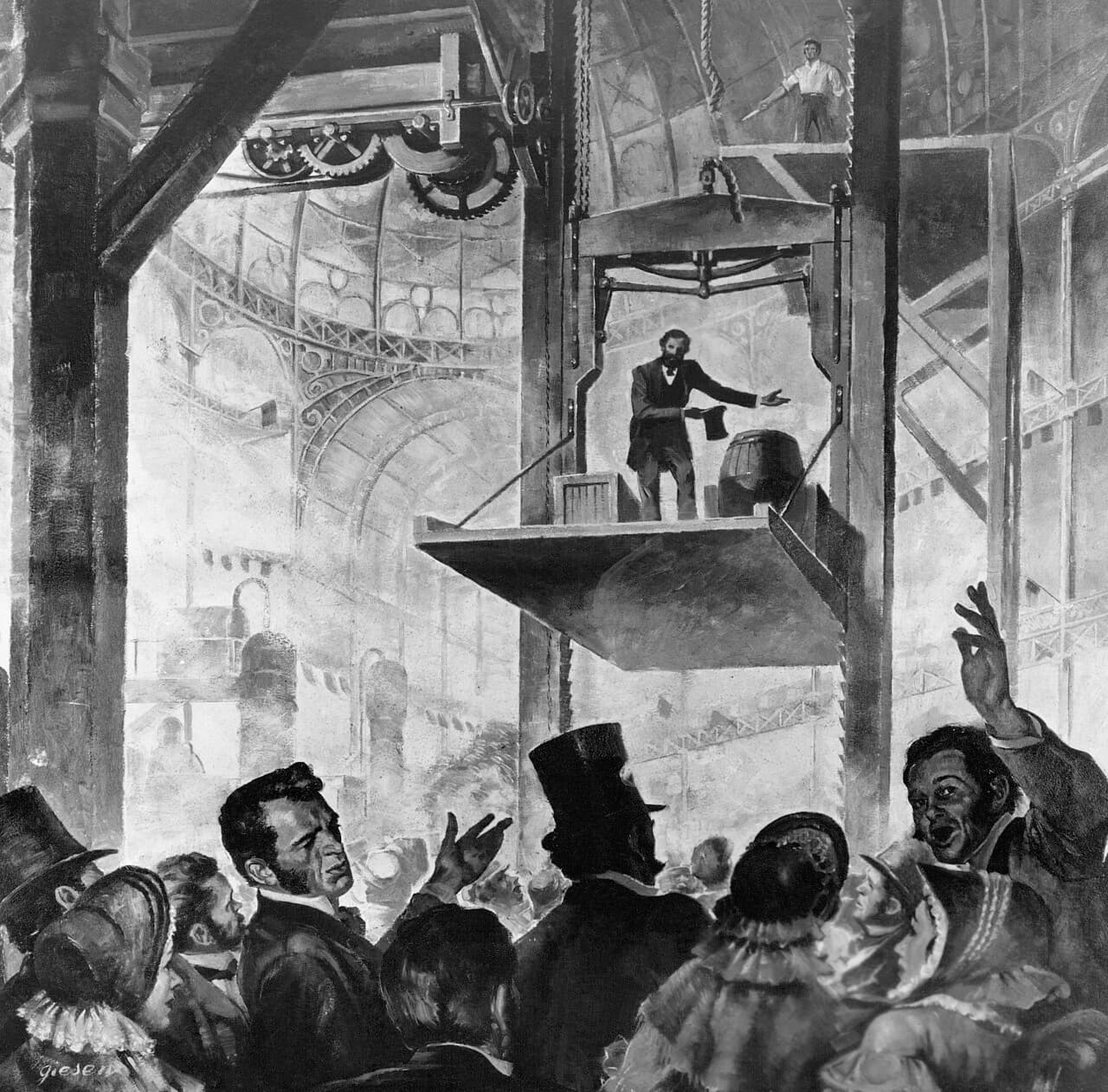
The first passenger safety elevator, in 1857, went into a five-storey shop on Broadway that did not even need one: the owner, E. V. Haughwout, knew people would come to see the novelty and stay to shop. In 1870 the Equitable Life Building in New York, which some historians call the first skyscraper, bet on elevators at a time when prestigious firms refused offices above the second floor because of the stairs. The elevators and the views from the top drew thousands of visitors. Without that safety brake, there would be no skyscrapers: most people simply will not climb more than a few flights.
Quiz me
0/3
Recap
Stairs made the top floor the poor floor; the safety elevator made it the penthouse.
Surprising fact · Before 1870, prestigious New York firms would not rent offices above the second floor, because nobody wanted to climb the stairs.
Sources (7)
No source, no claim. Every fact in this lesson (22 claims) cites at least one of these.