Why do babies say 'mama' and 'papa' in so many languages?
Swahili, Mandarin, Polish and Quechua all use almost the same sounds for 'mother'. Linguists don't credit a shared ancestor language: they credit the way babies babble.
▶ Start the storyBecause 'mama' and 'papa' are made of some of the easiest sounds a baby can produce, so babies babble them early and parents take them as names. Across many languages, the word for 'mother' or 'father' keeps landing on the same handful of sounds. Mandarin bàba, Yoruba bàbá, Persian baba and Aramaic abba all mean 'father'. Swahili mama, Quechua mama, Polish mama and Navajo amá all mean 'mother'. Linguists see no need to explain these by common ancestry: the resemblance is thought to be a coincidence resulting from the way babies first learn to speak.
The sounds in 'mama' and 'papa' are simply among the easiest any human mouth can make: consonants like /m/, /p/ and /b/, produced just by closing the lips, paired with the wide-open vowel /a/. These are often among the first word-like sounds babbling babies make. Parents everywhere, hearing something like 'mama' or 'papa' come out of their own baby's mouth, naturally assume the baby means them, and adopt that sound into the family's baby talk.
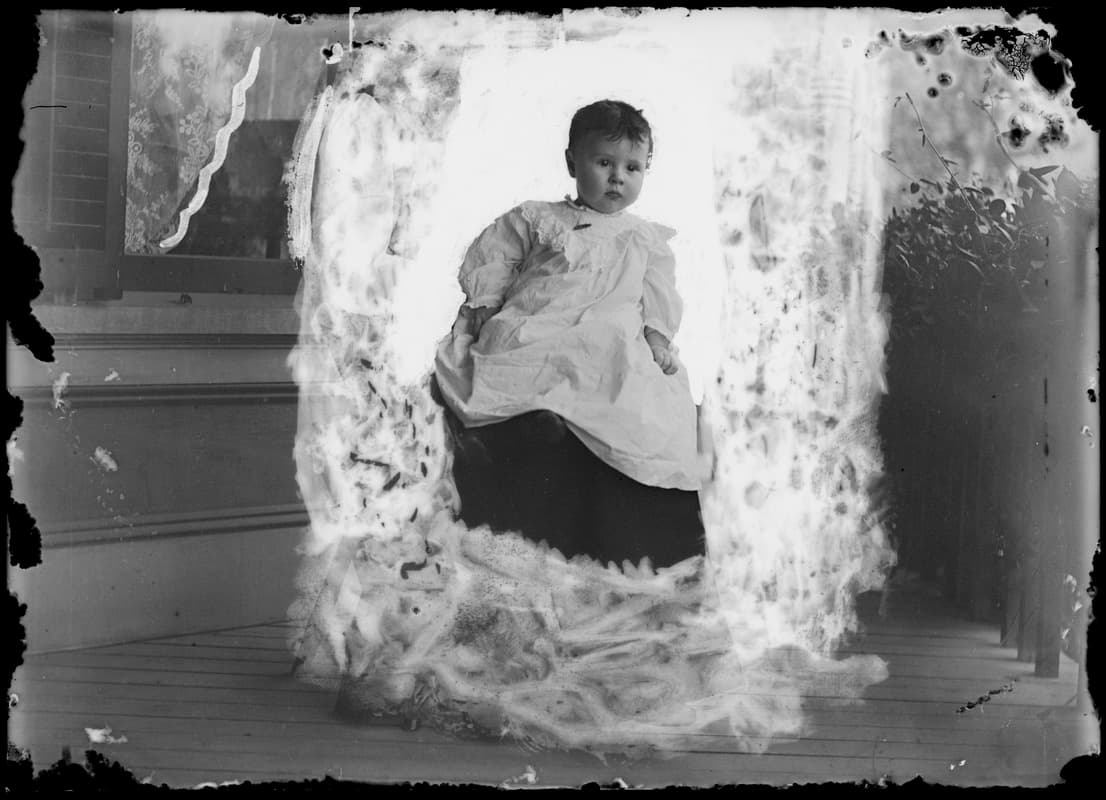
The linguist Roman Jakobson traced the 'm' sound even further back, to breastfeeding itself: a nursing baby, with lips sealed around the breast or bottle, can only make a soft nasal hum, since the mouth is otherwise full. That same hum later becomes a signal of hunger or longing even when no one is nursing. As Jakobson put it, a baby babbling 'mamma, mamma' with no particular thought at all gets heard by different adults as calling for mother, calling for father, or simply announcing hunger, and in a sense every interpretation is both right and wrong.
It isn't universal: Fijian uses nana for mother, Turkish uses ana, and Old Japanese used papa for mother, while its word for father was titi, the ancestor of modern chichi.
Quiz me
0/3
Recap
When a word for mother or father sounds the same in two unrelated languages, suspect easy baby sounds before you suspect a shared ancestor.
Surprising fact · In Old Japanese, papa used to mean 'mother', showing that even these 'universal' baby sounds can attach to opposite parents in different languages.
Sources (1)
No source, no claim. Every fact in this lesson (11 claims) cites at least one of these.